


Skincare Products For Young Girls: What Families Should Know
Choosing skincare products for young girls can feel complicated when shelves and social feeds suggest that every child needs a long routine. For most families, the best starting point is more measured: gentle cleansing when needed, moisturizer if skin feels dry, and sunscreen for daytime. The aim is comfortable, healthy-looking skin and repeatable habits, not a crowded counter.
Ask Bright Girl a product question
Which skincare products for young girls are useful to begin with?
A simple routine can cover the basics without adding steps just because they are popular. Start by considering the child’s age, daily activities, skin comfort, and whether she already uses sunscreen or makeup. A mild cleanser, a moisturizer when skin needs hydration, and daytime sun protection are reasonable categories to consider. No child needs every product type on a shelf.
Bright Girl is a dermatologist-created skincare brand for young skin ages 8–24. Its products are formulated by double board-certified dermatologist Angela Casey, M.D., with an emphasis on age-appropriate routines, pH-balanced formulas, and ingredient safety. That perspective supports a useful rule for families: select products for a clear need, introduce one new product at a time, and follow its label.
Parents can also decide what “simple” means at home. For one family, it may be a cleanser and sunscreen. Another may add moisturizer because a child’s skin feels dry after washing. The routine should fit the child rather than a trend, and the young person can have a say in comfortable textures while an adult checks directions and helps set realistic expectations.
How can parents match the routine to a child’s age and day?
Age can help guide supervision, but it does not determine an exact product list. A younger child learning basic habits may need an adult to help dispense a small amount, rinse thoroughly, and remember sun protection. A teen who wears makeup, sunscreen, or plays sports may need a consistent evening cleanse. A young adult may prefer more steps, but adding more is a choice, not a requirement.
Think through a typical day. Is the child outdoors at recess, in sports practice, swimming, or wearing makeup? Does the skin feel comfortable after washing, or dry and tight? These observations can help a parent identify a practical need. They do not call for diagnosing a skin condition at home. If a concern is persistent or painful, seek individualized guidance from a pediatrician or dermatologist.
Parents looking for age-specific context can read Bright Girl’s guides to skin care for kids and safe skincare for tweens. These can help start a conversation about routines without making a child feel that normal skin needs to be fixed.
What does each basic product do in a simple routine?
Cleanser: remove everyday buildup gently
A gentle facial cleanser can remove dirt, oil, sweat, sunscreen, and makeup from the day. Use lukewarm water and clean fingertips, then rinse well and pat dry. Scrubbing hard or washing again and again is not a shortcut to better care. If cleansing leaves skin feeling uncomfortable or stripped, simplify and review the product directions.
Bright Girl’s Bright+Clean daily facial gel cleanser is one option families may explore. A good practical test is whether the child can use the cleanser as directed and whether skin feels comfortable afterward. For activity-specific ideas, see the brand’s guide to skincare after swimming.
Moisturizer: add hydration when it is useful
Moisturizer can support hydration and a healthy-looking skin barrier, especially when skin feels dry after washing or in cold, dry weather. Apply a modest amount to clean skin and follow the label. A moisturizer is not an obligatory extra layer if the child’s skin feels comfortable without it. If a formula stings or leads to ongoing discomfort, stop using it and ask a healthcare professional for advice.
Bright Girl’s Day+Bright 24-hour facial moisturizer is a product to consider when a family is looking for a straightforward moisturizing step. For broader guidance about hydration, the brand’s article on hydration and skin adds helpful context.
Sunscreen: make daytime protection practical
For outdoor time, choose a broad-spectrum sunscreen with an SPF appropriate to the planned activity, apply it as directed, and reapply according to the label. A hat, shade, and protective clothing can support sun habits, too. Check directions closely for swimming, sports, or extended time outside, and follow any water-resistance information on the package.
The American Academy of Pediatrics shares family guidance on skincare for teens and tweens, including habits parents can use to plan outdoor protection. Bright Girl offers sun protection products, including mineral sunscreen options. Families can compare choices and their directions rather than choosing by packaging alone.
How can families compare common skincare product choices?
Use this comparison as a decision aid, not as a prescription. Begin with the child’s routine and a clear reason for each step. If an item does not meet a need, it can stay off the counter. Read the package for intended use, directions, warnings, and any age guidance provided.
| Product type | When it may be useful | What parents can check | Simple use |
|---|---|---|---|
| Gentle cleanser | After sunscreen, makeup, sweat, or daily buildup | Facial use, directions, and a comfortable feel | Use a small amount with lukewarm water; rinse well |
| Moisturizer | When skin feels dry or tight | Directions, ingredients, and whether the texture suits the child | Apply a modest amount after cleansing |
| Broad-spectrum sunscreen | Daytime outdoor exposure | SPF, broad-spectrum label, instructions, and water resistance when relevant | Apply and reapply as the label directs |
| Toner, mask, or other optional step | Only when there is a clear, age-appropriate reason | Purpose, directions, ingredients, and whether the extra step is needed | Introduce one product at a time and stop if uncomfortable |
How can parents apply the guide to everyday situations?
Consider three common situations before buying anything new. The point is not to prescribe a routine for every child, but to connect a product category to a real part of the day and keep the rest uncomplicated.
When a child does not wear makeup
If the child has not worn sunscreen, makeup, or other products that need to be washed off, do not assume a complex evening cleanse is necessary. Keep the focus on basic hygiene and comfort. If she has been outdoors, sunscreen remains a daytime habit; follow its directions for application and removal. A parent can decide whether a cleanser belongs in the routine based on the child’s actual day rather than a social media routine.
When a teen wears makeup or sunscreen
A gentle evening cleanse may be a useful way to remove makeup and sunscreen. Plan for a short routine the teen can repeat: wash with lukewarm water, rinse well, pat dry, and add moisturizer if skin feels dry. If a product is difficult to use or leaves the skin uncomfortable, reassess the choice instead of adding a second cleanser or scrub. For a young person learning the habit, keep the product and directions visible and offer reminders without turning the routine into a test.
When sports or swimming change the day
Activity can change when sunscreen is needed and when a wash is practical. Review sunscreen directions before outdoor practice or swimming, and reapply as directed. Afterward, gentle cleansing can remove sweat, sunscreen, and pool or salt water. Avoid scrubbing skin simply because it has been active. Bright Girl’s skincare guide for teens and safe skincare guide offer further reading for parents considering age-appropriate habits.
When skin feels dry in changing weather
Cold air, indoor heating, or frequent washing may leave skin feeling dry for some children. A moisturizer may be worth considering if it fits the child’s needs and its directions. Keep other products steady while observing comfort. If dryness is persistent, painful, or accompanied by a rash, a healthcare professional can help the family decide what to do rather than relying on a general product checklist.
These examples show why a starter routine should remain flexible. The same child may need sunscreen planning for an outdoor weekend, a cleanser after makeup, and no extra steps on a quiet day indoors. Choose for the day in front of you, then return to a simple baseline.
What should parents check before choosing a product?
Read the full label rather than relying on a front-of-package phrase. Confirm how the product is intended to be used, how often to apply it, and whether the package includes age guidance or warnings. A polished claim does not tell a parent whether a product fits a particular child’s routine. If a label is unclear, choose a simpler option or ask a qualified professional.
Bright Girl emphasizes Beyond Clean Beauty, non-toxic formulations, pH-balanced products, ingredient safety, and age-appropriate care. Parents can review the brand’s Beyond Clean Beauty approach and ingredient no-no list when comparing product information. Ingredient lists can be long, so focus on the whole formula and the directions rather than assuming that one phrase answers every question.
- Check whether the product is designed for facial use and whether a parent should supervise use.
- Choose a manageable number of steps the child can follow consistently.
- Introduce one new product at a time so it is easier to notice how skin responds.
- Keep products personal rather than sharing items intended for one person’s use.
- Store products safely and follow any package directions about use and storage.
- Keep routine language neutral and supportive; skin care should not create pressure about appearance.
For families who want to understand how pH fits into skincare, Bright Girl explains the role of pH. Its article on ceramides offers another ingredient-focused read. These resources can support informed questions, but they do not replace advice based on a child’s health history.
How can parents introduce a new product thoughtfully?
Change one thing at a time. If several products are introduced together and skin becomes uncomfortable, it is harder to identify which change might be involved. Start with the label’s directions, use the product as intended, and avoid adding several new steps in the same week simply to build a longer routine. A parent can keep a short note of the product and date it was introduced, particularly when a child has sensitive skin or has reacted to products before.
Try this practical sequence:
- Choose the need. Decide whether the child needs cleansing after makeup or sunscreen, hydration for dry-feeling skin, or sun protection for outdoor activity.
- Review the product. Read the ingredient list, directions, and warnings. Check whether it is intended for the child’s age and intended use.
- Keep the rest steady. Avoid changing several products at once. Maintain familiar habits while observing comfort.
- Watch for discomfort. Stop using a product that causes persistent irritation and seek professional advice when appropriate.
- Reassess the routine. If the product does not serve a clear purpose, it may not need to remain in the routine.
This measured approach also helps children learn that a routine is about care and consistency, not collecting products. Bright Girl’s clean beauty guide for teens discusses age-aware choices, while its moisturizer guide provides further context for that specific step.
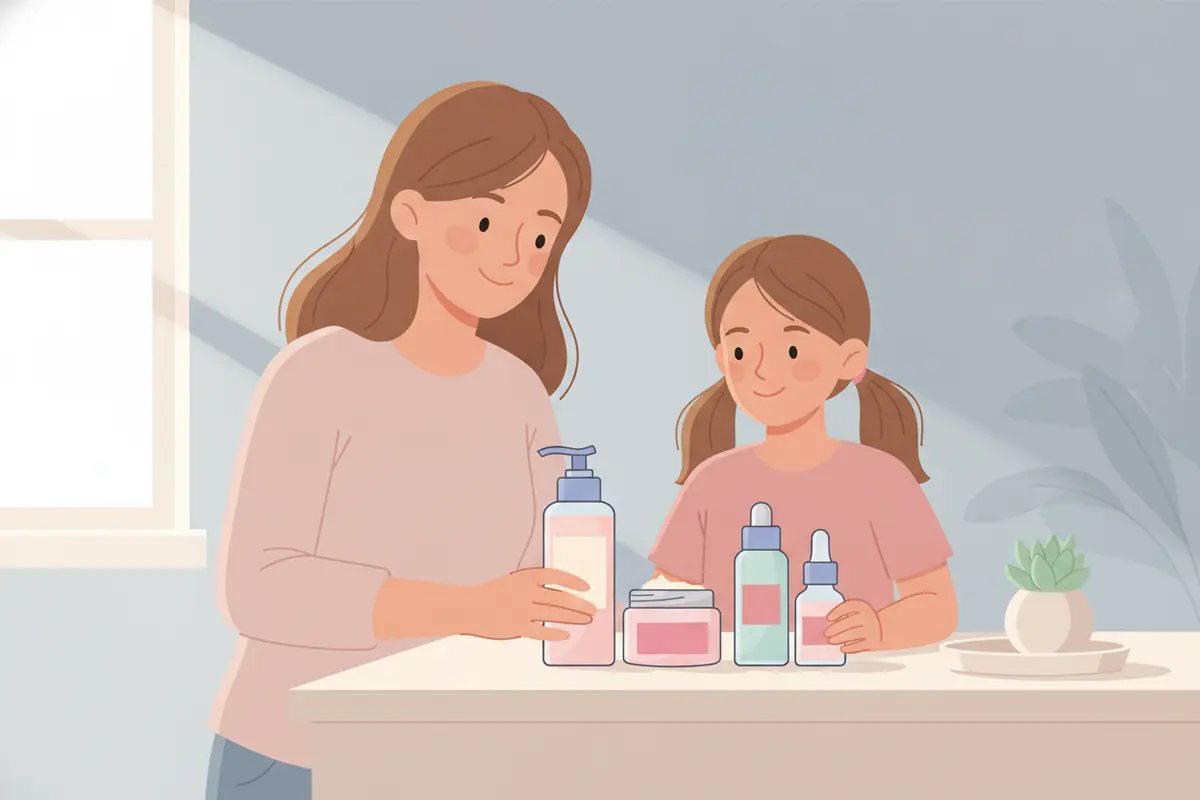
How can the routine work on school days and weekends?
A routine only helps if it fits real life. Keep morning steps brief: cleanse if needed, moisturize if needed, and use sunscreen for daytime. At night, cleanse when the child has worn sunscreen or makeup, or after a sweaty day. Avoid turning the routine into a long checklist. Put products in a consistent place and make the order easy to remember.
For a school morning, a parent might set out sunscreen near the child’s daily items so it is visible before leaving. For sports, pack sunscreen as directed for outdoor practice and remind the child to follow the package directions. After swimming, rinse according to the family’s routine and use sunscreen again for additional outdoor time as directed by its label. These are planning cues, not extra complicated skincare steps.
At the weekend, take a moment to check what is actually being used. Is the cleanser running out because it has a regular place in the routine, or is it sitting untouched? Is moisturizer needed seasonally? Does the sunscreen label still provide clear directions? Reviewing products occasionally can prevent a collection from growing without purpose. Check the brand’s information on sunscreen expiration for more on reading sunscreen dates and storage guidance.
When should a parent ask a healthcare professional?
Ask a pediatrician or dermatologist when a child has persistent irritation, a painful or changing concern, a known skin condition, or a reaction that does not settle after stopping a product. An individual clinician can consider the child’s history and advise what is appropriate. A general skincare routine is not a substitute for that guidance.
Bright Girl’s products are formulated by double board-certified dermatologist Angela Casey, M.D., but a product page or educational article cannot assess an individual child. Families can read Bright Girl’s story to learn about the brand’s dermatologist-created perspective. If you have a question about a product or shopping options, use the contact page to reach Bright Girl.
How can families keep product choices simple?
Begin with the basics, then pause before adding anything optional. A family might choose cleanser for evenings when sunscreen or makeup needs to be removed, moisturizer when skin feels dry, and sunscreen for daytime outdoor activities. This creates a straightforward plan with a reason for every step. If a child’s needs change with sports, swimming, or the season, review the routine rather than adding products automatically.
Parents who would like help exploring a coordinated selection can browse Bright Girl’s curated skincare sets or view the Core 4 routine. A family can also use the Bright Girl skin quiz as a shopping guide. Compare each recommendation with the child’s actual needs and the product directions before deciding what belongs in the routine.
Explore age-conscious skincare sets
Frequently Asked Questions
At what age should a girl start using skincare?
There is no single starting age that fits every child. Parents can introduce basic habits such as gentle cleansing when needed and daytime sun protection with age-appropriate supervision. Keep the routine practical and follow product directions.
Does a young girl need a multi-step routine?
No. Many families can begin with a few basic steps and add a product only when there is a clear, suitable reason. A longer routine can add complexity without meeting a child’s needs.
Should parents introduce several new products at once?
It is easier to observe how skin responds when introducing one new product at a time. Follow the label, keep other steps familiar, and stop using a product that causes persistent discomfort.
What should parents do if a product causes irritation?
Stop using the product and ask a pediatrician or dermatologist for guidance if irritation persists, is painful, or concerns you. A clinician who knows the child can provide individualized advice.
Thoughtful skincare products for young girls do not need to create a complicated routine: choose gentle basics for a clear purpose, follow directions, and let comfort and professional guidance shape what comes next.
