


Clean Beauty for Teens: What It Really Means
Teen skincare can feel crowded with bold labels and complicated ingredient lists. For young skin, a better starting point is a routine that is gentle, understandable, and built around healthy skin habits rather than quick fixes. Parents should be able to recognize what a product includes, while teens should feel confident using it consistently.
Clean beauty for teens means choosing age-appropriate formulas that prioritize non-toxic ingredient standards, a skin-friendly pH, and a clear list of ingredients the brand intentionally leaves out. Bright Girl calls this approach Beyond Clean Beauty, with dermatologist-created products designed to support the skin barrier for tweens, teens, and young adults.
Shop clean beauty for young skin
That definition makes clean beauty more useful than a vague marketing label. It gives families a practical way to evaluate a cleanser, moisturizer, or sunscreen: look beyond the front of the package and consider how the formula supports young skin. How transparent the ingredient policy is, and whether the routine is simple enough to follow. The details behind those three principles can help you make more informed choices.
What Does Clean Beauty for Teens Really Mean?
Clean beauty for teens is best understood as a thoughtful approach to choosing skincare, not as a single official formula or regulated label. The goal is to make ingredient choices easier to understand and to support young skin with products designed for gentle, age-appropriate routines. That means looking beyond attractive packaging or broad marketing language and asking what a product contains. What it leaves out, and how it is designed to work with the skin.
For Bright Girl, the foundation includes non-toxic, pH-balanced formulations and clear ingredient standards. A pH-balanced product is made with the skin's natural environment in mind, while transparent ingredient information helps teens and parents make informed choices. Clean beauty also involves identifying ingredients a brand chooses not to use, rather than assuming that every product described as clean follows the same definition.
| A vague "clean" label | A transparent clean beauty standard (Beyond Clean Beauty) |
|---|---|
| May use "clean" as a marketing term with no shared definition. | States a clear formulation philosophy in plain language. |
| Front-of-packaging promises without ingredient details. | Shares a specific list of ingredients the brand leaves out. |
| Often targeted at adult, anti-aging concerns. | Made for the needs of young skin, ages 8-24. |
| Little explanation of pH or barrier support. | Prioritizes non-toxic, pH-balanced, gentle formulas. |
Bright Girl takes this approach further through its Beyond Clean Beauty philosophy. The brand was created by double board-certified dermatologist Angela Casey, M.D., for girls ages 8-24. With an emphasis on building healthy skin habits during tweens, teens, and young adulthood.
Is clean beauty a regulated standard?
No single regulatory definition determines exactly what clean beauty must include or exclude. Brands may use the term to describe different ingredient policies, formulation choices, or sourcing priorities. This is why a clean beauty label should be the beginning of a shopper's questions, not the end of them.
A more useful review looks for specific information. Does the brand explain its ingredient philosophy? Does it identify excluded ingredients in plain language? Are products made for the needs of young skin instead of borrowing aggressive adult skincare trends? Does the company provide a clear way to learn about formulation choices?
What does Beyond Clean Beauty mean for young skin?
Bright Girl's Beyond Clean Beauty standard brings those questions together through three connected ideas: non-toxic formulations, pH-balanced formulas, and ingredient exclusion. The approach is designed to make skincare education more practical for both teens learning self-care and parents helping them choose products.
Ingredient transparency also supports better habits. When teens can understand why a cleanser, moisturizer, or sunscreen belongs in a routine. They are more likely to use products consistently and avoid constantly switching between trendy formulas. Parents can evaluate the same information with greater confidence, especially when a routine needs to remain simple and age appropriate.
In other words, clean beauty for teens is not about finding the most products or fearing every unfamiliar ingredient. It is about choosing a brand with a clear standard, readable information, and formulations that respect the needs of young skin. Bright Girl's dermatologist-created philosophy gives families a framework for making those decisions with less guesswork and more context.
Which Ingredients Should Teen Skincare Exclude?
Ingredient awareness is an important part of choosing clean beauty for teens. The goal is not to fear every unfamiliar word on a label. It is to understand why a formula includes each ingredient, which components a brand intentionally leaves out, and whether the product fits young skin and its changing needs.
Some conventional cosmetic additives deserve a closer look. Parabens and phthalates, for example, are commonly discussed as potential endocrine-disrupting chemicals. Endocrine disruptors may interfere with the body's hormone system, which is especially relevant during the hormonally active teen years. Research has examined potential exposure to endocrine-disrupting compounds through personal care products, including products used by younger people. Read the research on cosmetic chemical exposure and endocrine disruption and potential EDC exposure from personal care products.
This does not mean one application automatically creates harm, or that every ingredient with a complicated name is unsafe. It does mean that teens and parents have good reason to value transparent labels and thoughtful ingredient standards. The National Institute of Environmental Health Sciences notes that ingredients in cosmetics and personal care products can be absorbed into the body. So each cosmetic component deserves a careful safety assessment. See NIEHS guidance on cosmetics and personal care products.
A practical exclusion list may also help families avoid unnecessary irritants and harsh additives. Depending on the brand's standards, this can include ingredients such as parabens, phthalates, certain synthetic fragrances, and other components that do not support a gentle, age-appropriate routine. Look for a brand that explains its choices rather than relying on a vague "clean" label. Ingredient transparency is a core part of Bright Girl's Beyond Clean Beauty philosophy, alongside formulas designed to support healthy skin habits and the skin barrier.
Bright Girl keeps a specific list of ingredients excluded from its formulations, so shoppers can review the standard before choosing products. Explore the clean skincare ingredients to avoid, also called the No Thank You List, with your teen. Reading it together can turn a confusing label into a simple conversation about informed choices.
For teens, the best formula is rarely the one with the longest ingredient list or the most aggressive-sounding promise. Choose products that are age-appropriate, clearly labeled, and made with a gentle routine in mind. A dermatologist-created brand such as Bright Girl, developed by Angela Casey, M.D. Can give families a clearer framework for evaluating what goes into daily skincare without making the process feel overwhelming.
Why Does pH Balance Matter for Young Skin?
Healthy skin is not meant to feel tight, squeaky, or stripped after cleansing. It has a naturally acidic surface, often called the acid mantle, that helps support the skin barrier and defend against unwanted microbes. For young skin that is already sensitive or prone to breakouts, protecting this environment is more useful than repeatedly trying to remove every trace of oil.
When a cleanser or other product is poorly suited to the skin's natural pH, it may leave the barrier feeling stressed. That can show up as dryness, stinging, flaking, or a cycle of over-cleansing followed by increased discomfort. A pH-balanced formula is designed to work more respectfully with the skin's existing environment. It does not mean a product is automatically right for every person, but it is an important part of an age-appropriate routine.
How does the acid mantle support the skin barrier?
The barrier is the outer layer that helps keep moisture in and environmental irritants out. The acid mantle is part of that surface system. Together, they help young skin stay more comfortable and resilient. The acid mantle also plays a role in defending against acne-causing bacteria. Which is one reason pH balance matters for adolescents who may be navigating oil changes and occasional blemishes.
This is why a healthy routine should focus on barrier support rather than harsh stripping. Gentle cleansing, a suitable moisturizer, and daily mineral sun protection can provide a practical foundation. If skin feels persistently irritated, scaling back on strong or numerous products is often a better first step than adding another active ingredient. A simple routine also makes it easier to identify what your skin actually likes.
Why is pH balance especially relevant for adolescents?
Adolescent skin is still developing and can be more permeable and sensitive to external chemicals. Ingredients applied to the skin can be absorbed into the body. So parents and teens have good reason to pay attention to both formulation quality and how the skin responds. This does not mean every ingredient is dangerous or that a product must be marketed with fear. It means choosing transparent, age-appropriate formulas and observing the skin's comfort over time.
Bright Girl formulations are pH-balanced and non-toxic, with an emphasis on supporting healthy skin habits and barrier function. That approach puts skin health ahead of the temporary sensation of being deeply scrubbed or completely oil-free. For families exploring clean beauty for teens. PH balance is a practical question to ask on the label and a useful reminder that gentleness is not the same as doing less.
How to Choose Clean Skincare for Your Teen: A Simple Checklist
Shopping for teen skincare can feel complicated when every product promises a better routine. A useful checklist keeps the decision focused on safety, simplicity, and age-appropriate care. Parents make most skincare purchase decisions for tweens and teens, controlling 73% of tween skincare purchases and 61% of teen skincare purchases, according to Bright Girl's customer research. Use these steps to choose products you and your teen can feel confident using consistently.
- Read the full ingredient label. Look beyond the front of the package and review the ingredient list. Favor brands that clearly explain what they include and what they leave out. Bright Girl maintains a No Thank You List of excluded skincare ingredients, which gives families a practical starting point for comparing formulas. Ingredient awareness does not require memorizing every cosmetic term. It means choosing transparent brands and asking questions when a formula is unclear.
- Look for a thoughtful exclusion philosophy. "Clean" is not a regulated promise with one universal definition, so the brand should explain its standards in plain language. Consider whether it addresses ingredient safety, transparency, and unnecessary additives without using fear-based messaging. Bright Girl's Beyond Clean Beauty approach combines non-toxic, pH-balanced formulations with ingredient exclusion. You can read more about the Beyond Clean Beauty philosophy before choosing products.
- Choose pH-balanced, gentle formulas. Young skin benefits from a routine that supports its natural barrier instead of leaving it feeling tight, stripped, or overwhelmed. Bright Girl formulations are pH-balanced and designed to support healthy skin habits in young girls. A gentle cleanser and comfortable moisturizer are better starting points than a shelf full of harsh, highly active products.
- Match the product to your teen's age and skin needs. Tweens and teens have different levels of skincare experience and different concerns. Look for products formulated for young skin and the person's skin type. Avoid adult-focused formulas or appearance-driven promises that do not fit a simple adolescent routine. The goal is education and consistency, not copying an elaborate routine from social media.
- Prefer dermatologist-created guidance. A dermatologist-created brand can give parents another layer of confidence when they are evaluating ingredients and routine design. Bright Girl was created by double board-certified dermatologist Angela Casey, M.D., for girls ages 8-24. That age-specific focus helps keep product education approachable while respecting the needs of developing skin.
- Keep the routine to three essentials. Start with cleansing, moisturizing, and daily mineral SPF. This simple structure is easier for a teen to remember and makes it easier to notice how skin responds. Add another product only when there is a clear reason and the basic routine feels comfortable. Consistent, healthy habits matter more than a crowded bathroom counter.
What Should a Teen Skincare Routine Actually Include?
A teen skincare routine does not need a crowded shelf or a dozen complicated steps. For most teens, the foundation is simple: cleanse gently, moisturize consistently, and use mineral sunscreen every morning. This kind of routine is easy to remember, supports healthy skin habits, and leaves room to adjust as skin changes.
For tweens, the goal is usually learning how to care for young skin without overdoing it. A gentle cleanser and moisturizer may be enough at first, with sunscreen added as a daily habit. Teens may have more oil, visible pores, or occasional breakouts as puberty changes the skin. Even then, starting with a calm, consistent routine is more useful than layering strong products or switching products every few days.
Bright Girl's clean beauty skincare routine guidance follows this age-appropriate approach. The brand was created by double board-certified dermatologist Angela Casey, M.D., with pH-balanced, non-toxic formulas designed for girls and young women ages 8-24.
Step 1: Start with a gentle cleanser
Use a gentle cleanser in the evening to remove sweat, excess oil, sunscreen, and daily buildup. If skin feels tight, itchy, or uncomfortable after washing, the cleanser may be too harsh or the water may be too hot. Bright Girl's Bright+Clean Daily Facial Gel Cleanser is a natural starting point for a straightforward routine. Cleanse with clean hands, rinse thoroughly, and pat dry rather than rubbing.
Step 2: Moisturize after cleansing
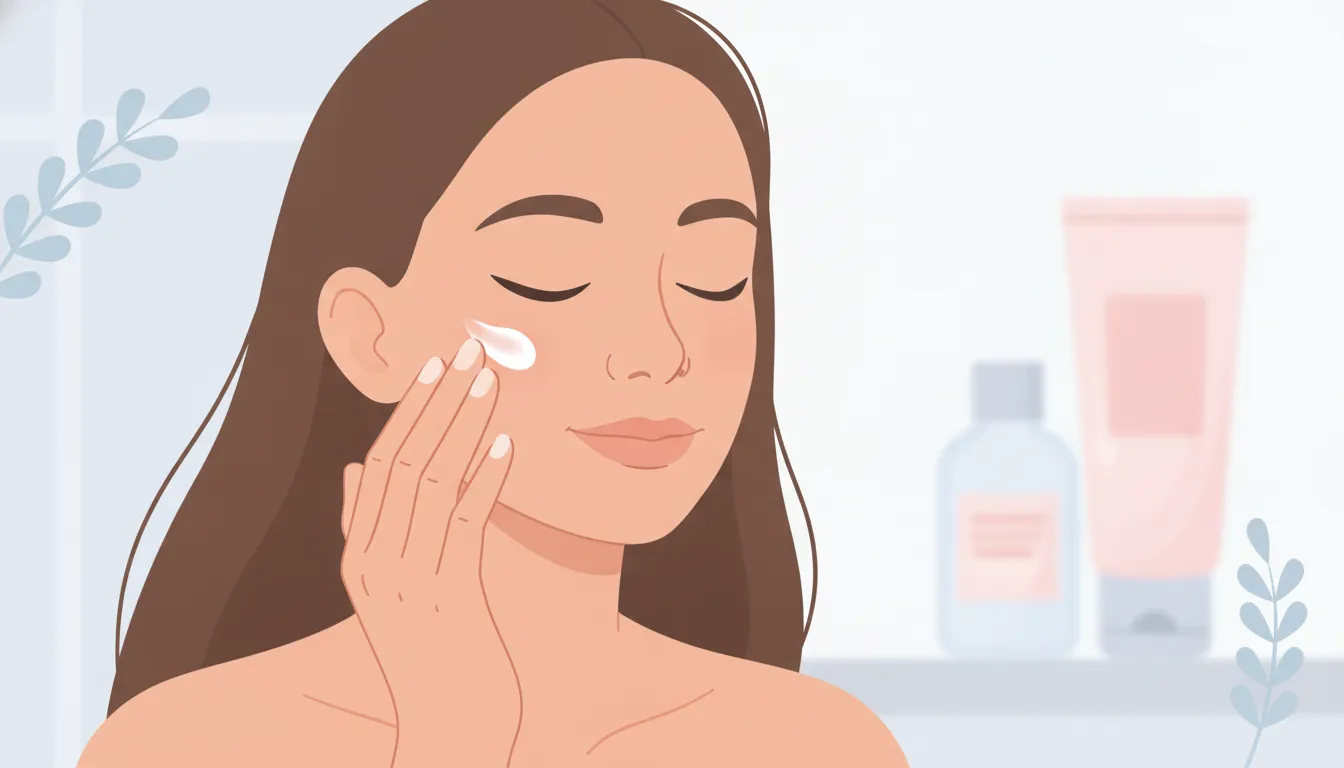
Moisturizer helps keep a routine comfortable and supports the skin barrier. Apply it while skin is still slightly damp after cleansing. A lightweight formula can work well for teens who dislike a heavy feeling, while dry or sensitive skin may prefer a richer texture. Day+Bright 24-hour Facial Moisturizer can be paired with Bright+Clean for a simple cleanser-and-moisturizer routine. Parents looking for more guidance can explore this skincare routine for young skin.
Step 3: Finish the morning routine with mineral sunscreen
Mineral sunscreen belongs in the morning routine, especially when teens will be outside. Choose a product they will use comfortably and apply it as the final skincare step before makeup, if makeup is part of the routine. Bright Girl's mineral sunscreen options can be paired with a gentle cleanser and moisturizer to create a practical three-step combination.
Consistency matters more than complexity. Tweens and teens can build the habit by keeping products together, following the same order each day, and making changes one product at a time. If skin is persistently uncomfortable or a concern is affecting confidence, a parent or caregiver can help arrange advice from a qualified healthcare professional.
Shop clean, age-appropriate skincare for teens
Frequently Asked Questions
What is the best clean skincare for teenagers?
The best option is a simple, age-appropriate routine with a gentle cleanser, moisturizer, and daily mineral sunscreen. Look for clear ingredient information, pH-balanced formulas, and products designed for young skin rather than adult-focused routines. A short routine is easier to use consistently and helps support the skin barrier.
What skincare brands are safe for teens?
Look for brands that explain why their formulas are appropriate for teens, disclose their ingredients, and provide a clear exclusion list. Dermatologist-created guidance can also help parents and teens evaluate products more thoughtfully. Bright Girl is formulated by double board-certified dermatologist Angela Casey, M.D., for girls ages 8-24, with a focus on non-toxic, pH-balanced skincare and healthy skin habits.
What should a 14-year-old use for skincare?
A 14-year-old can usually start with a gentle cleanser, a lightweight moisturizer, and mineral sunscreen. Add a targeted product only when there is a clear need, and introduce one change at a time. Avoid building a complicated routine from social media trends. If skin concerns are persistent, painful, or worsening, ask a parent or guardian about seeing a dermatologist.
What are good organic cosmetics for teenagers?
Do not rely on the word organic alone. Instead, check the full ingredient list, the brand's safety standards, and whether the product is formulated for young skin. Ingredient transparency matters because cosmetics and personal care ingredients can be absorbed into the body, according to the National Institute of Environmental Health Sciences: niehs.nih.gov. Choose products that support healthy skin without unnecessary complexity.
Ready to Explore Clean Beauty for Teens?
A thoughtful routine can help teens build healthy skincare habits with gentle, age-appropriate formulas and clear ingredient standards. Bright Girl's Beyond Clean Beauty philosophy brings together non-toxic, pH-balanced skincare created with young skin in mind, so teens and parents can make choices with more confidence.
Explore clean, dermatologist-created skincare for young skin
