


What Are Ceramides? A Barrier-Support Guide
Skincare advice can become complicated quickly, especially when tweens, teens, and young adults are trying to understand ingredient labels. A healthy routine does not need a long list of strong products. It starts with understanding the skin barrier and choosing habits that support it.
Explore Bright Girl skincare for a simple young-skin routine.
What are ceramides? Ceramides are naturally occurring lipids, or fats, found in the outer layer of skin. They help support the skin barrier, which helps keep water in and unwanted irritants out. Ceramides may also appear in moisturizers and other barrier-supportive skincare products, but an age-appropriate routine should remain simple and gentle.
For young skin, that often means cleansing without over-drying, moisturizing consistently, and using daytime sun protection as appropriate. Parents can use ingredient education as an opportunity to build thoughtful habits rather than chase every trend. Understanding how ceramides fit into the skin barrier is the first step toward making more informed routine choices.
What Are Ceramides and Why Does the Skin Barrier Need Them?
Ceramides are naturally occurring lipids, or fats, found in the outer layer of the skin. They are part of the stratum corneum, the outermost portion of the epidermis, where they sit between skin cells and help organize the barrier. Cleveland Clinic explains that ceramides make up about half of the epidermis. The source also notes that they appear in skincare products such as moisturizers, lotions, creams, and serums. Learn more about ceramides from Cleveland Clinic.
That definition matters because ceramides are not a trendy substance that exists only in a cosmetic bottle. Healthy skin naturally contains them. In a moisturizer, a ceramide ingredient is intended to complement the skin's own barrier-supportive lipids. Product formulas may use different ceramide types, so the ingredient list may include names such as ceramide AP, EOP, NG, NP, or NS.
How do ceramides support the skin barrier?
The skin barrier is the outer interface between the body and the environment. One of its everyday jobs is helping reduce water loss while limiting the passage of unwanted external substances. You can think of the barrier as a carefully arranged structure: skin cells provide much of the physical framework, while lipids between those cells help fill the spaces and maintain its organization.
Ceramides are one important part of that lipid structure. Along with cholesterol and fatty acids, they contribute to the orderly arrangement that helps the outer skin layer hold on to moisture. When the barrier is not functioning well, skin may feel tight, rough, dry, or more easily uncomfortable. Those sensations can have many possible causes, including weather, cleansing habits, friction, or individual skin needs. They are not a reason to assume that a ceramide product is the right answer for every person.
Why does this matter for young skin?
For tweens, teens, and young adults, barrier education can make skincare feel less complicated. A long list of strong ingredients is not required to understand or support healthy skin habits. Gentle cleansing, comfortable moisturizing, and daytime sun protection when appropriate provide a practical foundation. Parents can use the ingredient list to evaluate whether a product fits the routine, while young people can learn that hydration and barrier support are distinct from chasing an immediate cosmetic effect.
Ingredient education should also stay specific. Ceramides can be a useful feature in a moisturizer or another barrier-focused formula, but the word alone does not describe the entire product. The texture, supporting ingredients, fragrance, and the way the formula fits an individual's skin all matter. If dryness, irritation, or discomfort persists, a dermatologist can help identify the right next step.
How Can Ceramides Fit Into a Tween or Teen Skincare Routine?
A routine does not need to become complicated just because a parent or young person is learning about ingredients. Ceramides are naturally occurring lipids in the outer layer of skin, where they are part of the structure that helps the skin barrier hold onto water and interact with the environment. They are an ingredient category to understand, not a reason to add several new products at once. The goal is a consistent foundation that respects young skin and leaves room to notice how each product feels.
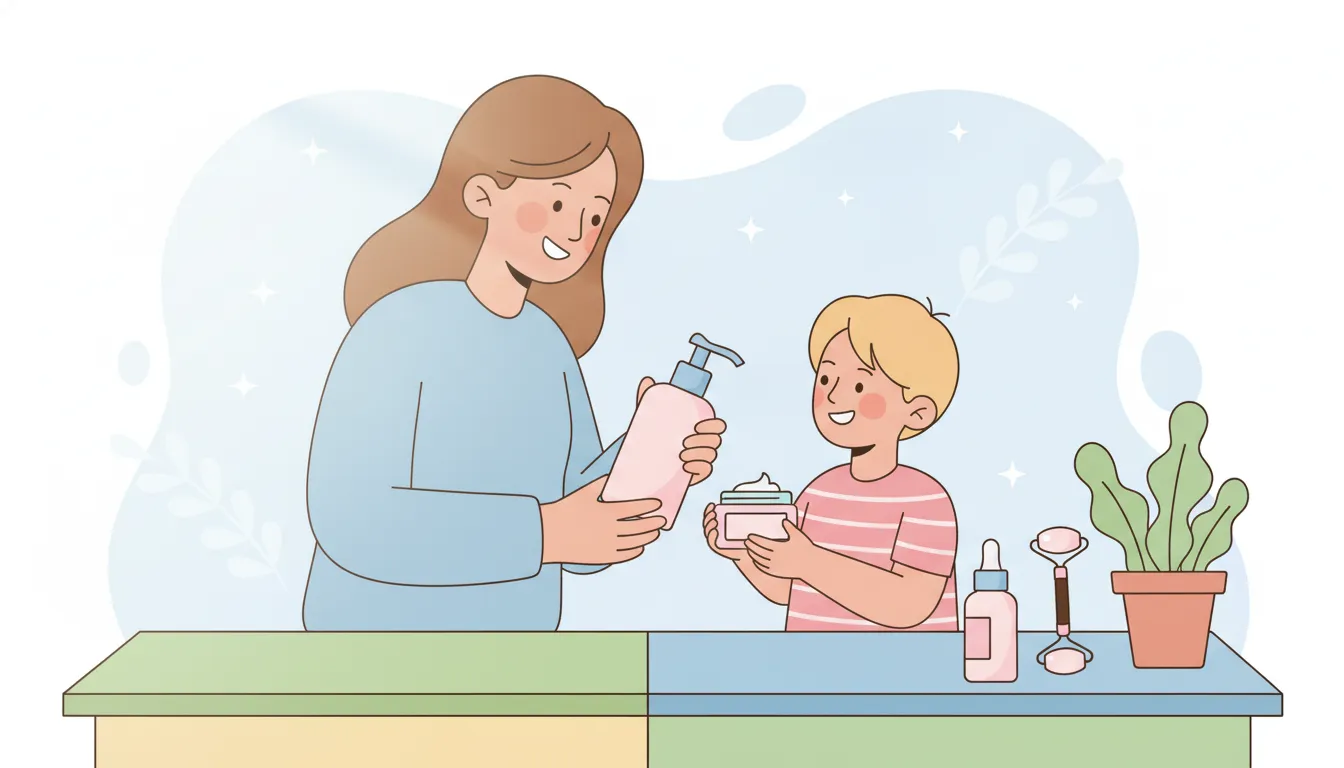
- Cleanse gently. Start with a mild facial cleanser, using lukewarm water and clean hands. The purpose is to remove everyday buildup without leaving the skin feeling tight or uncomfortable. Bright Girl's Bright+Clean gentle daily cleanser is described as a non-drying gel cleanser formulated for ages 8 and older. A simple cleanser can be a more useful starting point than layering multiple exfoliating or highly active products.
- Moisturize while skin is comfortable. Follow cleansing with a moisturizer suited to the person's skin and routine. Moisturizers are one of the product types in which ceramides are commonly discussed, but not every moisturizer contains them, and a ceramide label alone does not determine whether a product is the right fit. Look for a formula that feels comfortable and supports a practical routine. Bright Girl describes Day+Bright as a non-greasy, pH-balanced daily moisturizer intended to provide all-day hydration. Its inclusion here is an example of a routine step, not a claim that it contains ceramides.
- Use daytime sun protection as appropriate. In the morning, add a broad-spectrum sunscreen according to the product directions and the person's activities. Sun protection is a separate routine step from ceramide education. Ceramides do not replace sunscreen, and sunscreen does not need to be selected because of a ceramide claim. Parents can help younger children apply enough product and reapply when the label recommends it.
- Keep the routine steady before expanding it. Give a basic routine time to become familiar before adding another product. If a new formula causes persistent stinging, redness, or discomfort, stop using it and ask a parent or healthcare professional for guidance. Someone with ongoing or significant skin concerns should receive individualized advice from a dermatologist rather than trying to solve the issue by adding more ingredients.
This approach keeps ceramides in their proper place: useful ingredient education within a balanced routine, rather than a promise of a particular result. Cleveland Clinic explains that ceramides are found naturally in the upper layers of skin and are also used in skincare products such as moisturizers, lotions, toners, and creams. For families comparing routines, Bright Girl's guidance on age-appropriate skincare routines can help keep product choices focused and manageable.
Bright Girl's dermatologist-created approach is designed for young skin ages 8 to 24, with an emphasis on gentle cleansing, hydration, barrier support, and pH-balanced care. Those principles matter more than building an impressive shelf of products. A short routine that a tween or teen can follow consistently is often easier to understand, evaluate, and maintain.
Shop Bright Girl sets for a focused skincare routine.
Are Ceramides Better Than Other Hydrating Ingredients?
Not necessarily. The better question is what role an ingredient plays in a routine and what the skin needs at that moment. Ceramides, humectants, and emollients support hydration in different ways, so they are often complementary rather than competing choices.
| Ingredient group | Primary role | What to know |
|---|---|---|
| Ceramides | Support the skin barrier | These are lipid molecules naturally found in the outer layer of skin. In a moisturizer, they can complement the skin's own barrier lipids. |
| Humectants | Attract water | Ingredients such as hyaluronic acid and glycerin help draw water toward the skin's surface. They are often used in hydrating serums and moisturizers. |
| Emollients | Smooth and soften | These ingredients fill in gaps between skin cells, helping the surface feel more comfortable and supple. |
So, what are ceramides doing that hyaluronic acid does not? Ceramides are part of the skin's lipid structure and are associated with the barrier. The barrier helps keep water in and unwanted external substances out. Humectants focus more on attracting water, while emollients improve the feel and flexibility of the surface. A product may contain more than one category because hydration is not a single-step process.
For young skin, this distinction can make ingredient labels less confusing. A lightweight formula with a humectant may feel comfortable when skin feels tight after cleansing. A moisturizer with emollients may help soften a rough-feeling surface. A ceramide-containing moisturizer may appeal when the goal is to support a simple barrier-conscious routine. None of those descriptions makes one ingredient universally better, and a longer ingredient list is not automatically a better routine.
Parents and young people can start with the basics: a gentle cleanser, a moisturizer suited to the skin's comfort and needs, and daytime sun protection as appropriate. If the skin is persistently uncomfortable, unusually reactive, or difficult to understand, a dermatologist can help assess the broader picture. For practical guidance on choosing age-appropriate products, see this teen cleanser and moisturizer guide. For the science behind ceramides and the skin barrier, review the Cleveland Clinic overview of ceramides.
What Should Parents Look For in a Ceramide Skincare Product?
A thoughtful ingredient label can help parents choose a moisturizer that fits a young person's skin and routine without turning skincare into a long checklist. Start by looking for the word "ceramide" or familiar label names such as ceramide AP, EOP, NG, NP, or NS. These are types of naturally occurring lipids associated with the outer layer of skin. For a plain-language overview of label names, see this ceramide ingredient guide.
Choose a simple formula that supports the routine
A ceramide product does not need to be surrounded by a complicated lineup of active ingredients. For tweens and many teens, a practical routine usually begins with a gentle cleanser and a moisturizer. A daytime sunscreen may also be appropriate. Look for a texture the young person will use consistently, whether that is a lotion, cream, or lighter moisturizer. Ingredients such as glycerin, fatty acids, and cholesterol may appear alongside ceramides in barrier-supportive formulas. But the entire formula and the person's comfort matter more than one ingredient on the front of the package.
Parents should also consider fragrance. Fragrance is not automatically unsuitable for every person, but scented formulas can be a poor fit for someone who notices stinging, itching, redness, or discomfort after using skincare. A fragrance-free option may make it easier to identify what the skin is responding to. This is especially useful when introducing a new product. Read the full ingredient list rather than relying only on phrases such as "clean," "natural," or "gentle."
Match the product to comfort and routine needs
Skin type and daily experience provide useful context. Someone with dry-feeling skin may prefer a richer moisturizer, while someone who dislikes a heavy finish may be more comfortable with a lightweight lotion. If the current routine already feels comfortable, there is no need to add a ceramide product simply because it is popular. The goal is a manageable routine that supports cleansing, moisture, and healthy habits.
When selecting age-appropriate products, parents can use this teen cleanser and moisturizer guide as a starting point. Bright Girl's approach centers on young skin ages 8-24, simple routines, and pH-balanced formulas, without claiming that every young person needs the same ingredients or products.
Introduce one product at a time
Before making a new product part of the daily routine, apply a small amount to a limited area according to the product directions and observe how the skin responds. Introducing one new item at a time makes it easier to notice a pattern if discomfort develops. Stop using a product that causes persistent or significant discomfort, and ask a dermatologist for individualized guidance when needed. Ingredient literacy is useful, but a comfortable, consistent routine is the better measure of fit.
Shop all Bright Girl skincare and build a barrier-conscious routine.
Frequently Asked Questions
What are ceramides?
Ceramides are lipid molecules naturally found in the outer layer of skin. They are part of the skin barrier, which helps limit water loss and provides a protective interface with the environment. In skincare, they are most often discussed as ingredients in moisturizers and other barrier-supportive formulas. Cleveland Clinic explains more about ceramides and the skin barrier.
What do ceramides do for the skin barrier?
They help support the structure of the outer barrier and the skin's ability to hold on to moisture. That makes ceramides relevant when a routine is focused on comfort, hydration, and barrier support. They are not a reason to build a complicated routine. Gentle cleansing followed by a suitable moisturizer may be a more age-appropriate starting point for a tween or teen.
Are ceramides appropriate for tweens and teens?
They can fit into a simple routine when included in a well-formulated moisturizer that suits the person's skin and preferences. Parents and young people should focus on the full formula, how the skin feels, and whether the routine is easy to follow. A gentle cleanser, moisturizer, and daytime sunscreen as appropriate usually provide a more practical foundation than layering many active ingredients.
How can I tell whether a product contains ceramides?
Check the ingredient list for the word ceramide and its specific forms, which may include ceramide AP, EOP, NG, NP, or NS. If the label or product description is unclear, ask the brand for clarification. Anyone with persistent irritation, marked discomfort, or questions about a changing skin concern should ask a qualified dermatologist for individualized guidance.
Ready to Build a Simple Young-Skin Routine?
Understanding ceramides can make skincare labels feel less confusing, especially when the goal is a gentle, age-appropriate routine. Bright Girl offers education and thoughtfully selected skincare for young skin, so parents and young people can focus on consistent basics without adding unnecessary complexity.
