


Skincare Sets for Girls: How Parents Can Choose a Simple Starting Point
Choosing skincare sets for girls can feel harder than it should: one bundle may contain more steps than a young person needs, while another leaves parents wondering where each product fits. A thoughtful set makes a gentle, age-appropriate routine easier to understand and repeat. Start with the person’s age, everyday habits, skin preferences, and the directions on each product—not the number of items in the box.
Ask Bright Girl a product question
Skincare Sets for Girls: What Should Parents Look For?
Begin with the job each product is meant to do. For many young people, a straightforward foundation includes a gentle cleanser, a moisturizer, and daytime sun protection. A toner or face mask can be an optional extra, not a required step for every age or skin type. A good set should make those basic choices clearer rather than making a routine feel like a long checklist.
Bright Girl is a dermatologist-created skincare brand for young skin ages 8–24, with products formulated by double board-certified dermatologist Angela Casey, M.D. When reviewing a bundle, parents can ask a practical question: does each item have a clear place in a routine the young person can follow? The goal is supportive, age-appropriate care—not pressure to copy a complicated routine seen online.
A set can simplify shopping by bringing related products together, but the word “set” does not mean every item is right for every person. Read the product descriptions, ingredients, directions, and cautions. Consider whether a bundle includes items the family already has and whether its steps are easy to remember. Bright Girl’s skincare sets offer options to compare, and the Core 4 collection provides another way to review a coordinated lineup.
How Can Parents Match a Set to Age and Everyday Needs?
Age can guide the conversation, but it does not tell the whole story. A tween who is just learning skincare may appreciate a brief routine and a parent nearby to read labels together. A teen may already have steady habits and want a set that fits them. A young adult may prefer to choose a few products individually. In each case, pay attention to real preferences instead of assuming that everyone the same age wants the same routine.
Notice ordinary patterns without trying to diagnose a skin condition. Does skin often feel dry or tight after washing? Does it tend to look shiny later in the day? Is a basic moisturizer comfortable to use? These observations can help narrow product choices. They are not a substitute for personalized medical advice. For ongoing discomfort or concerns that affect daily life, ask a qualified healthcare professional rather than expecting a product bundle to answer a health question.
- For a first routine: Look for a cleanser, moisturizer, and a separate daytime sun-protection step, with directions the young person can follow.
- For skin that feels dry: Give moisturizer a central role and read descriptions for information about hydration and barrier support. Review Day+Bright moisturizer as one product option.
- For skin that gets shiny: Keep the basic steps simple. Do not assume that adding several products is necessary; evaluate any toner or mask by its stated purpose and directions.
- For sensitive-feeling skin: Check the complete ingredient list, consider known sensitivities, and introduce one new product at a time.
- For an established routine: Compare the set with products already used at home. A smaller selection that fills a real gap may be more useful than a bundle that duplicates familiar basics.
For a closer look at the cleanser step, review Bright+Clean daily facial gel cleanser. Families can also read about Beyond Clean Beauty and the ingredient no-no list when comparing product information. These resources help families understand the brand’s approach; product labels and personal experience remain important when choosing what to use.
Which Products Belong in a Simple Starter Set?
Think about what each step contributes, rather than how many steps a bundle advertises. A cleanser is used to remove dirt, oil, and daily buildup. Bright Girl describes Bright+Clean as gently cleansing without stripping and leaving skin feeling clean, soft, and comfortable. A moisturizer provides a hydration step and supports a healthy-looking skin barrier. Sunscreen is the daytime sun-protection step. These roles are easier to remember than a long list of trending ingredients, and they help parents assess whether every included product has a clear purpose.
A toner or face mask may be considered as an extra, depending on the person and the product directions. Bright Girl describes its toner as refreshing and balancing and as helping reduce the look of shine. The face mask is described as helping absorb excess oil and refine the look of pores. Such descriptions explain a product’s intended cosmetic role; they do not promise a particular result for an individual. The Bright Tone toner and Calm+Bright face mask pages can help parents inspect specific product details before deciding whether an extra step belongs in a set.
| Routine step | What to compare | Useful parent check |
|---|---|---|
| Cleanser | A daily facial cleanser with clear directions | Is the use instruction easy to understand, and does the young person find the step comfortable? |
| Moisturizer | A straightforward hydration step | Does the texture and stated use fit a realistic morning or evening routine? |
| Sunscreen | A clearly identified daytime sun-protection product | Are the label directions, amount, and reapplication guidance available? |
| Optional toner or mask | An extra with a specific, understandable purpose | Can the routine work without it, and are its directions clear? |
| Existing products | Whether the bundle duplicates something already in use | Would the new item fill a genuine gap, or simply add another bottle? |
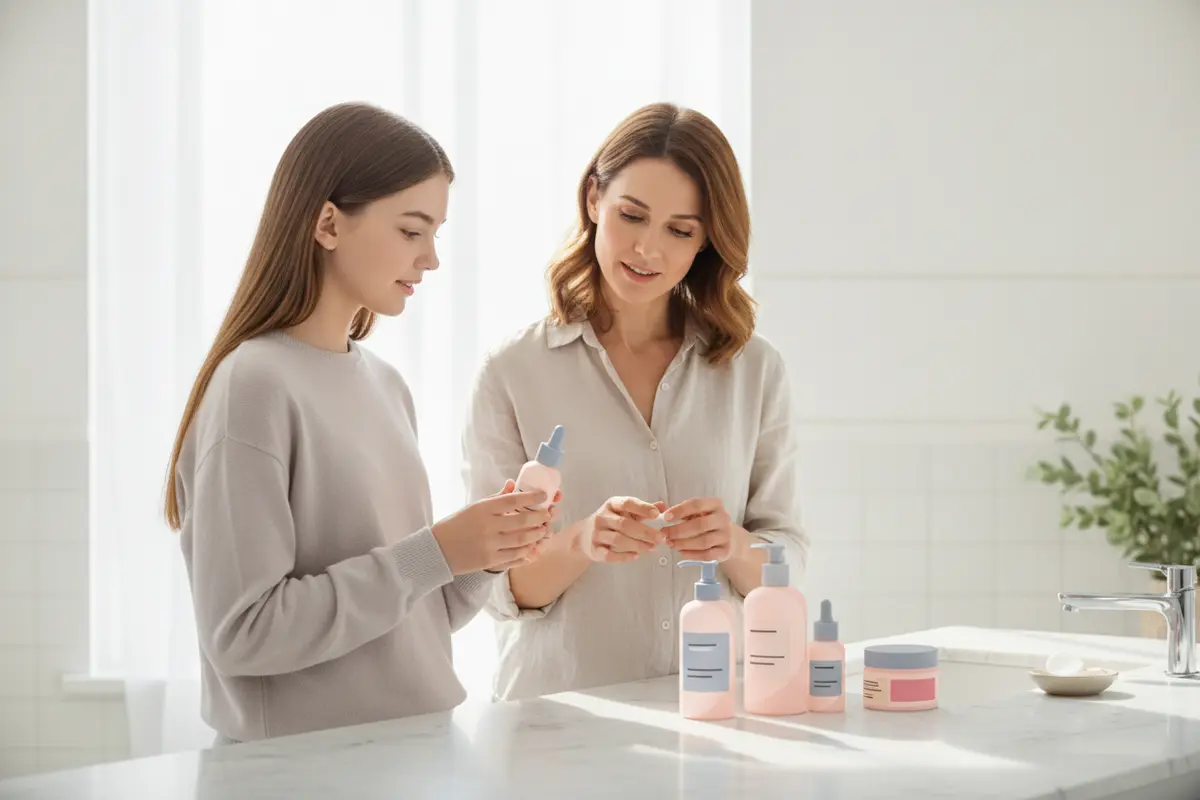
When comparing sunscreens, read the label and directions instead of relying on a set name alone. Bright Girl offers mineral sun-protection options, including Bright+Block sunscreen. The right option is one the family understands how to use as directed and can fit into a regular daytime routine. For families who want more context, the brand’s guide to sunscreen expiration is another resource to consult.
How Can You Compare Skincare Sets Before Buying?
A quick comparison can make a shopping decision more deliberate. First, list what the person already uses and mark what is working comfortably. Then write the name and purpose of every item in a possible set. If a product’s role is unclear, read its description or ask the brand before adding it to a routine. This side-by-side check helps separate useful basics from extras that may not fit the family’s current needs.
- Read every product description. Identify each item, its intended place in a routine, and where to find its use directions. Do not infer how to use a product from its name alone.
- Review ingredients and cautions. Compare the full ingredient list with known sensitivities, follow package guidance, and consult a healthcare professional about specific personal concerns.
- Map the steps by time of day. Write a simple morning and evening sequence. Include a step only when its timing and purpose are easy to explain.
- Check what is already at home. A family with a suitable cleanser and moisturizer may not need another of each. Decide whether the bundle fills a real gap before buying.
- Think about the user’s preferences. A routine is easier to maintain when the young person understands the steps and is comfortable with the product textures and directions.
- Plan a gradual introduction. Decide which product to start with and how to observe the skin’s response before adding another new item.
For example, imagine a tween who has never used a routine and a teen who already has a cleanser they like. The first family might prioritize a short set with clearly explained basics. The second could compare sets that complement the current cleanser instead of replacing it without a reason. A young adult who wants to pare back a crowded shelf might choose only the pieces that serve a useful role. The same bundle does not have to be the best fit for all three.
Parents who want help organizing preferences can explore the Bright Girl skin quiz as a shopping guide. It can help sort choices, but it is not a medical evaluation. For general ingredient information, families can read about ceramides and learn how moisturizers fit into a routine. The Bright Girl story page offers more context about the brand and its dermatologist-created approach.
Compare Bright Girl skincare sets
How Should a Family Introduce a New Set?
Make the first use calm and practical. Read each label together, choose a consistent place to store the products, and agree on when each step belongs. The young person should know where to find the directions and what amount the package recommends. Parent involvement can be supportive without turning skincare into an inspection. The aim is to build a comfortable habit and give the young person room to take part in the choice.
Introduce one new product at a time instead of starting every item in a multi-product set on the same day. If the family changes several things simultaneously, it can be harder to tell which product may be connected to an unexpected response. Follow the package instructions. Do not use a product more often or in a different way because a social post suggests it. If persistent irritation occurs, stop using the product and ask a qualified healthcare professional for guidance.
A simple introduction plan might look like this: begin with the cleanser according to its directions, keep other familiar steps steady, then add another chosen product after the first feels understood and comfortable. Write down the start date if that helps the family remember what changed. This is not a diagnostic method; it is a practical way to keep track of new products. For guidance tailored to younger users, review age-appropriate skincare for tweens or the brand’s skincare overview for kids.
Keep the routine manageable on busy mornings and evenings. Place products where they are easy to find, but store them as directed and keep containers closed as instructed. If a planned step is regularly skipped because the sequence feels too long, revisit the routine together. It may be more practical to return to the basic steps than to insist that every product in the set be used daily.
What Should Parents Know About Labels and Product Safety?
Buy from a source the family trusts and take time to read labels. Be cautious when ingredients are unclear, directions are vague, or claims sound absolute. A specific example comes from the California Department of Public Health, which warns against selling or using face creams listed as containing mercury. Families can consult its list of face creams containing mercury for that safety information.
This is one targeted warning, not a replacement for reviewing each product in a set. Check packaging for directions and cautions, and compare the complete ingredient list when a young person has a known sensitivity. If a product causes a concerning reaction, discontinue use and contact a healthcare professional for personal advice. Persistent skin concerns, or questions about whether a particular product is suitable, also belong in a conversation with a qualified professional.
Families may also explore Bright Girl’s Beyond Clean Beauty information and the brand’s article on hydration and skin. Use educational resources to form questions, then rely on product labels and qualified professionals for guidance specific to an individual. A set should make informed choices easier, not replace thoughtful attention to how a product is used.
Explore skincare sets from Bright Girl
Frequently Asked Questions
At what age should a girl start using a skincare set?
There is no single age that makes a set necessary. Consider whether the young person needs basic cleansing, moisturizing, and daytime sun protection, then choose age-appropriate products with clear directions. A parent can help decide what is practical.
Does a skincare set need to include a toner and a mask?
No. These may be optional steps. A simple cleanser, moisturizer, and sunscreen foundation may be enough for many routines. Choose an extra only when its purpose and directions make sense for the person who will use it.
Should a family begin using every product in a set at once?
It is easier to introduce one new product at a time and follow its label directions. A gradual approach can help a family notice how the skin responds and identify which new product may be associated with an unexpected reaction.
What if a product causes discomfort?
Stop using a product that causes persistent irritation and ask a qualified healthcare professional for advice, especially if the reaction is significant or does not settle. Do not rely on a product bundle to answer a medical concern.
How Can Parents Keep the Routine Simple?
The most useful set is one that suits the young person’s needs, has clear directions, and supports a routine the family can follow consistently. Compare each product’s role, introduce new items thoughtfully, and let simplicity guide the final choice.
