

Choosing dermatologist recommended skin care products can feel complicated when labels promise a lot and young skin may be changing. A useful starting point is simpler: look for age-appropriate daily care, understand what each product is meant to do, and introduce changes thoughtfully. This guide gives parents a practical way to compare options, including when a young person asks about a specific ingredient such as madecassoside.
Ask Bright Girl a product question
What Are Dermatologist Recommended Skin Care Products, and How Should Parents Choose?
The phrase can describe a dermatologist’s professional opinion, a product line created by a dermatologist, or a recommendation for a particular person’s needs. It does not automatically mean that every dermatologist endorses a product, that a product suits every age or skin type, or that it is the only reasonable choice. Read the full product information and consider the person who will use it.
For young skin, age-appropriate care often means keeping daily habits manageable rather than copying a complicated routine seen online. Bright Girl is a skincare brand created by double board-certified dermatologist Angela Casey, M.D., for young skin ages 8–24. Parents can read Bright Girl’s story and its approach to Beyond Clean Beauty to learn more about the brand’s point of view.
A brand’s founder or professional background is one consideration, not a substitute for checking an individual product’s ingredients, directions, and cautions. If a young person has a persistent or uncomfortable skin concern, a healthcare professional can help the family decide what to do next. The American Academy of Dermatology provides general public information about skin health.
How Can Parents Compare Products for Young Skin?
Begin with the basic role of the product. A cleanser removes everyday dirt and oil; a moisturizer helps address dryness and supports comfortable-feeling skin; sunscreen provides sun protection when used as directed. A toner, mask, or other optional step should have a clear purpose for the person using it. More steps do not automatically make a routine more suitable.
Before choosing, consider these practical questions:
- What is the need? Is the family looking for basic cleansing, hydration, sun protection, or guidance about a specific concern?
- How does the skin feel? Note whether it tends to feel dry, oily, combination, or sensitive. Skin can change, so avoid assuming one observation is a permanent label.
- Can the young person follow the routine? A few consistent steps are often easier to maintain than a long sequence of products.
- What does the label say? Check directions, ingredients, age guidance, and warnings. Do not rely on a front-label phrase alone.
- Is a professional’s advice needed? Ask a healthcare professional about ongoing symptoms, known sensitivities, or uncertainty about a product.
Parents who want a guided starting point can explore Bright Girl’s skin quiz, or compare the items in the Core 4 routine. A family can also browse all available skincare and review the ingredient information page when checking what is included or excluded.
What Should You Look for on a Skin Care Label?
Read the directions and ingredient list before opening a product. Look for a clear description of the product’s role, practical instructions, and any cautions relevant to the intended user. If a product has a complex set of directions or several optional steps, ask whether those steps are necessary for the family’s routine.
Be careful with broad words such as “clean,” “gentle,” or “dermatologist recommended.” Those phrases do not tell you every ingredient, how the product should be used, or whether it is a fit for a particular young person. Consider the whole formula and the context. Bright Girl describes its Bright+Clean cleanser as gently removing dirt, oil, and daily buildup without stripping, and its Day+Bright moisturizer as a 24-hour facial moisturizer. Check each product page for current directions and ingredient details rather than assuming all products share the same formulation.
Families sometimes encounter ingredient names such as madecassoside while comparing labels. Madecassoside is a compound associated with Centella asiatica, also called cica or tiger grass in skincare discussions. Its presence on an ingredient list does not, by itself, establish that a complete formula is suitable for a particular young person or that it will produce a specific outcome. The full formula, directions, and individual skin needs matter. Do not assume Bright Girl products contain madecassoside; check the current ingredient list for the specific item.
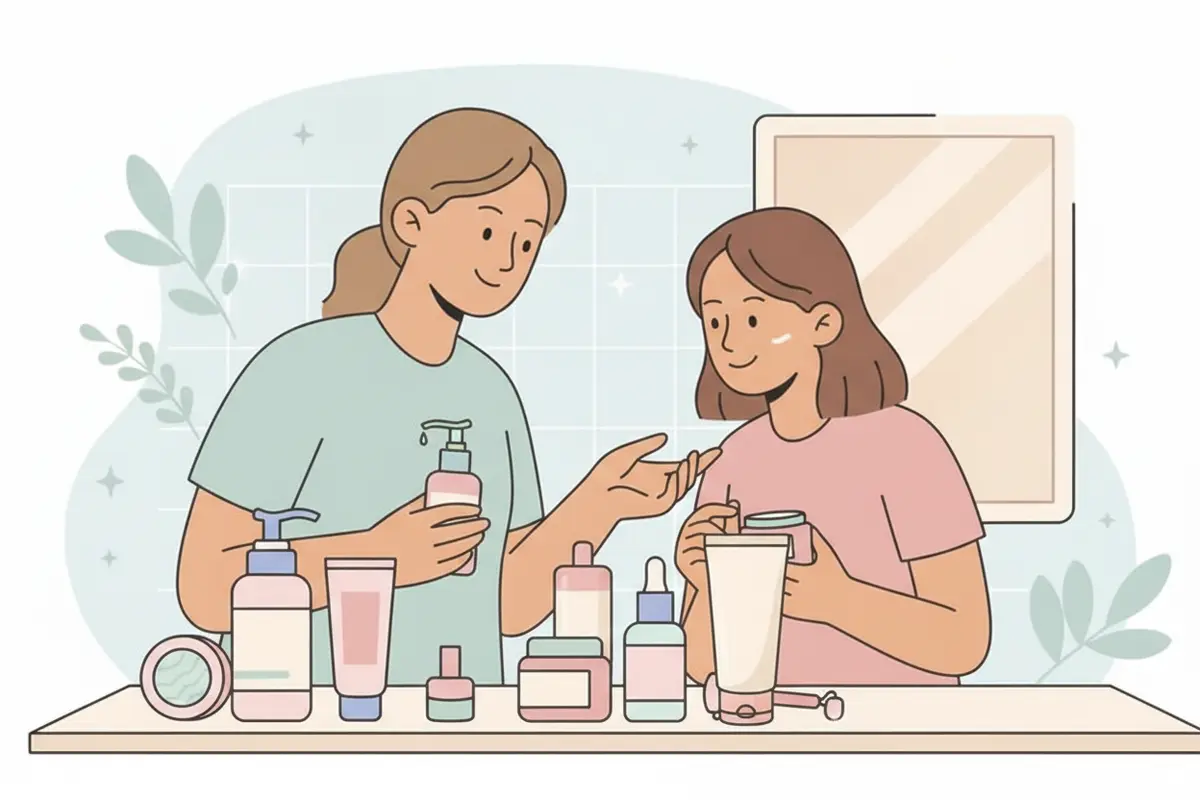
Parents can also distinguish a product’s category from its intended use. A moisturizer, for example, may be made for the face or body, and directions can differ between formulas. For sunscreen, check the current package for the protection details and application instructions; a product works as intended only when used according to its label. If the young person swims, sweats, or spends time outdoors, revisit those directions and plan for the setting rather than relying on memory. For any product, avoid borrowing someone else’s application schedule or assuming that two items with similar names have identical instructions. A quick label check before the first use is a practical habit that helps the family make an informed choice.
How Can a Family Keep a Routine Simple and Consistent?
A straightforward routine can help everyone understand what is being used and notice whether a product feels comfortable. Start with the basics that fit the family’s needs. Introduce one new product at a time, follow its label, and avoid making several changes at once. This makes it easier to identify which item may be connected to a new reaction or uncomfortable feeling.
- Choose the essentials. Consider a cleanser, moisturizer, and daytime sunscreen based on the young person’s needs and the product directions.
- Agree on a simple schedule. Set a realistic time for the routine, such as after waking and before bed, while following each product’s instructions.
- Make one change at a time. Avoid introducing several unfamiliar products together. Pay attention to comfort and stop using an item if it causes a concerning reaction.
- Review together. A parent can help check directions, answer questions, and keep the routine manageable without pressuring a young person to chase a particular look.
For example, a family beginning with basics could compare Bright+Clean with the Day+Bright moisturizer, then review available sun protection options before deciding what fits. If a young person wants an optional wash-off step, read the details for Calm+Bright and follow its current product directions. The family can also compare curated skincare sets rather than assembling a lengthy routine without a clear purpose.
How Do Common Product Choices Compare?
This table is a starting framework, not a prescription. The right choice depends on the person, the product label, and any professional advice the family has received.
| Product type | Typical role | What parents can check | Simple next step |
|---|---|---|---|
| Cleanser | Removes everyday dirt, oil, and buildup | Directions, feel after rinsing, and ingredient list | Choose one suitable for regular use and follow its label |
| Moisturizer | Helps hydrate and support comfortable-feeling skin | Texture, directions, and whether it fits the young person’s needs | Use as directed; reassess if skin feels uncomfortable |
| Sunscreen | Provides sun protection when applied and reapplied as directed | SPF, broad-spectrum details, directions, and age guidance | Review the package and choose an option the user can apply as directed |
| Optional toner or mask | Adds a specific optional step | Why the step is needed, frequency, and full directions | Keep it optional; do not add it just to make the routine longer |
When Should a Parent Ask a Health Professional?
Seek professional advice when a skin concern persists, is painful or uncomfortable, changes suddenly, or affects a young person’s wellbeing. It is also reasonable to ask before using a new product if the young person has known sensitivities or is already following professional guidance. Bring the product packaging or ingredient list so the professional can review the actual formula.
Online recommendations and family experiences can be useful conversation starters, but they cannot account for every person’s history and needs. A dermatologist or other appropriate healthcare professional can help families make decisions when routine product selection is not enough. Bright Girl’s guide to skin care for kids and article on ceramides in skincare offer additional general reading, while the humectant guide explains another common label term.
How Can Parents Make a Confident Choice?
Use a short checklist: identify the need, check the full label, compare the directions with the young person’s routine, and seek professional input when there is an ongoing concern. A dermatologist-created brand may be one useful point of reference, but no single label phrase or ingredient name answers every question. Thoughtful, age-appropriate care is about matching a clear purpose with a routine the family can understand and maintain.
For more about Bright Girl’s approach to young-skin care, visit Bright About or browse the Bright Ideas library. Parents who would like help finding product information can also contact Bright Girl.
Explore Bright Girl skincare sets
Frequently Asked Questions
Does “dermatologist recommended” mean a product is right for every young person?
No. The phrase does not guarantee that every product fits every age, skin type, or individual need. Review the full label and directions, and ask a healthcare professional when you are unsure.
Is madecassoside the same as Centella asiatica?
No. Madecassoside is a compound associated with Centella asiatica. Check the ingredient list of the specific product, since the presence of one named ingredient does not describe the full formula or determine whether it is a good fit.
Should a teen use many skincare steps?
Not necessarily. A family can begin with basic products that match its needs and add an optional step only when there is a clear reason. Follow product directions and keep the routine manageable.
What if a product causes discomfort?
Stop using the product and ask a parent or caregiver for help. For a persistent or concerning reaction, contact a healthcare professional and share the product label or packaging.
Choosing skincare is easier when parents and young people focus on clear product roles, understandable labels, and realistic routines. When questions go beyond everyday product selection, a qualified healthcare professional can provide guidance for the individual situation.


