


What Is Ashwagandha? A Skincare Ingredient Guide for Teens
What Is Ashwagandha in Skincare?
Ashwagandha is a botanical ingredient from Withania somnifera, a plant traditionally used in Ayurvedic practices. In topical skincare, its extract is included as a supporting ingredient in formulas designed to condition and comfort the skin. It is not the same as taking an ashwagandha supplement, and an ingredient label cannot predict one universal result.
Shop Day+Bright Facial Moisturizer
For teens and parents, the short answer is this: ashwagandha is a plant extract you may see in a moisturizer or serum. The formula around it, the amount used, the rest of the ingredient list, and how the product feels on your skin matter just as much as the botanical name.
Bright Girl includes ashwagandha in the ingredient story for Day+Bright Facial Moisturizer, a lightweight, pH-balanced daily moisturizer created for young skin. This guide explains the ingredient without turning one botanical into a promise. It also separates topical skincare education from oral supplement questions, which require a different kind of safety conversation.
Where Does Ashwagandha Come From?
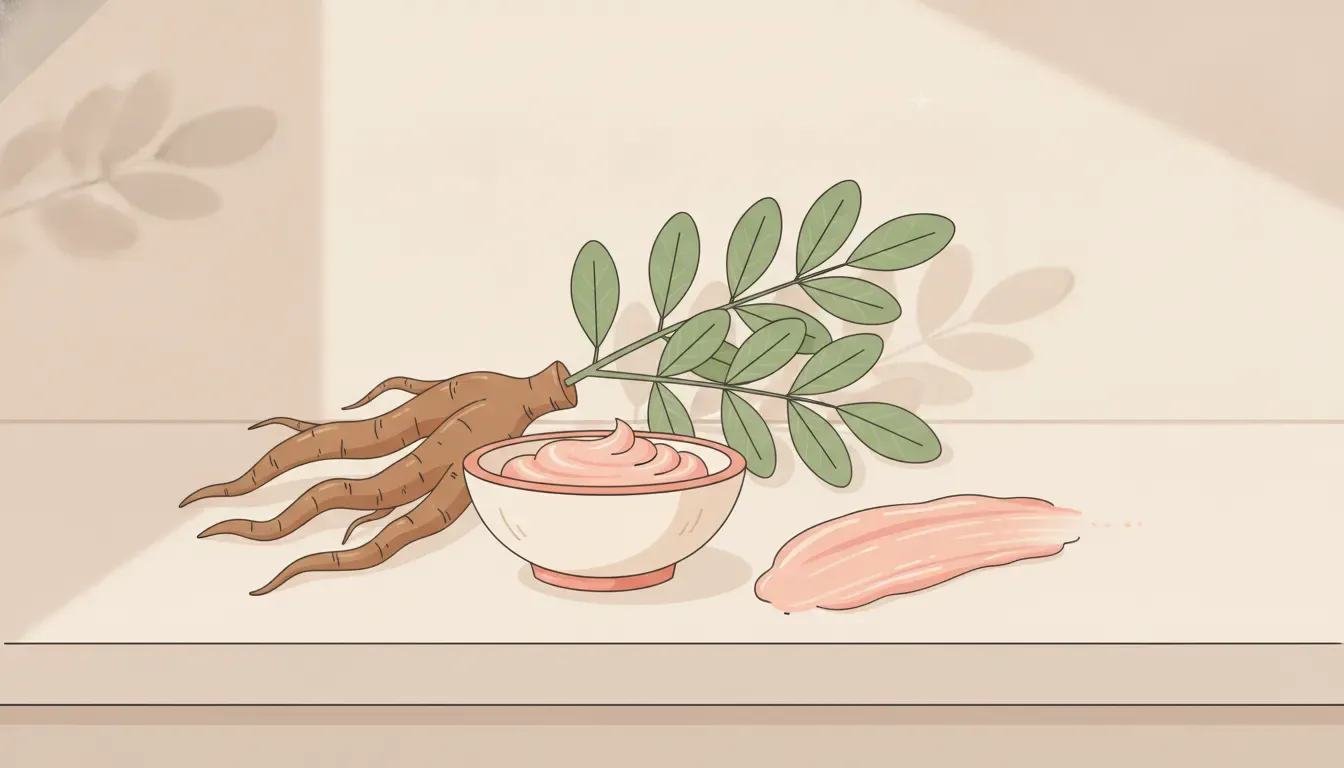
Ashwagandha comes from the evergreen shrub Withania somnifera, also known as Indian ginseng. Its root and leaf extracts contain several naturally occurring compounds, including withanolides. The exact extract can vary by plant part, growing conditions, extraction method, and how the finished cosmetic formula is made.
The name can sound more complicated than it is. When you scan a cosmetic ingredient list, you may see the botanical name rather than the everyday name. Withania somnifera signals the plant source; it does not tell you the concentration, standardization, or complete performance of the finished product.
That distinction is useful label literacy for young shoppers. A long ingredient name is not automatically a warning sign, and a familiar plant name is not automatically proof that a product is right for every person. Context is the skill: look at the whole formula, the product's intended use, and whether it is designed for your age group and skin needs.
How Does Ashwagandha Work Differently in a Topical Formula?
Topical ashwagandha stays part of a cosmetic formula applied to the surface of the skin, while oral ashwagandha is swallowed and interacts with the body more broadly. Those routes are not interchangeable. A face moisturizer should not be described as delivering the same effects, dosage, or safety profile as a supplement.
| Question | Topical skincare | Oral supplement |
|---|---|---|
| How is it used? | Applied to the skin as one part of a cosmetic formula. | Swallowed as a dietary supplement or other oral preparation. |
| What should you evaluate? | Full ingredient list, intended use, skin feel, and individual tolerance. | Product quality, dose, medical history, medications, and guidance from a qualified clinician. |
| What can you conclude? | Only what the specific topical formula and available evidence support. | Oral research does not establish what a moisturizer will do. |
The National Center for Complementary and Integrative Health overview of ashwagandha explains that oral products can vary and may have safety considerations, including medication interactions. That information is important precisely because it shows why supplement content should not be copied into a skincare product description. This article does not recommend oral ashwagandha, a dose, or a supplement routine.
What Does the Research Say About Ashwagandha for Skin?
Topical ashwagandha research is developing, not a finished answer. A small randomized study examined one lotion containing 8% standardized ashwagandha root extract in adults ages 18 to 60 over 60 days. That study cannot establish that every ashwagandha product works the same way, or that adult findings apply to younger skin.
The study included 56 adults and compared the ashwagandha lotion with a similar placebo lotion. The researchers reported differences in several measured skin parameters, including hydration and transepidermal water loss. However, the formulation, extract standardization, age range, study duration, and sample size were specific to that trial. The authors also called for more research using different skin types and standard comparators.
For a teen skincare guide, the responsible takeaway is narrower: ashwagandha has a plausible place as a botanical supporting ingredient, but topical evidence is limited and product-specific. A study on adults using one standardized lotion is not evidence for acne, eczema, sensitive skin, or universal outcomes in teens. Read the full open-access study if you want to review its methods and limitations.
Bright Girl's approach is intentionally practical. Rather than making the ingredient the hero of every routine, ingredient education should help teens and parents understand what they are applying, choose a simple formula, and pay attention to how skin responds.
Why Does Ingredient Context Matter for Teen Skin?
Young skin does not need a complicated ingredient chase. The most useful context is whether a product supports a gentle, consistent routine without adding unnecessary steps. For teens, ingredient literacy means understanding the role of the whole formula instead of assuming that one trending botanical will solve a specific concern.
- Start with the product's purpose. A daily moisturizer has a different job from a concentrated serum or a supplement.
- Look at the complete formula. Ashwagandha appears alongside other ingredients, such as humectants, emollients, and botanical extracts.
- Match the texture to the routine. A lightweight moisturizer may be easier to use consistently than a heavy product that feels uncomfortable.
- Consider age and skin context. A formula made for young skin is a better starting point than borrowing an adult product because it is popular online.
- Keep expectations realistic. An ingredient can support a formula without promising a visible change or replacing professional care.
Bright Girl's dermatologist-recommended skincare guide for teens places ingredient choices inside a simpler three-step routine. That is the right frame for ashwagandha too: learn what it is, then return to the basics of cleansing, moisturizing, and daytime mineral sun protection.
How Can Teens Read Ashwagandha on an Ingredient List?
To read ashwagandha on an ingredient list, look for its botanical name, Withania somnifera, and remember that the list shows presence, not a specific strength or outcome. Then review the rest of the formula, the product instructions, and the brand's age and skin-type guidance before deciding whether it fits.
- Find the name. Search for Withania somnifera or a closely related ashwagandha extract name.
- Check the product type. A moisturizer, cleanser, mask, and serum may place the botanical in very different routines.
- Read the surrounding ingredients. Look for the formula's overall focus, such as hydration, conditioning, or comfort.
- Use the product directions. More product or more frequent use is not automatically better.
- Patch test thoughtfully. If your skin is reactive or you have a history of ingredient allergies, ask a parent or guardian and a qualified healthcare professional about the safest way to try a new product.
- Stop if skin feels persistently uncomfortable. Ongoing burning, swelling, or a rash deserves help from a parent, guardian, pharmacist, or clinician rather than more experimentation.
Botanical does not mean risk-free, and synthetic does not automatically mean harsh. The American Academy of Dermatology's product-testing guidance notes that skincare ingredients can cause contact reactions for some people. A careful, supportive approach is more useful than labeling every plant ingredient as either perfect or dangerous.
Where Does Ashwagandha Appear in Bright Girl Day+Bright?
Bright Girl's Day+Bright Facial Moisturizer includes ashwagandha alongside chamomile, turmeric, and squalane in a lightweight, pH-balanced formula for young skin ages 8 to 24. The product page describes it as a daily moisturizer that can be applied after cleansing and layered under mineral sunscreen or makeup.
That product context matters. Day+Bright is not an ashwagandha supplement, and Bright Girl does not need to make the botanical carry the entire product story. The formula's role is daily hydration and comfortable, age-appropriate care. The botanical is one part of a larger ingredient profile developed under the direction of double board-certified dermatologist Angela Casey, M.D.
For a closer look at how Bright Girl explains moisturizers, read the guide to choosing a face moisturizer for teenage skin. You can also compare it with the teen and tween moisturizer buyer's guide, which focuses on texture, hydration, and age-appropriate product selection.
Explore Day+Bright for simple daily hydration
How Can Ashwagandha Fit Into a Simple Teen Routine?
If a moisturizer contains ashwagandha, it can fit into the moisturizing step of a simple routine. Cleanse gently, apply a comfortable moisturizer as directed, and use daytime mineral sun protection when appropriate. The goal is consistency and skin comfort, not collecting multiple products because each one features a new botanical.
Bright Girl's broader ingredient education follows the same pattern. For example, the chamomile ingredient guide explains one botanical within the context of a complete formula and young-skin routine. That is a helpful way to think about ashwagandha: one ingredient, one role, and no need to make the routine more complicated than it needs to be.
If you are building from scratch, begin with the product category that meets the immediate need. A gentle cleanser supports the first step, a moisturizer supports hydration, and mineral sunscreen supports daytime protection. If a concern is persistent, painful, or affecting confidence, ask a parent or guardian about speaking with a dermatologist instead of adding increasingly strong products.
Explore Bright Girl's age-appropriate skincare collection
Frequently Asked Questions
Is ashwagandha the same as Indian ginseng?
Ashwagandha is a common name for Withania somnifera, a botanical sometimes called Indian ginseng. It is not the same plant as true ginseng. In skincare, the botanical name can help you recognize the source extract on an ingredient list.
Is topical ashwagandha the same as an ashwagandha supplement?
No. Topical ashwagandha is applied to the skin as part of a cosmetic formula. A supplement is swallowed, has a different route through the body, and raises separate questions about dose, interactions, and personal health history. Oral supplement information should not be used to describe a face moisturizer.
Is ashwagandha safe for teens to use on the skin?
A product's safety depends on its complete formula, intended use, manufacturing quality, and the individual. Research on one adult topical lotion does not establish that every formula is appropriate for teens. Follow the product directions, patch test cautiously when appropriate, and ask a qualified healthcare professional about a persistent reaction.
Does ashwagandha help acne?
This guide does not make an acne claim for topical ashwagandha. The available topical study was conducted in adults and used one specific standardized lotion, so it does not establish an outcome for teen acne or every cosmetic formula. Choose a gentle routine and seek professional guidance for ongoing breakouts.
Why is ashwagandha in Day+Bright Facial Moisturizer?
Bright Girl includes ashwagandha as one botanical in Day+Bright's broader formula, which also includes chamomile, turmeric, and squalane. The product is positioned as a lightweight, pH-balanced daily moisturizer for young skin. The ingredient should be understood as part of the complete formula, not as a stand-alone promise.
What should I do if a product with ashwagandha irritates my skin?
Stop using the product and tell a parent or guardian. If discomfort continues, or if you notice swelling, hives, or a significant rash, contact a qualified healthcare professional promptly. Do not keep applying a product simply to see whether irritation goes away.
Explore Bright Girl's age-appropriate skincare collection
This article is for skincare education and does not provide medical advice or supplement guidance. Ingredient research changes over time, and a dermatologist can help with individual skin concerns.
