


Gentle Skincare for Eczema: A Parent Guide
Choosing gentle skincare for eczema-prone young skin can feel confusing when every label seems to promise something different. Parents usually need a simpler answer: how to reduce avoidable irritation, build a short routine, and choose age-appropriate products without turning daily skincare into a medical project. This guide walks through those decisions in plain language.
Shop Bright Girl skincare sets
What Does Gentle Skincare for Eczema Mean for Young Skin?
Gentle skincare for eczema means a low-irritation routine built around mild cleansing, regular moisturization, careful ingredient review, and minimal rubbing. It does not diagnose eczema or replace advice from a dermatologist. For young skin, the goal is a consistent routine that supports comfort and the skin barrier. Avoid unnecessary fragrance, harsh cleansing, and too many new products at once.
Atopic dermatitis, often called eczema, can make skin dry, itchy, red, or more reactive. The word eczema describes a group of conditions, and the right care depends on the individual. A parent should ask a qualified healthcare professional for personalized guidance, especially when symptoms are new, persistent, painful, spreading, or interfering with sleep.
Bright Girl was created by double board-certified dermatologist Angela Casey, M.D., with a focus on age-appropriate skincare for young skin ages 8 to 24. That positioning makes the brand a useful educational resource for parents. But a product page cannot determine whether a particular child has eczema or whether a formula is right for a specific flare.
How Can Parents Choose Eczema-Friendly Skincare Products?
Parents can start by choosing products with a short, understandable ingredient list and a routine that does not rely on strong fragrance, aggressive exfoliation, or frequent product changes. The American Academy of Dermatology recommends choosing fragrance-free products rather than products labeled only unscented, because unscented products may use fragrance to mask an odor.
- Look for fragrance-free wording: Do not assume unscented means fragrance-free.
- Choose mild cleansing: Skip harsh scrubbing, stiff brushes, and very hot water.
- Prioritize a moisturizer: A plain, comfortable moisturizer used consistently is more useful than a crowded shelf.
- Introduce one new product at a time: This makes it easier to notice a reaction and identify what changed.
- Ask the dermatologist for product guidance: A clinician can help when a young person has a known diagnosis, frequent flares, or suspected contact sensitivity.
The National Eczema Association also provides product information and a Seal of Acceptance program. A seal is one research step, not a guarantee that every product will suit every person. A parent should still review the label, follow the directions, and stop using a product if it causes discomfort or a new reaction.
What Is the Difference Between Fragrance-Free and Unscented?
Fragrance-free means a product is made without added fragrance ingredients. Unscented means the product does not have a noticeable scent, but it may contain ingredients that mask the natural smell of the formula. For eczema-prone young skin, parents who are trying to reduce possible triggers should look for the specific words fragrance-free and read the full ingredient list.
Labels are helpful, but they are not the whole decision. A formula can be fragrance-free and still contain an ingredient that does not agree with one person. If your child has a history of contact reactions, ask a dermatologist whether formal allergy evaluation or a supervised product plan would be useful.
Keep the label conversation practical rather than frightening. The aim is not to make a young person afraid of every ingredient. It is to teach them how to choose a small number of products, notice how their skin feels, and ask for help when something changes.
What Should a Simple Eczema-Prone Skincare Routine Include?
A simple routine usually has three decisions: cleanse gently, moisturize comfortably, and protect skin from the sun when needed. Start with the fewest steps that meet the young person's needs. A routine that is easy to repeat is more useful than a complicated routine that is difficult to maintain.
1. Cleanse without stripping the skin
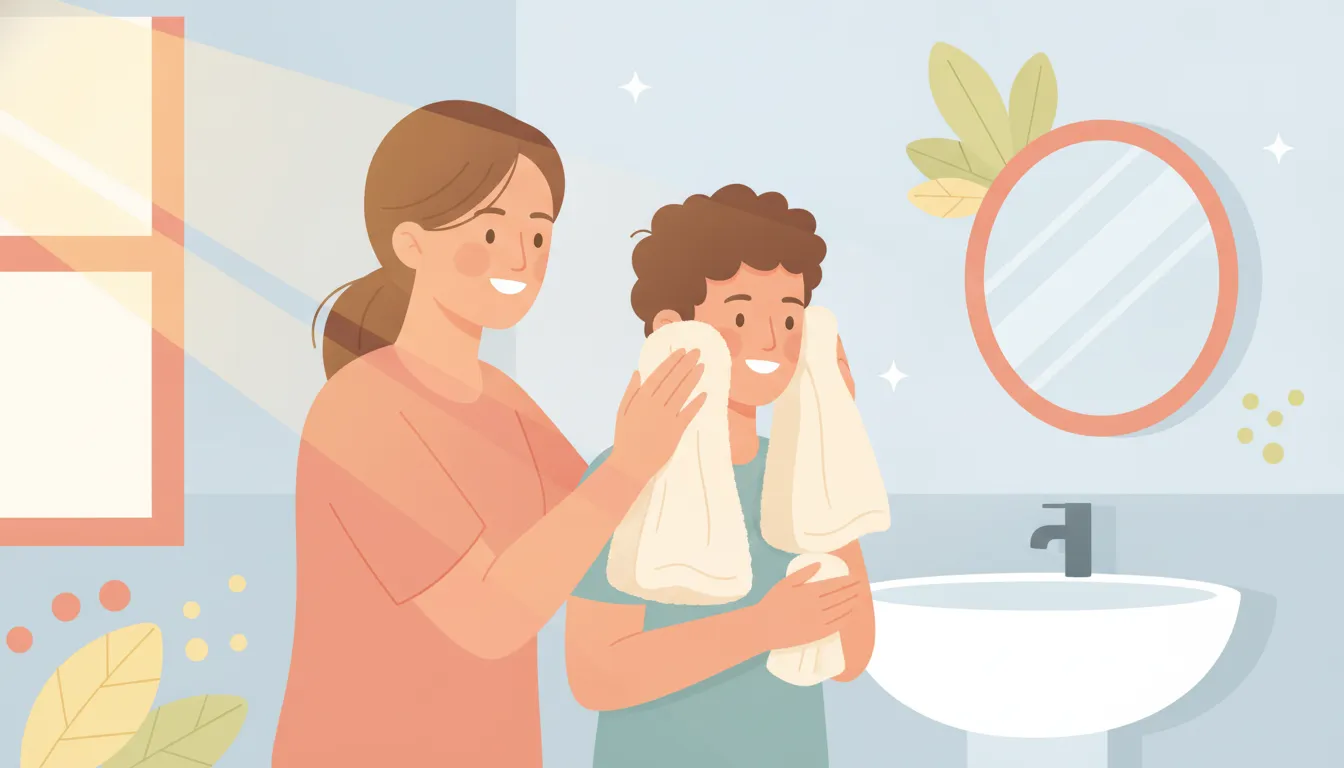
Use lukewarm water and a mild facial cleanser when cleansing is needed. Apply it with clean fingertips, then rinse without scrubbing. Pat the skin dry with a soft towel rather than rubbing. Cleansing too often or using very hot water can leave already-dry skin feeling tighter.
Bright+Clean Daily Facial Gel Cleanser is a pH-balanced gel cleanser for ages 8 and up, and Bright Girl lists it as suitable for sensitive skin. Parents considering it for eczema-prone skin should read the current ingredient list, introduce it cautiously, and ask their child's healthcare professional for personalized guidance. No cleanser should be presented as a solution for eczema itself.
2. Moisturize while skin is comfortable
Moisturizer helps reduce the dry, tight feeling that can follow cleansing. Apply a comfortable layer to clean skin, following the product directions. If a moisturizer stings, causes a new rash, or seems to make symptoms worse, stop and ask a healthcare professional what to do next.
Day+Bright 24-hour Facial Moisturizer is a pH-balanced, non-greasy moisturizer designed for daily use. Bright Girl describes it as providing hydration without clogging pores. Parents can consider it as part of a basic routine after reviewing the formula and checking whether the child's dermatologist has recommended different ingredients or textures.
3. Add mineral sun protection when appropriate
Sun protection remains important for young people with sensitive skin. Ask a dermatologist or pediatric healthcare professional which sunscreen format and active ingredients make sense for your child. Bright Girl offers mineral sunscreen options, including Bright+Block Sheer SPF 40 Mineral Sunscreen. Parents should check the current product label, apply as directed, and use shade and protective clothing as additional sun-safety habits.
Explore Bright+Clean Daily Facial Gel Cleanser
How Should Parents Patch-Test a New Skincare Product?
A patch test is a cautious way to introduce a new product, but it cannot predict every reaction. Ask your child's healthcare professional for advice if they have a history of significant reactions. When appropriate, apply a small amount to a limited area that is not already irritated. Follow the product instructions, and observe the skin before adding the product to the full routine.
- Review the label: Check the ingredients, age guidance, directions, and any warnings.
- Choose a calm area: Do not test on broken, scratched, or actively irritated skin.
- Use a small amount: Follow the product directions rather than applying a thick layer.
- Watch the area: Notice burning, swelling, itching, redness, or a new rash.
- Pause if the skin reacts: Stop using the product and contact a healthcare professional if the reaction is concerning.
Keep a short note of the product name, date, and skin response. This can help a parent and clinician see patterns without asking a young person to remember every product used in the past month.
Which Skincare Habits Can Make Eczema-Prone Skin Feel Worse?
Product selection is only one part of a gentle routine. Friction, heat, dry air, and frequent changes can also make sensitive skin feel less comfortable. The American Academy of Dermatology recommends avoiding common irritants and choosing fabrics and household products thoughtfully when a child has eczema.
| Routine choice | Gentler approach |
|---|---|
| Hot water or long, steamy washes | Use lukewarm water and keep cleansing brief. |
| Scrubs, brushes, or vigorous towels | Use fingertips and pat skin dry with a soft towel. |
| Several new products at once | Add one product at a time so changes are easier to understand. |
| Strongly scented products | Compare labels and look for fragrance-free options. |
| Ignoring a persistent reaction | Pause the new product and ask a healthcare professional for guidance. |
Do not turn an avoidance list into a rigid rulebook. A child's skin, diagnosis, climate, and medical history all matter. The best routine is one that the family can follow consistently and that fits the advice of the child's healthcare team.
When Should a Parent Ask a Dermatologist About Eczema?
Parents should contact a dermatologist or another qualified healthcare professional when a young person has persistent or recurring symptoms, severe itching. Painful or cracked skin, signs of infection, a reaction after using a product, or symptoms that disrupt sleep or daily activities. Professional guidance is also appropriate when a parent is unsure whether a rash is eczema, acne, contact dermatitis, or another condition.
Seek prompt medical attention for symptoms that appear severe or rapidly worsen. This article is educational and is not a diagnosis or individualized care plan. Do not use a skincare product to delay medical advice when a child's skin is causing concern.
For families who already have a clinician-approved routine, a gentle skincare brand can make the daily steps easier to understand. Bright Girl's skincare sets organize age-appropriate basics, while the brand's Beyond Clean Beauty page explains its ingredient and formulation philosophy.
Parents can also use the same calm approach beyond the bathroom. Wash soft towels regularly, avoid rough fabrics when they cause discomfort, and keep the routine visible but simple. A short checklist can help a young person remember the order without making the routine feel like a test. If symptoms change, pause and return to the plan from the child's healthcare professional.
It can also help to separate comfort from appearance. A young person may want to hide redness or dry patches, but adding makeup. Scrubs, or several new formulas can make it harder to understand what their skin needs. Reassure them that a simple routine is a thoughtful choice, not a lack of effort. Invite them to share sensations such as tightness, stinging, or itch so a parent can respond early.
Explore Day+Bright Facial Moisturizer
Frequently Asked Questions About Gentle Skincare for Eczema
Can a child with eczema use regular skincare products?
A child with eczema may be able to use some everyday skincare products, but the right choice depends on the individual formula and the child's skin. Look for fragrance-free options, introduce one product at a time, and ask a dermatologist for personalized guidance when symptoms are active or recurring.
Is unscented skincare the same as fragrance-free skincare?
No. Unscented describes the noticeable smell, while fragrance-free describes the absence of added fragrance ingredients. The American Academy of Dermatology recommends choosing fragrance-free products rather than relying on the word unscented when shopping for eczema-friendly products.
Should parents use a scrub on eczema-prone skin?
Scrubs and vigorous rubbing can increase irritation, especially when skin is dry, cracked, or itchy. A gentle cleanser, fingertips, lukewarm water, and patting with a soft towel are more appropriate starting habits. Ask a dermatologist before adding exfoliating products.
Can skincare replace medical care for eczema?
Skincare is not a replacement for medical care for eczema. A gentle routine may support comfort and the skin barrier, but eczema is a medical condition that may need a clinician-guided care plan. Ask a dermatologist if symptoms persist, worsen, or interfere with daily life.
What is the first step in a gentle routine?
Start by simplifying. Use a mild cleanser only as needed, apply a comfortable moisturizer, and avoid adding multiple new products at once. Review labels with a parent or clinician, especially when the young person has a known sensitivity or recurring symptoms.
What Is the Best Next Step for a Parent?
Start with the routine your child can follow: gentle cleansing, comfortable moisturization, thoughtful label reading, and professional guidance when symptoms need more than everyday skincare. Bright Girl's dermatologist-created approach is designed to help families understand age-appropriate basics without encouraging an overloaded routine.
For more education before choosing products, browse Bright Girl's teen eczema-prone skincare routine guide for the teen-facing perspective, then return to this parent guide for label and product-selection considerations.
Sources:
- American Academy of Dermatology: How can I find eczema friendly products?
- American Academy of Dermatology: Itch relief and skin care for childhood eczema
- National Eczema Association: Eczema in Children
These sources provide general education and do not replace personalized medical advice.
