


Daily Facial Cleanser for Teens: What Makes a Good Fit?
Choosing a daily facial cleanser for teens does not have to mean building a complicated shelf of products. For many families, a useful starting point is a gentle cleanser that removes everyday dirt, oil, and buildup while leaving skin feeling comfortable. Parents can help by checking directions and ingredients, keeping changes gradual, and noticing how skin responds over time.
Ask Bright Girl a product question
Daily Facial Cleanser for Teens: What Makes a Good Fit?
A good fit is a cleanser the teen can use consistently and comfortably, with directions that make sense for their routine. The face should feel clean afterward, not painfully tight or rubbed raw. No cleanser can guarantee the same experience for every person, so a thoughtful choice starts with practical details: the formula, the intended use, known sensitivities, and the condition of the skin.
Parents shopping for a tween, teen, or young adult may also want a brand whose approach is designed with young skin in mind. Bright Girl is a dermatologist-created skincare brand for ages 8–24, with formulations developed by double board-certified dermatologist Angela Casey, M.D. Families can explore the Bright+Clean daily facial gel cleanser and the brand’s Beyond Clean Beauty approach as they consider what fits their needs.
What Should Parents Check Before Choosing a Cleanser?
Product labels and descriptions can help narrow the choices, but they cannot predict exactly how an individual will respond. Read the directions and ingredient information before buying, especially when a young person already has sensitivities or uses other skincare products. A clear, simple product description is useful; so is a willingness to start with one change rather than several at once.
- Intended use: Look for a facial cleanser described for regular cleansing, rather than assuming a scrub or strong-feeling formula is needed.
- How it rinses: Consider whether the teen prefers a gel, cream, or another texture. The label should explain how to use it.
- Comfort: After rinsing, skin should feel clean and comfortable. A persistent tight, stinging, or uncomfortable feeling is a reason to pause and reassess.
- Known sensitivities: Check the ingredient list for anything the teen has previously reacted to. A history of reactions is a good reason to ask a health professional for guidance.
- Routine compatibility: Consider what else is already used. A cleanser is one part of a routine, not a reason to add several more steps automatically.
Ingredient awareness can help parents ask more informed questions. Bright Girl provides an ingredient no-no list and an educational article about pH in skincare. These resources explain the brand’s perspective; they do not replace individual medical advice or a clinician’s recommendations for a particular skin concern.
How Do Common Cleanser Types Compare?
Words such as gel, cream, and micellar describe different textures or ways of cleansing. They do not by themselves tell you how a specific product will feel on every person. Use the product directions and the teen’s experience to decide whether an option is a sensible match. The comparison below is a starting point for questions, not a ranking.
| Option | Typical experience | What to consider |
|---|---|---|
| Gentle gel cleanser | Light texture; it may foam or rinse clean depending on the formula. | Can suit a straightforward routine. Check how skin feels afterward and follow the label. |
| Cream cleanser | Often feels richer and may be less foamy. | May appeal to someone who prefers a softer, less squeaky-clean finish. |
| Micellar cleanser | Water-based option often applied with a cotton pad. | Check whether the label recommends rinsing, and avoid rough or repeated wiping. |
| Exfoliating scrub | May contain particles or other exfoliating features. | Not required for basic daily cleansing. Vigorous rubbing may be uncomfortable for some skin. |
There is no single texture that suits every teen. Someone whose skin feels dry may prefer a different experience from someone who notices more oil or shine. Avoid choosing solely by foam, fragrance, or a dramatic “deep clean” promise. For a broader discussion of comfortable-feeling skin, see Bright Girl’s guide to hydration and skin.
How Often Should a Teen Wash Their Face?
Many families begin with a gentle evening cleanse to remove the day’s ordinary buildup. Some teens also wash in the morning if that feels comfortable and works well for them. More washing is not automatically better; repeated washing can be an unhelpful response if the skin already feels dry or uncomfortable.
A randomized, single-blinded clinical trial indexed by PubMed reported slight support for washing the face twice daily with a mild cleanser, including for efficacy and convenience. It is one study, not an instruction for every teen or every skin type. Parents can read the face-washing trial abstract and weigh that information alongside the cleanser directions and the young person’s comfort.
A reasonable way to begin is to establish a repeatable routine and observe it for a while:
- Choose one cleanser. Review its directions and introduce it without adding several unfamiliar products at the same time.
- Use lukewarm water. Wet the face gently. Very hot water is unnecessary for ordinary cleansing.
- Apply with clean hands. Use the amount directed on the label and spread it gently rather than scrubbing.
- Rinse thoroughly. Follow the product’s directions, then pat the face dry with a clean towel.
- Consider what comes next. A moisturizer may be useful if skin needs it. In daytime, include appropriate sun protection.
- Notice the response. Pay attention to comfort and routine practicality, not just how the face looks immediately after washing.
If the skin feels persistently uncomfortable after cleansing, pause to reassess the cleanser, technique, and other products rather than washing more often. Families can read a guide to moisturizers or review Day+Bright 24-hour facial moisturizer when considering a simple next step.
How Can Parents Build a Routine That Sticks?
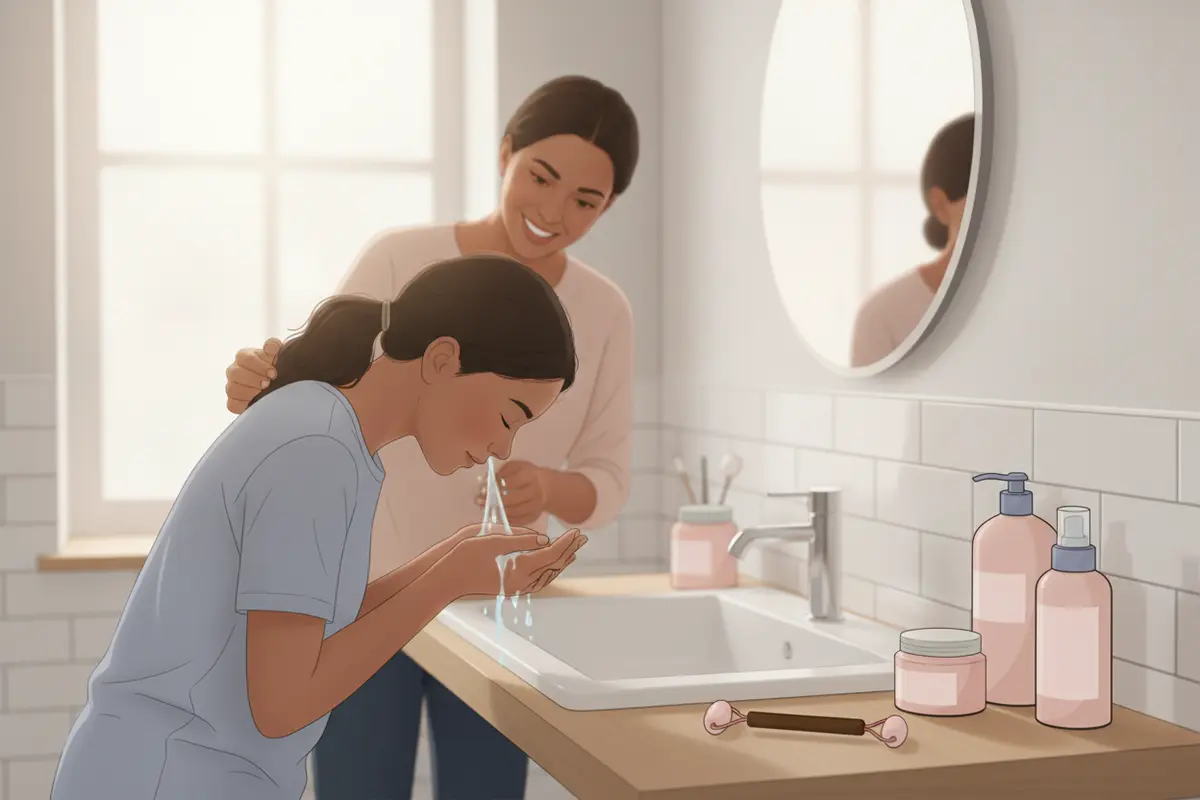
A manageable routine is easier to repeat than a crowded counter of products. Start with the steps the family actually needs, make the directions easy to remember, and let the teen take an age-appropriate role in carrying them out. Parents can support consistency by keeping products visible and explaining why each step is there, rather than presenting skincare as a long list of rules.
Try this basic framework and adjust it to the young person’s comfort and product directions:
- Evening: Cleanse to remove the day’s buildup. Use moisturizer if needed.
- Morning: Rinse or cleanse according to comfort, then use a moisturizer and appropriate sun protection.
- When trying a new product: Read its label, introduce one change at a time, and keep track of any discomfort or other changes.
For instance, if a teen currently washes with a rough cloth and several products, simplify the experiment: use clean hands, select a gentle cleanser, and keep other familiar steps unchanged at first. If comfort improves, the family has a clearer idea of what may have helped. If discomfort persists or worsens, stop guessing and seek professional advice. This is a practical observation process, not a way to diagnose a skin condition.
A useful routine should fit the teen’s age, habits, and skin needs. A younger tween may need help remembering to rinse fully, while an older teen may be ready to read directions and manage the evening step independently. The shared goal is not a perfect-looking routine. It is a thoughtful, comfortable habit that does not introduce unnecessary products.
What Habits Can Make Cleansing Less Comfortable?
Small technique choices can affect how washing feels. Vigorous rubbing, rough cloths, repeated cleansing, and water that feels too hot may be uncomfortable. Clean hands are enough to apply many cleansers. Use a light touch, rinse carefully, and pat dry instead of rubbing the face with a towel.
Also consider the whole shelf, not just the cleanser. A teen may be using products borrowed from a friend, gifts with unclear directions, or multiple new products at once. That can make it difficult to understand which steps feel comfortable. Keep the routine simple while making changes, and store products with their labels so parents and teens can check directions when needed.
Families may encounter many ingredient names while comparing products. Bright Girl’s educational pages on ceramides and squalane offer background on two ingredients used in skincare. Ingredient education can help with label literacy, but a single ingredient name does not determine whether a full formula is right for a specific person.
How Can Families Compare Products Without Overcomplicating the Choice?
When two options seem similar, compare the practical details rather than chasing a perfect-sounding claim. Read the directions, see whether the texture fits the teen’s preferences, and check the full ingredient list for known sensitivities. Then consider how the cleanser fits around the steps already in use. A short written checklist can make shopping less overwhelming.
- Write down the need. Is the family looking for a basic daily cleanser, or trying to address a persistent concern? A cleanser is for routine washing, not a substitute for individualized medical guidance.
- Set aside unsuitable formats. If the teen dislikes scrubbing or has found it uncomfortable, a scrub is not an obvious starting point.
- Compare instructions. Confirm how much to use, how to apply it, and whether the product should be rinsed.
- Check the whole formula. Review the full ingredient information rather than relying on one highlighted ingredient or a broad label phrase.
- Choose a realistic schedule. The best option is one the teen can use as directed without making the routine burdensome.
- Observe and reassess. If the experience is uncomfortable, discontinue the new step and ask a qualified professional when appropriate.
Bright Girl’s skin quiz offers a guided way to explore product choices. Families can also review the Core 4 collection or browse skincare sets to understand how products may fit into a broader routine. Choosing a set is optional; a teen does not need every available step just because products are presented together.
When Should a Family Ask a Health Professional?
A cleanser is for everyday cleansing, not individualized medical care. Consider contacting a pediatrician or dermatologist if a skin issue is persistent, painful, getting worse, or affecting a young person’s well-being. Professional guidance is also useful when a teen has a known skin condition, a history of reactions, or uncertainty about whether a product is appropriate.
Before an appointment, make a short list of products and how often each one is used. Bring the product containers or ingredient labels if possible. Note when the concern began and what changes have already been made. This gives the professional a clearer picture without asking a family to diagnose the cause on its own.
Parents interested in the brand’s background can visit Bright Girl’s Our Story page. For product questions, the contact page provides a way to reach the company. For a medical concern, however, ask an appropriate health professional.
What Are Common Questions About Daily Facial Cleansers for Teens?
Can teens use a facial cleanser every day?
Many teens can include a gentle facial cleanser in a regular routine, but product directions and personal comfort matter. Start with a simple approach and reassess if the skin feels persistently uncomfortable.
Should a teen wash their face in the morning and at night?
Some teens prefer cleansing twice a day, while others mainly cleanse in the evening. A PubMed-indexed study offers slight support for twice-daily washing with a mild cleanser, but individual needs vary. Follow product directions and pay attention to comfort.
Is a foaming cleanser always too harsh for young skin?
No. Foam alone does not describe how the full formula will feel. Read the product information and notice how skin responds after use instead of judging only by whether the cleanser foams.
Does a teen need an exfoliating cleanser?
Not necessarily. A gentle cleanser is a sensible basic step, and exfoliating is not required for everyday washing. If a family is unsure about adding steps, a health professional can offer individual guidance.
What should a parent do if cleansing leaves skin feeling tight?
Review the directions, water temperature, washing frequency, and other products in use. Consider pausing the new cleanser if discomfort continues, and contact a health professional if the issue persists or is concerning.
Explore Bright+Clean cleanser details
A simple cleanser choice can make daily skincare feel more manageable when comfort, clear directions, and age-appropriate habits guide the decision.
