


When a 12-year-old asks about cosmetics, the most helpful answer is rarely an automatic yes or no. Parents can look at the child's maturity, the reason for the interest, school or activity rules, and the products themselves. The goal is to make cosmetics a supervised, age-appropriate choice while keeping young-skin care simple.
Shop Bright Girl's young-skin essentials
Are cosmetics for 12-year-olds appropriate?
Cosmetics can be appropriate for some 12-year-olds when a parent sets clear boundaries and chooses products for their intended use. There is no universal starting age. A thoughtful decision considers maturity, the occasion, hygiene, product ingredients, and whether the child can follow a simple remove-and-clean routine.
The word cosmetics can describe many products, from lip color and blush to eye makeup and skin care. Those categories do not carry the same considerations. A sheer lip product used occasionally is a different choice from a complex adult makeup collection worn every day. Start with the smallest, simplest option that fits the reason your child is asking.
What should parents ask before choosing cosmetics?
Before buying cosmetics for a 12-year-old, ask what the product is for, where it will be used, how often it will be worn, and whether your child can use and remove it responsibly. These questions turn a trend-driven request into a calm family decision and help you choose a product set that matches the occasion.
- What is the reason? Is your child interested in creative play, a performance, a celebration, or copying a social media look?
- Where will it be worn? Check school policies, sports rules, and expectations for family or community events.
- Can your child follow the routine? They should be able to wash hands, avoid sharing, keep products closed, and remove cosmetics at the end of the day.
- Does the product fit the age and purpose? Look for clear directions and avoid adult formulas that promise dramatic changes or contain unnecessary strong actives.
- Does the product have a clean, readable label? A short, transparent ingredient list is easier to discuss and monitor than vague claims alone.
This conversation also creates space to talk about appearance without making appearance the measure of confidence. Cosmetics can be a creative choice, a form of self-expression, or part of an activity. They should not become a requirement for feeling acceptable.
Which cosmetic products are the simplest place to begin?
For a first cosmetic experience, begin with one or two low-complexity products suited to the occasion. A lip balm or sheer lip color, a lightly tinted product, or a small washable color palette may be easier to supervise than a full face of cosmetics. Choose one new product at a time so you can identify any irritation and understand how your child uses it.
| Product type | Parent questions | Simple starting boundary |
|---|---|---|
| Lip color or gloss | Is it used only on the lips? Can it be kept clean and not shared? | Use for a defined occasion, then remove and store closed. |
| Blush or face color | Is the product clearly labeled for facial use? Is the applicator clean? | Use a small amount with a clean tool and wash the tool regularly. |
| Eye cosmetics | Is the product made for the eye area? Can your child avoid rubbing the eyes? | Use only with close supervision and never share or use during irritation. |
| Skin care | Is the goal cleansing, hydration, or sun protection rather than changing appearance? | Choose a short routine designed for young skin, not an adult trend routine. |
Avoid buying a large collection simply because it looks complete. More products create more opportunities for contamination, forgotten removal, and irritation. A small kit that your child understands is usually easier to manage than a crowded cosmetic bag.
How can a 12-year-old use cosmetics more safely?
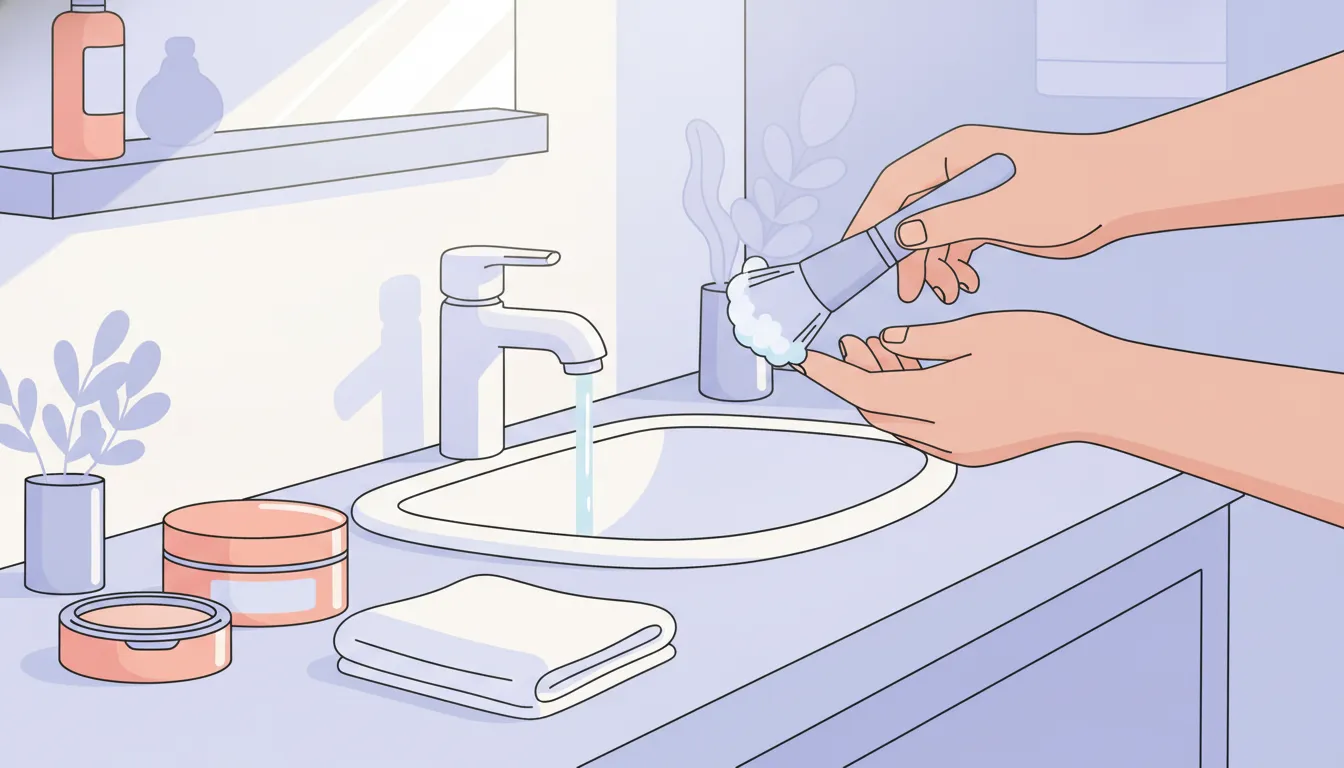
Safe cosmetic habits focus on hygiene, intended use, and paying attention to the skin. Parents can demonstrate the routine once, keep the rules visible, and check in without making the conversation embarrassing. If a product stings, causes redness, or bothers the eyes, stop using it and ask a health professional for advice if the concern persists.
- Wash hands first. Clean hands reduce the amount of dirt and microbes transferred to the face or product.
- Use products only where they are intended. Do not use lip products around the eyes, and do not use eye products on other areas unless the label says they are intended for that use.
- Do not share cosmetics or applicators. Each person should have their own products and tools.
- Keep products closed and clean. Wipe the outside of containers and store them away from heat and direct sunlight.
- Clean reusable tools. Brushes and applicators need regular washing and complete drying before storage.
- Remove cosmetics before bed. A gentle cleanse helps prevent leaving color and residue on the skin overnight.
- Replace old or changed products. Discard anything that smells different, changes texture, becomes dry, or looks contaminated.
The U.S. Food and Drug Administration's eye cosmetic guidance recommends not sharing cosmetics, keeping tools clean, using products only as intended, and discarding old or dried eye products. It also advises stopping use when irritation occurs. These are useful household rules whether cosmetics are used for a special event or more regularly.
Which ingredients and claims deserve a closer look?
Parents do not need to memorize every cosmetic ingredient to shop thoughtfully. Instead, look for a complete ingredient list, clear directions, an age-appropriate purpose, and a company that explains how the product should be used. Be cautious when a product relies on an appealing label claim but does not provide enough information to evaluate the formula or its intended use.
- Prefer products with a complete, readable ingredient list and clear manufacturer directions.
- Be cautious with strong fragrance or formulas that repeatedly sting or dry the skin.
- Be cautious when a word such as "natural" or "clean" appears as the only reason a product is presented as right for every child.
- For eye products, confirm that the item is intended for the eye area and follow the package directions.
- Be especially careful with imported or novelty products that have unclear labeling or no reliable use instructions.
- Patch testing a small area may be reasonable for a new face product, but it does not guarantee that irritation will not occur.
For children with eczema, recurrent rashes, known allergies, or frequent irritation, ask a dermatologist or pediatric clinician for individualized guidance before introducing new cosmetics. Cosmetics are not a substitute for medical care, and a parent should not use makeup to cover a symptom that needs professional attention.
How does skin care fit with cosmetics for a 12-year-old?
Skin care and cosmetics serve different purposes. Cosmetics add color or change the appearance of the skin temporarily, while a young-skin routine should focus on gentle cleansing, comfortable hydration, and daily sun protection. Keeping those roles separate helps families avoid turning a basic routine into a complicated collection of adult-style products.
Bright Girl's existing parent education recommends a short routine around the pre-teen years: gentle cleanser, moisturizer as needed, and daily mineral sun protection. Bright Girl products are formulated for young skin ages 8-24 by double board-certified dermatologist Angela Casey, M.D. Families can review when to start a skincare routine and simple skin care for a 10-year-old before adding optional cosmetic use.
If your child is asking for cosmetics because of dryness or discomfort, start by understanding the skin concern rather than covering it with color. Bright+Clean Gel Facial Cleanser is a pH-balanced daily cleanser, and Day+Bright Facial Moisturizer is a pH-balanced daily moisturizer. For daytime sun protection, families can review Bright Girl's mineral sunscreen options, including Bright+Block SPF 44 Tinted Mineral Sunscreen. Choose only the products that fit your child's needs, and follow each product's directions.
Start with a simple Bright+Clean and moisturize routine
How can parents set cosmetic boundaries without making it a battle?
Clear, predictable boundaries work better than a last-minute argument. Explain what is allowed, where cosmetics may be worn, how products are cleaned, and when the family will revisit the decision. A child can have a voice in choosing colors or occasions while the parent remains responsible for age-appropriate limits and product safety.
A practical family agreement might include:
- Cosmetics are optional, not required for school, friendship, or confidence.
- Only approved products may be used, and new products are discussed before purchase.
- Cosmetics stay personal and are never shared.
- Eye products are used only with the agreed level of supervision.
- All cosmetics are removed before bed and stored in a clean, dry place.
- Skin or eye irritation means stopping the product and telling a parent.
Ask your child what they enjoy about cosmetics, then separate creative interest from pressure to look older. The Cleveland Clinic's parent guidance on makeup for children also emphasizes that there is no single right age and that families should consider maturity, values, school rules, activities, and the reason for the interest.
What should a parent remember about cosmetics for 12-year-olds?
Cosmetics for 12-year-olds can be a reasonable, supervised form of creativity when the products are clearly labeled, the use is age-appropriate, and hygiene rules are part of the decision. Begin with less, choose products for their intended area, remove them consistently, and keep skin care simple. The right choice is the one your family can use responsibly and comfortably.
Explore age-appropriate Bright Girl skincare for young skin
Frequently Asked Questions
What is a good age to start wearing cosmetics?
There is no universal starting age. For a 12-year-old, parents can consider maturity, the occasion, school policies, product labeling, and the child's ability to follow hygiene and removal rules.
Are cosmetics safe for a 12-year-old?
Some cosmetics may be appropriate when they are clearly labeled for their intended use and used with supervision. Do not share products, keep tools clean, remove cosmetics before bed, and stop using any item that causes irritation.
What should a 12-year-old use for basic skin care?
A simple routine can center on gentle cleansing, comfortable moisturization, and daily sun protection. Avoid building an adult-style routine around strong actives or social media trends without professional guidance.
Should a 12-year-old wear eye makeup?
Eye makeup requires extra care because the eye area is sensitive. Use only products intended for the eyes, never share them, keep tools clean, and follow FDA safety guidance. Avoid use during eye irritation or infection.
How should a 12-year-old remove cosmetics?
Follow the product directions, remove color before bed, and cleanse gently without scrubbing. Wash reusable tools regularly and discard products that are dried out, contaminated, or noticeably changed.
What if cosmetics cause redness or stinging?
Stop using the product and tell a parent. If irritation persists, affects the eyes, or concerns you, contact a pediatric clinician or dermatologist for advice.
This guide is educational and is not a substitute for individualized medical advice. A parent or caregiver should consult a qualified clinician about persistent skin or eye concerns.
