

Skincare habits for young girls can begin with a few gentle, repeatable steps, not a crowded shelf or a complicated schedule. For parents, the goal is to help a child care for her skin in an age-appropriate way, learn what feels comfortable, and know when to ask for professional guidance.
Ask Bright Girl a skincare question
Skincare Habits for Young Girls: What Should Parents Start With?
Begin with the basics: gentle cleansing, comfortable hydration when needed, and daily sun protection. Keep the routine short enough to follow on school mornings and evenings. Products should be suitable for young skin and chosen for a real need, rather than added because a trend or video recommends them.
There is no single age when every child needs the same routine. A younger child may only need simple cleansing and sunscreen, while puberty can bring changes in oiliness, dryness, or visible blemishes. The routine can adapt as skin and daily activities change. Bright Girl is a dermatologist-created skincare brand for young skin ages 8–24, with formulations developed by double board-certified dermatologist Angela Casey, M.D.
Start by talking about what the child notices: Does skin feel tight after washing? Does it feel oily by midday? Is sunscreen easy to remember? These observations can guide the next step without turning normal changes into a problem to fix. For more background, see this guide to skincare for kids.
How Can Parents Make a Routine Gentle and Easy to Repeat?
Consistency comes from a routine that fits real life. Keep the products together, use the same order each day, and avoid adding several new products at once. A simple morning and evening plan may look like this:
- Morning: Rinse or gently cleanse if needed, apply moisturizer when skin feels dry or tight, then finish with a broad-spectrum sunscreen according to its label.
- Evening: Gently cleanse to remove the day’s buildup, then apply a moisturizer if the skin needs it.
Some young people do well with a water rinse in the morning; others prefer a gentle cleanser. A cleanser should leave skin feeling comfortable, not stripped. Bright Girl’s Bright+Clean daily facial gel cleanser is the brand’s cleanser option, while the Day+Bright 24-hour facial moisturizer is a moisturizer option for a routine. Parents can compare the Shop Sets if they are looking for a grouped routine; choose based on the child’s needs rather than assuming every step is necessary.
Use a small amount as directed on the product packaging, and help younger children remember to rinse thoroughly. Avoid scrubbing hard or washing repeatedly to try to make skin feel extra clean. Gentle handling is a more useful habit than chasing a squeaky-clean feeling. The American Academy of Dermatology shares general skin-care information for families at aad.org.
Which Daily Habits Support Comfortable, Healthy-Looking Skin?
Products are only one part of everyday care. Practical habits can help a young person feel more confident managing a routine:
- Wash hands before applying products. This simple step keeps dirt and residue from being transferred to the face.
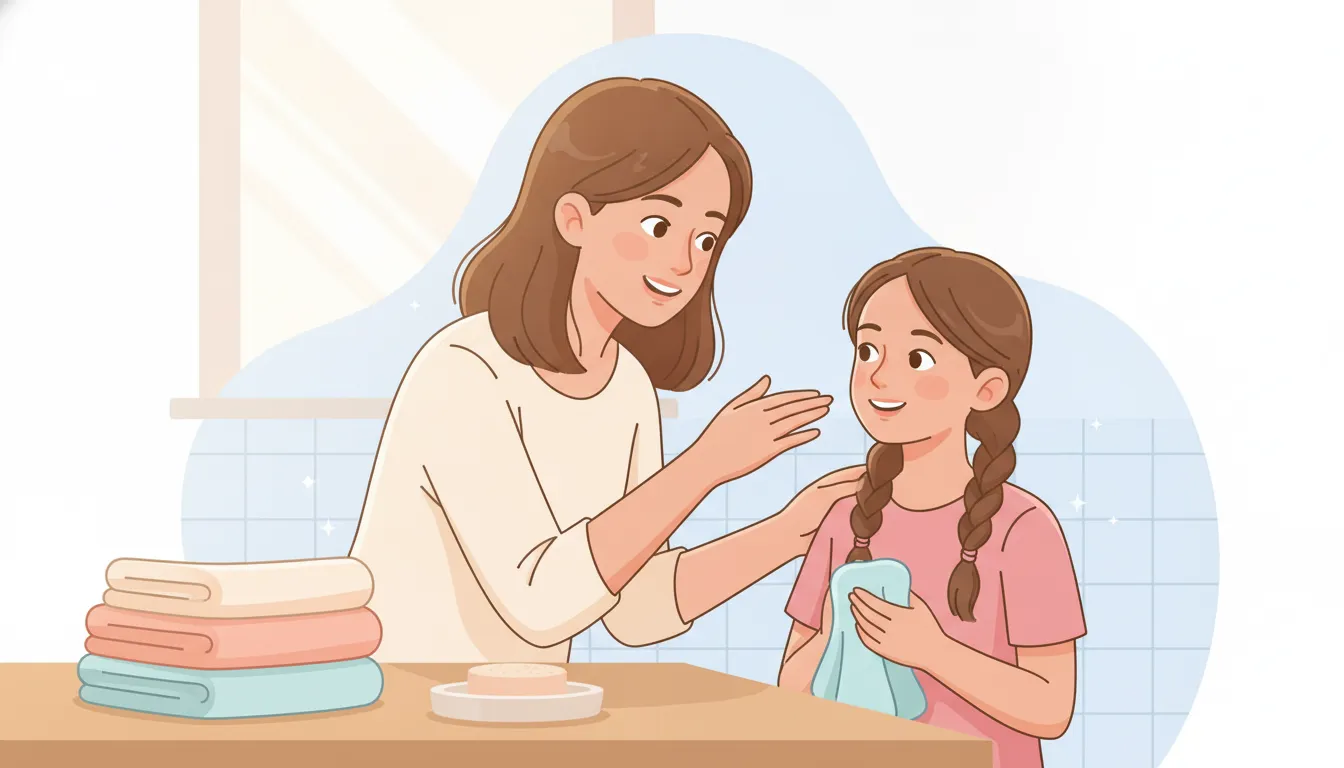
- Use clean towels and washcloths. Pat skin dry with a clean, soft towel instead of rubbing.
- Keep facial products personal. Sharing applicators, makeup, or skincare containers can make it harder to keep a routine hygienic.
- Follow package directions. More product or more frequent use does not necessarily mean better care.
- Keep the routine steady. Give a new basic product time to become familiar, and avoid changing several steps at once.
- Make sun protection part of getting ready. Keep sunscreen near the everyday items used before school or outdoor activities, and follow the label for use and reapplication.
Parents can make the routine easier by storing products where the child can reach them safely and setting a reminder if useful. Invite the child to take part in choosing an appropriate product, while keeping the final decision with the adult. This supports independence without making skincare feel like a test or a source of pressure.
How Can Families Make Skincare Fit a Busy Week?
Build each step around something the child already does. A morning routine might happen after brushing teeth and before getting dressed. Evening cleansing can follow changing out of school clothes or brushing teeth. Anchoring a new habit to a familiar one makes it easier to remember than relying on motivation alone.
Set up the space for success. Keep everyday products together, put sunscreen near a bag or the door, and return each item to the same place after use. For a child who is just learning, a parent can demonstrate how much product to use and how to rinse it away. A simple checklist can help, but it does not need to become a scorecard. Missing a step once is not a reason to start over or add extra product the next day.
Travel and changing schedules are also easier when the routine stays basic. Pack the same familiar essentials rather than introducing a new product for a trip. For sports or outdoor plans, check sunscreen directions before leaving and bring it along for use as directed. If a routine repeatedly feels too long, remove optional steps and keep the basics that meet the child’s needs.
How Should a Parent Choose Products for a Young Girl?
Choose products based on age, skin feel, and the routine the family can maintain. A short list of questions can make comparison easier:
- Is this product intended for the face and suitable for the child’s age?
- Does the label explain how and how often to use it?
- Does the formula fit the child’s skin concerns, such as dryness or sensitivity?
- Can the routine include it without becoming unnecessarily complicated?
- Are the claims clear and realistic, without promising a particular outcome?
For young or sensitive skin, a less-is-more approach is often sensible. Avoid borrowing a friend’s routine or adding strong exfoliating steps and multiple active products without qualified guidance. If a product causes persistent discomfort, stop using it and ask a parent or health professional what to do next. Families looking for brand information can review Bright Girl’s Beyond Clean Beauty approach and its ingredient no-no list.
Product choice can also follow the need. A cleanser is a starting point for cleansing; a moisturizer can support hydration when skin feels dry; sunscreen is a daytime protection step. A face mask or toner is optional, not a required part of every young person’s routine. If a family wants a guided selection path, Bright Girl’s skin quiz can help navigate its product options. A parent may also compare the curated skincare sets or browse the skincare collection.
How Can Parents Introduce a New Product Thoughtfully?
When a family decides a product may fill a real need, make the change easy to understand. Read the directions together, review when and where to use it, and agree on who will help with the first few applications. If the young person already uses several products, write down the current routine before changing anything. That simple record makes it easier to notice which steps are comfortable and which may be unnecessary.
Introduce one new item at a time rather than changing cleanser, moisturizer, and sunscreen all at once. This makes it easier to identify a possible connection if skin becomes uncomfortable. Follow the product label, and do not apply more often or use more than directed in hopes of speeding up a visible change. Keep the packaging available so a parent can review the ingredients and instructions if a question comes up.
Consider the setting, too. A child may be more willing to remember a routine when the products are easy to use and the steps feel manageable. For example, a cleanser that needs a long process may not fit a rushed evening. A small, stable set of basics can be a better choice than a long shelf of products that are difficult to keep straight. When in doubt about an ingredient or a specific concern, ask a qualified professional instead of relying on a social-media trend.
Revisit the routine when a child’s day-to-day needs change, but avoid making adjustments in response to every small fluctuation. Cold weather, time outdoors, sports, and changing schedules can affect what feels practical. For a week with early practices, for example, sunscreen and a familiar cleansing step may be the priorities; a weekend with more time is not a reason to add extra steps. If skin feels uncomfortable after a change in weather, a parent can review whether the current routine still feels gentle and whether a basic moisturizer is needed. Keep the same clear sequence where possible so the child does not have to relearn the routine each time.
It can also help to agree on a simple pause plan before a new product is introduced. Explain that persistent discomfort means telling an adult and stopping the new item until the family has guidance. Do not try to offset discomfort by layering more products or scrubbing. Keep the product name and package available for reference if a health professional has questions. This gives the young person a practical next step without asking her to diagnose what is happening or manage a concern alone.
What Is a Useful Routine by Age and Skin Need?
Age can offer context, but it should not dictate a long checklist. A child’s comfort, preferences, and changing skin matter more than reaching a particular number of steps. This comparison is a starting point for a parent-child conversation, not a medical plan.
| Situation | Simple habit to consider | Parent’s role |
|---|---|---|
| Beginning skincare | Gentle cleansing as needed and daily sunscreen | Help choose age-appropriate basics and supervise use |
| Skin feels dry or tight | Use a gentle cleanser and consider a comfortable moisturizer | Notice whether the routine feels comfortable; simplify if not |
| Puberty brings more oil or visible changes | Keep cleansing gentle and avoid layering many new products | Discuss concerns without shame and seek professional advice if needed |
| Skin is sensitive or persistently uncomfortable | Pause new additions and keep care simple | Ask a qualified health professional for individualized guidance |
| Outdoor day or sports | Plan sunscreen use according to its label | Pack it with the day’s essentials and help with reapplication |
For combination or changing skin, the routine does not have to be identical across the whole face. A parent can keep the basics consistent and avoid adding targeted products unless there is a clear reason. The guide to hydration and skin offers more context on why comfortable hydration is part of everyday care.
How Can Parents Talk About Skin Changes Without Adding Pressure?
Young people hear many messages about appearance online and from peers. Keep the conversation focused on comfort, health, and learning, not on perfection. Normal skin has texture and can change from day to day. A routine is a way to care for the skin, not a measure of a child’s worth or a promise that every blemish will disappear.
Try neutral, supportive questions: “Does your skin feel comfortable after you wash?” or “Would it help to put sunscreen by your backpack?” Avoid criticizing a child’s appearance or comparing their skin with another person’s. If a child feels worried, listen first, and decide together whether a trusted professional should be involved.
Parents who want to learn more about the brand and its approach can visit Bright Girl’s story or explore its Bright Ideas skincare education. For questions about choosing a product, the Bright Girl contact page is another way to reach the brand.
When Should a Family Ask a Health Professional?
Ask a pediatrician or dermatologist when a skin concern is persistent, painful, worsening, or affecting a child’s comfort or confidence. A professional can consider the child’s age, skin history, and other factors before offering individualized advice. Seek help if a new product is followed by a concerning reaction, and stop using it while asking a parent or qualified professional for guidance.
A parent should also seek guidance before using a strong active ingredient, combining multiple specialty products, or adapting an adult routine for a child. Product labels and general online articles cannot account for every person’s needs. Bright Girl’s approach is centered on dermatologist-created, age-appropriate skincare, but an individual concern may call for personalized medical advice.
Explore Bright Girl skincare sets
Frequently Asked Questions
At what age should a girl start a skincare routine?
There is no universal starting age or required number of steps. Families can begin with simple hygiene and sun protection, then adapt if skin needs or daily routines change. A parent can guide product choice and supervise use when appropriate.
Does a young girl need a multi-step routine?
No. A gentle cleanser, moisturizer when needed, and sunscreen are useful basics to consider. Toner, masks, and other extras are optional and should have a clear purpose in the family’s routine.
What if a product makes skin feel uncomfortable?
Stop using the new product and tell a parent or guardian. If discomfort persists or the reaction is concerning, ask a qualified health professional for guidance rather than adding more products.
How can parents encourage consistency?
Keep the routine short, store products together, and connect it to an existing daily habit such as brushing teeth. Let the child participate while a parent oversees product choice and directions.
Ready to Choose a Simple Routine?
Healthy habits grow through small, comfortable steps repeated over time. Start with what a young person actually needs, keep the conversation supportive, and ask a health professional when a concern needs individual attention.
Explore Bright Girl skincare sets
A thoughtful routine can help families make skincare feel simple, informed, and age-appropriate.


