


Skincare for Combination Teen Skin: How to Keep the Routine Simple
Skincare for combination teen skin can feel confusing when the forehead and nose get shiny while the cheeks feel dry or tight. The answer is not to scrub the oily areas harder or coat the whole face in extra products. A gentle, consistent routine can clean away daily buildup, add comfortable hydration, and protect skin without making the routine complicated. For parents, the goal is to help a teen notice what their skin needs and build habits they can keep.
Ask Bright Girl a skincare question
What Does Skincare for Combination Teen Skin Need?
Combination skin describes a pattern: some areas tend to feel oilier, while other areas feel normal, dry, or tight. A teen might notice more shine around the forehead, nose, and chin, with cheeks that feel comfortable or dry. The pattern can shift with weather, activity, hormones, or a change in routine. It does not mean that every part of the face needs a different product.
Start with a few basic habits: cleanse gently, moisturize where needed, and use sunscreen in the morning. Keep the same core steps across the face, then adjust how much moisturizer goes on different areas if that feels more comfortable. Avoid trying to make the skin feel “squeaky clean.” Tightness after washing can be a cue that the cleanser or frequency is too much for the drier areas.
Combination skin is not a diagnosis, and it does not need a complicated regimen. If a teen has persistent discomfort, a rash, or concerns about recurring blemishes, a parent can ask a qualified healthcare professional for individualized guidance. A gentle routine is a starting point, not a substitute for care when a concern needs attention.
How Can You Tell Which Areas Are Oily or Dry?
Look for patterns rather than judging the skin after one busy day. Shine can be more noticeable by midday, especially across the forehead and nose. Dryness may feel like tightness after cleansing, or show up as rough-feeling patches on the cheeks. A teen can pay attention to comfort as well as appearance: does the face feel balanced, oily, tight, or irritated?
To get a clearer read, try this low-fuss check:
- Wash the face gently and pat it dry without rubbing.
- Wait a short while before applying other products, if comfortable.
- Notice whether certain areas feel tight or look shiny, rather than repeatedly touching or washing the skin.
- Repeat the observation on a few ordinary days. Weather, sports, and time outdoors can affect how skin feels.
There is no need to use blotting papers, harsh scrubs, or frequent washing to label a skin type. The purpose is simply to notice whether different areas have different needs. If the face feels tight or stings after a product, stop using it and involve a parent or guardian. Persistent irritation is a good reason to check in with a healthcare professional.
Which Simple Routine Works for Combination Teen Skin?
A routine can stay consistent even when the face has both oily and dry areas. Use a gentle cleanser, a comfortable moisturizer, and daily sun protection. Add products only when there is a clear reason and the teen can use them as directed. For young skin, a short routine is easier to remember and makes it easier to spot if a new product does not agree with the skin.
| Routine step and timing | How to adapt for combination areas |
|---|---|
|
Gentle cleanse Morning as needed; evening to remove the day's buildup |
Use lukewarm water and light fingertips over the whole face. Do not scrub the T-zone or wash the cheeks repeatedly. |
|
Moisturize After cleansing; morning or evening as comfortable |
Apply a light, even layer. Add a little more to areas that feel dry rather than using a heavy layer everywhere. |
|
Sun protection Every morning when heading outdoors; follow the label for use and reapplication |
Apply evenly to exposed skin. Choose a formula the teen is willing to use consistently. |
|
Optional routine addition Only when there is a specific need |
Introduce one new product at a time and ask a parent or healthcare professional if unsure. |
The American Academy of Pediatrics recommends a simple, safe approach to skincare for tweens and teens, including cleansing, moisturizing, and morning protection, rather than following every trend. Read its guidance on trendy skincare for tweens and teens with your teen before building a longer routine.
How Should You Cleanse Without Over-Cleansing Dry Areas?
Use a mild face cleanser with clean hands and lukewarm water. Spread it gently across the face, then rinse well and pat dry with a clean towel. A cleanser should leave the skin feeling comfortable, not stripped. Avoid rough washcloths, abrasive scrubs, and very hot water, which can leave dry-feeling areas more uncomfortable.
Most teens do not need to wash repeatedly throughout the day to manage shine. A morning cleanse can be useful if the face feels oily after sleep. In the evening, cleansing helps remove dirt, oil, sunscreen, and daily buildup. After sports or sweating, rinsing or cleansing gently may feel refreshing; there is no need to vigorously wash the face multiple times because it looks shiny.
When choosing a cleanser, look for one designed for gentle daily use and suitable for young skin. Bright Girl's Bright+Clean daily facial gel cleanser is one option to explore. It is positioned to gently remove dirt, oil, and daily buildup without stripping, while leaving skin feeling clean, soft, and comfortable. Follow the product label and stop if irritation develops.
How Can Moisturizer Support Both Dry and Oily Areas?
Oily areas still need a routine that respects comfort; skipping moisturizer everywhere may leave dry-feeling areas without the hydration they need. Choose a moisturizer that feels comfortable, then start with a modest amount. Smooth it over the face instead of layering on a thick coat. If the cheeks feel dry, use a little more there. If the forehead and nose already feel comfortable, use less in those areas.
There is no need to apply different moisturizers to each facial zone unless a healthcare professional recommends that approach. Consistency matters more than having a large collection. Give a new moisturizer time to become a familiar part of the routine, and avoid changing several products at once.
Day+Bright 24-hour facial moisturizer is Bright Girl's moisturizer option, positioned to hydrate and support a healthy-looking skin barrier and help improve the look of dryness and rough texture. Parents and teens can review the product information and ingredient details together. For more on hydration, see this Bright Girl guide to hydration and skin.
What Sun Protection Fits a Teen's Daily Routine?
Daily sun protection is a practical part of a morning routine, whether the skin is oily, dry, or a mix. Choose a sunscreen that feels comfortable enough to use, apply it as directed on the label, and reapply according to the directions, especially during extended outdoor time. Hats, shade, and clothing that covers skin can also be part of sun-safe habits.
For a mineral option, Bright Girl offers Bright+Block sun protection products. Review the product details, including the labeled SPF and directions, to decide what fits your family. A teen who dislikes how sunscreen feels may be more likely to use a formula that suits their preferences; comfortable use is an important part of a routine they can maintain.
How Can You Choose Products Without Overloading the Routine?
Read labels and make one change at a time. A parent can help check that a product is intended for facial use, follow its directions, and understand what the product is meant to do. Avoid buying a multi-step routine simply because a trend or a friend recommends it. More steps can make it harder to tell which product is causing discomfort.
- Begin with the basics. Cleanser, moisturizer, and sunscreen cover the core routine.
- Consider skin comfort. A product should not leave skin feeling persistently tight, stinging, or uncomfortable.
- Check product information. Review directions and ingredient details, particularly if the teen has known sensitivities.
- Introduce one item at a time. Keep other habits stable while noticing how skin responds.
- Ask for guidance when needed. A healthcare professional can help with persistent symptoms, significant irritation, or questions about a specific skin concern.
Bright Girl describes its products as dermatologist-created and formulated for young skin. The brand's Beyond Clean Beauty approach and ingredient information can help parents learn more as they compare options. If it is difficult to narrow down choices, the Bright Girl skin quiz offers a way to explore product suggestions by skin needs.
How Can You Adjust the Routine When Skin Feels Different?
Combination skin can feel different from one day to the next. Cold or dry weather, a long day outdoors, a sports practice, or a new product may affect how the face feels. Instead of immediately changing the whole routine, notice what changed and make one small adjustment. If cheeks feel tight, check whether the cleanser is being used too often or whether a light layer of moisturizer would help. If the T-zone looks shiny, resist the urge to scrub or layer on multiple products.
Keep a simple note for a week or two if it helps: what products were used, whether there was sports or outdoor time, and whether any area felt uncomfortable. This is not about tracking every detail or inspecting skin constantly. It can help a parent and teen spot a repeat pattern and explain it clearly if they decide to ask a healthcare professional. Do not keep using a product that causes a reaction just to see whether the skin will get used to it.
When trying a new product, follow the label and keep the rest of the routine familiar. If the teen has a history of sensitivity or a known ingredient concern, a parent can review the ingredients and ask a healthcare professional for advice before trying something new. A routine should be manageable on a regular school morning, not just on a day when there is extra time. If it feels too long, simplify it to the core steps.
What Common Habits Can Make Combination Skin Feel Less Comfortable?
When the T-zone looks shiny, it can be tempting to scrub it, use a strong cleanser, or wash several times a day. That approach may leave other areas feeling tight or uncomfortable. On the other hand, applying a thick layer of many products to dry-feeling cheeks can make the routine feel heavy. Aim for gentle care and small adjustments instead of trying to force every area to look or feel the same.
- Do not scrub harder where skin looks oily. Use a gentle touch across the face.
- Do not skip moisturizer entirely. Start with a light layer and adjust where the skin feels dry.
- Do not add multiple new products at once. A simple routine makes changes easier to evaluate.
- Do not copy an adult influencer's routine automatically. Product trends may not match a teen's age or needs.
- Do not ignore ongoing irritation. Stop a product that causes a reaction and ask a parent or guardian for help.
Families can also review Bright Girl's guide to safe skincare for teens for more age-appropriate routine context.
How Can Parents Help Make the Routine Stick?
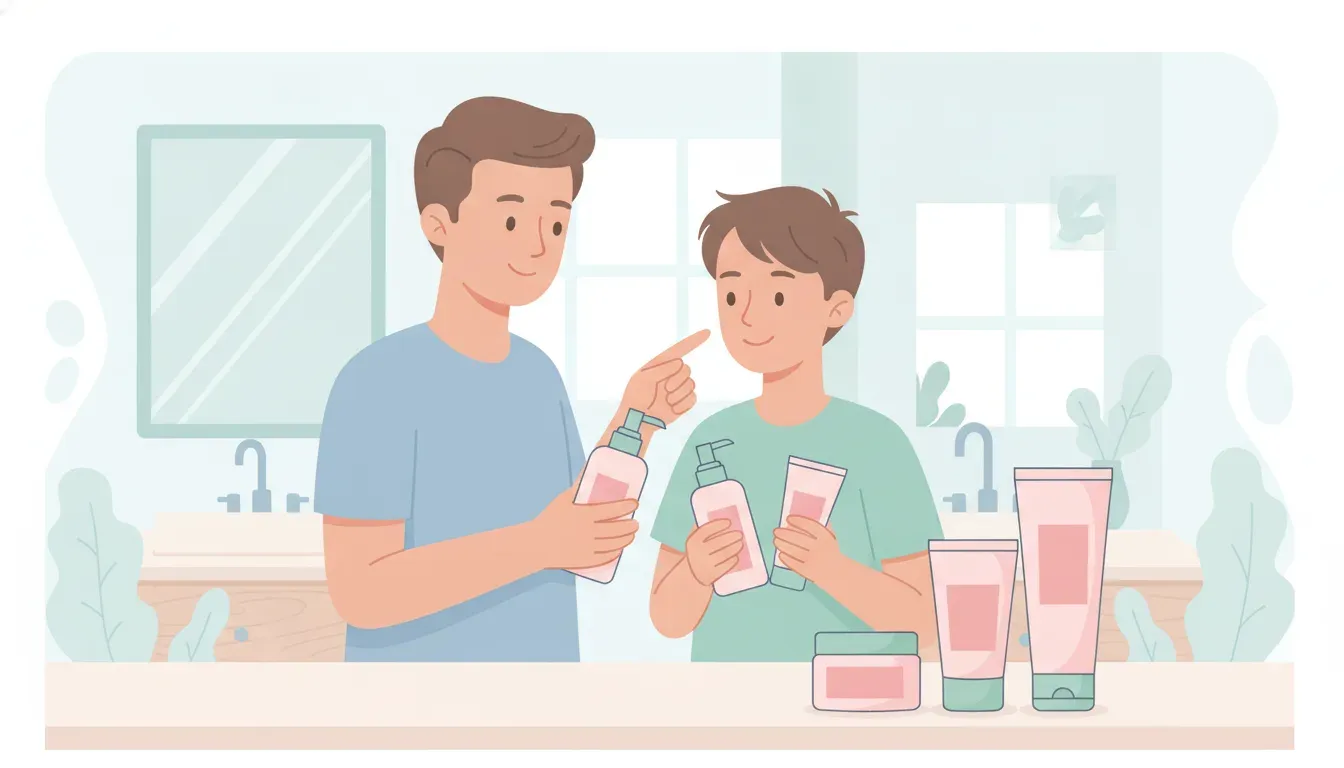
Parents can support a teen without turning skincare into a source of pressure. Keep products in a visible, convenient spot and agree on a short morning and evening routine. Explain what each step is for, then let the teen take part in choosing textures and formats when possible. That can make daily care feel personal while keeping decisions grounded in safety and simplicity.
It also helps to talk about skin in neutral terms. Shine or occasional blemishes are common experiences during adolescence; they are not a measure of cleanliness or personal worth. Encourage gentle habits rather than criticism, and avoid comparing a teen's skin with filtered images or someone else's routine.
If a teen asks about a new product, review its intended use and directions together before adding it. When a concern persists or causes distress, a pediatrician or dermatologist can offer guidance tailored to that teen. For background on Bright Girl's approach and founder, parents can visit the Bright Girl story.
Frequently Asked Questions
Should a teen with combination skin use moisturizer?
A moisturizer can be part of a comfortable routine even when some areas look oily. Start with a modest amount, apply it evenly, and use a little more on areas that feel dry if needed. Follow product directions and stop using a product if it causes persistent irritation.
Should oily areas be washed more often?
Usually, repeated washing is not needed just because the T-zone looks shiny. Cleanse gently as part of the morning or evening routine and after activities when appropriate. Avoid scrubbing or using very hot water.
Does combination skin need separate products for each area?
Not necessarily. A gentle cleanser, comfortable moisturizer, and sunscreen can work across the face. Begin with one consistent routine, then make small adjustments to the amount of moisturizer based on comfort.
When should a parent ask a healthcare professional about a teen's skin?
Ask a pediatrician or dermatologist when irritation persists, a reaction is concerning, or the teen has ongoing skin symptoms or questions that are not addressed by gentle everyday care. A professional can help decide what guidance is appropriate.
Explore Bright Girl skincare sets
A calm routine does not need to make every part of combination skin behave alike; it should help a teen care for their skin gently and consistently.
