


Safe Skincare Products for Adolescents: Guide
Skincare advice for adolescents can quickly become confusing, especially when social media turns a simple routine into a shelf full of products.
For most families, a better starting point is a short, age-appropriate routine that is easy to understand and comfortable to use consistently.
Explore Bright Girl's age-appropriate skincare collection
Safe skincare products for adolescents should support gentle cleansing, comfortable hydration, mineral sun protection, and clear ingredient choices without unnecessary complexity. Look for products designed with young skin in mind, introduce new items thoughtfully, and remember that a product can be well formulated without being right for every individual.
That framework gives parents a practical way to evaluate labels and routines while allowing adolescents to build healthy self-care habits. The first step is understanding how age fit, tolerability, and simplicity shape the meaning of safety.
What Makes Safe Skincare Products for Adolescents Different?
For adolescents, product safety is not just a question of whether an ingredient is popular or a package looks appealing. It is a question of fit. Safe skincare products for adolescents should suit developing skin and support a routine a young person can follow. They should also make it easy for parents to understand what is being applied and why. The goal is thoughtful daily care, not an overflowing shelf of formulas.
Age fit is the first consideration. Young skin does not automatically need the same type of regimen marketed to adults, especially when a product contains strong exfoliating acids or other highly active ingredients. Mayo Clinic guidance notes that acids and chemicals in some skincare products can potentially irritate young skin. HealthyChildren.org cautions against retinol, acids, and harsh exfoliants unless a medical professional directs their use. These ingredients can also place unnecessary stress on the skin barrier. A product designed with adolescents in mind starts with their stage of life and everyday needs rather than borrowing an adult routine.
How Does Simplicity Contribute to Product Safety?
A complete product should have a clear purpose within a manageable routine. Cleansing, moisturizing, and protection form a practical foundation, while extra steps should earn their place. If several products perform overlapping jobs, require complicated timing, or encourage frequent changes, it becomes harder to identify what the skin tolerates. HealthyChildren.org warns that too many products can overwhelm the skin and recommends a simple routine with gentle products. Its guidance also describes online multi-step regimens as a potential risk for young skin.
Simplicity matters for another reason: consistency. A short routine that fits mornings, evenings, school schedules, and sports is more useful than an elaborate plan that is difficult to maintain. Parents can evaluate each item by asking, "What does this product do. And is that purpose needed right now?" That question keeps routine decisions practical and leaves room for an adolescent to build confidence and autonomy.
What Should Parents Look for on the Label?
Ingredient transparency gives families a better basis for comparison. Look for a complete ingredient list, straightforward product directions, and language that explains the formula without hiding behind trend-driven claims. Gentle ingredients such as ceramides, hyaluronic acid, and niacinamide are identified by HealthyChildren.org as options that can help soothe skin. Fragrance-free choices may also be worth considering for families concerned about irritation. Repeated exposure to a particular chemical can increase the likelihood of irritant or allergic contact dermatitis over time. Fewer unnecessary exposures may therefore be a sensible approach, according to Mayo Clinic guidance.
Bright Girl applies this age-aware perspective to products formulated for young skin ages 8-24 by double board-certified dermatologist Angela Casey, M.D. Its Beyond Clean Beauty approach combines ingredient-conscious choices with medical expertise. For a closer look at label language and commonly discussed ingredients, review this guide to safe skincare ingredients. The right product is not the one with the longest ingredient story. It is the one with a clear role, understandable directions, and a formula that fits the young person's routine and comfort.
Which Products Belong in an Adolescent's Basic Routine?
A useful routine does not need a crowded shelf. For many adolescents, the foundation is a gentle cleanser, a face moisturizer, and daily mineral sun protection. This sequence supports practical habits while leaving room to notice how skin responds to each product. The American Academy of Pediatrics describes cleansing, moisturizing, and protection as the three core steps for tweens and teens, with protection used every morning. Learn more about a simple adolescent skincare routine.
- Cleanse gently. Use a mild facial cleanser to remove the day's buildup without leaving the skin feeling tight or dry. Mayo Clinic guidance recommends washing with water and a gentle cleanser twice daily, but the right frequency can depend on the adolescent's skin and daily activities. Bright+Clean Gel Facial Cleanser is pH-balanced, designed for ages 8 and older, and has a non-drying gel texture. It is described as suitable for all skin types, including acne-prone and sensitive skin. Parents and adolescents can use this gentle facial cleanser for teens guide to understand what to look for.
- Moisturize after cleansing. Moisturizer helps support comfortable, hydrated skin, including skin that feels oily. Look for a face formula that fits the adolescent's needs and does not leave a heavy or greasy finish. Mayo Clinic recommends a hypoallergenic, unfragranced or unscented moisturizer for tweens. Day+Bright Facial Moisturizer is a 24-hour, pH-balanced, non-greasy formula designed to provide all-day hydration without clogging pores. This guide to a moisturizer for teen skin types offers additional selection guidance.
- Protect in the morning. Apply sunscreen as the final morning skincare step, then reapply according to the product label and time spent outdoors. Mayo Clinic recommends a physical blocker such as zinc oxide and notes that sunscreen is recommended for everyone six months and older. Bright+Block SPF 44 is a mineral sunscreen featuring zinc oxide. Read the guide to mineral sunscreen for adolescents for more context on mineral protection and everyday use.
| Routine check. | What to look for. | Why it matters. |
|---|---|---|
| Cleanser. | Gentle and non-stripping. | Supports comfortable cleansing. |
| Moisturizer. | Age-appropriate and comfortable. | Supports hydration. |
| Mineral sunscreen. | Zinc oxide or another physical blocker. | Adds morning sun protection. |
| Optional step. | One clear purpose. | Limits routine complexity. |
Parents can use this simple check when comparing products.
The most useful routine is the one that fits the adolescent's needs and can be followed consistently.
Which products are optional?
A toner or face mask can be an optional addition, not a required step. Bright Tone Hydrating Toner is described as a non-drying post-cleansing rinse cycle, while Calm+Bright is a calming face mask. Consider one optional product at a time, and give the adolescent a chance to observe comfort and fit before adding anything else. A basic routine should remain easy to follow. Too many products can overwhelm young skin, and pediatric guidance cautions against acids, retinol, or harsh exfoliants unless a medical professional directs their use.
Product labels and individual needs matter. If a new product causes ongoing discomfort, stop using it and ask a dermatologist or pediatrician for guidance. The goal is not the longest routine. It is a manageable set of age-appropriate products that supports consistent care.
How Should Parents Read an Adolescent Skincare Ingredient List?
An ingredient list is most useful when it helps a parent understand what a product is designed to do. How it may fit into a simple routine, and which ingredients deserve closer attention. Start by looking for a clear purpose. A cleanser should cleanse without leaving skin tight, a moisturizer should support comfortable hydration, and sunscreen should provide daily protection. A product that combines several strong functions may require more caution than one with a focused role.
Transparency matters more than an impressive-sounding list. Read the full ingredient panel, product directions, age guidance, and warnings rather than relying only on front-label language. If a parent or adolescent cannot explain why an item belongs in the routine, it may not be necessary. The American Academy of Pediatrics' HealthyChildren.org recommends a simple approach with gentle ingredients and cautions against ingredient overload for young skin.
What should families look for in gentle ingredients?
Look for ingredients chosen to support cleansing, hydration, and the skin barrier without making the routine unnecessarily aggressive. HealthyChildren.org specifically identifies ceramides, hyaluronic acid, and niacinamide as gentle ingredients that can help soothe skin. These ingredients are not a guarantee that every formula will suit every person, but they can provide useful context when evaluating a moisturizer or other hydrating product.
Fragrance deserves its own check. A scented product may be appealing, but fragrance can be an avoidable source of irritation for some adolescents. HealthyChildren.org recommends looking for fragrance-free skincare to help reduce that concern. Parents should also be cautious with products featuring retinol, acids, or harsh exfoliants unless a medical professional has provided specific direction. Guidance from the Mayo Clinic notes that acids and other chemicals in some products can potentially irritate young skin. HealthyChildren.org also warns that strong exfoliating ingredients can damage the skin barrier.
Why does pH-balanced positioning matter?
pH-balanced positioning can be one helpful signal that a formula was developed with skin comfort in mind. Consider it alongside a gentle texture, clear directions, and a limited routine. Bright Girl's Bright+Clean Gel Facial Cleanser is described as pH-balanced, gentle, and designed for ages 8 and older. Its product information also describes a non-drying gel texture. Day+Bright Facial Moisturizer is described as a pH-balanced, non-greasy moisturizer designed for all-day hydration.
Families can explore this topic in the safe skincare ingredients guide, then compare what they learn with the actual label in front of them.
How can families introduce a new product carefully?
Introduce one new item at a time, following its directions, instead of changing an entire routine at once. This makes it easier to notice how the skin responds and avoids creating confusion about which product may be contributing to discomfort. The Mayo Clinic notes that repeated exposure to a chemical can increase the likelihood of irritant or allergic contact dermatitis over time. If stinging, itching, or other discomfort persists, stop the new product and ask a dermatologist or pediatrician for individualized guidance.
How Can a Routine Support Hydration and Mineral Sun Protection?
Hydration is a useful foundation for adolescent skincare, whether skin feels dry, balanced, combination, or oily. Healthy-looking skin still benefits from a comfortable moisture balance, and oily skin is not a reason to remove hydration altogether. A simple routine can support that balance with a gentle cleanser, a suitable moisturizer, and morning mineral sun protection. The goal is not to add more products. It is to choose safe skincare products for adolescents that fit the person's age, skin feel, and daily habits.
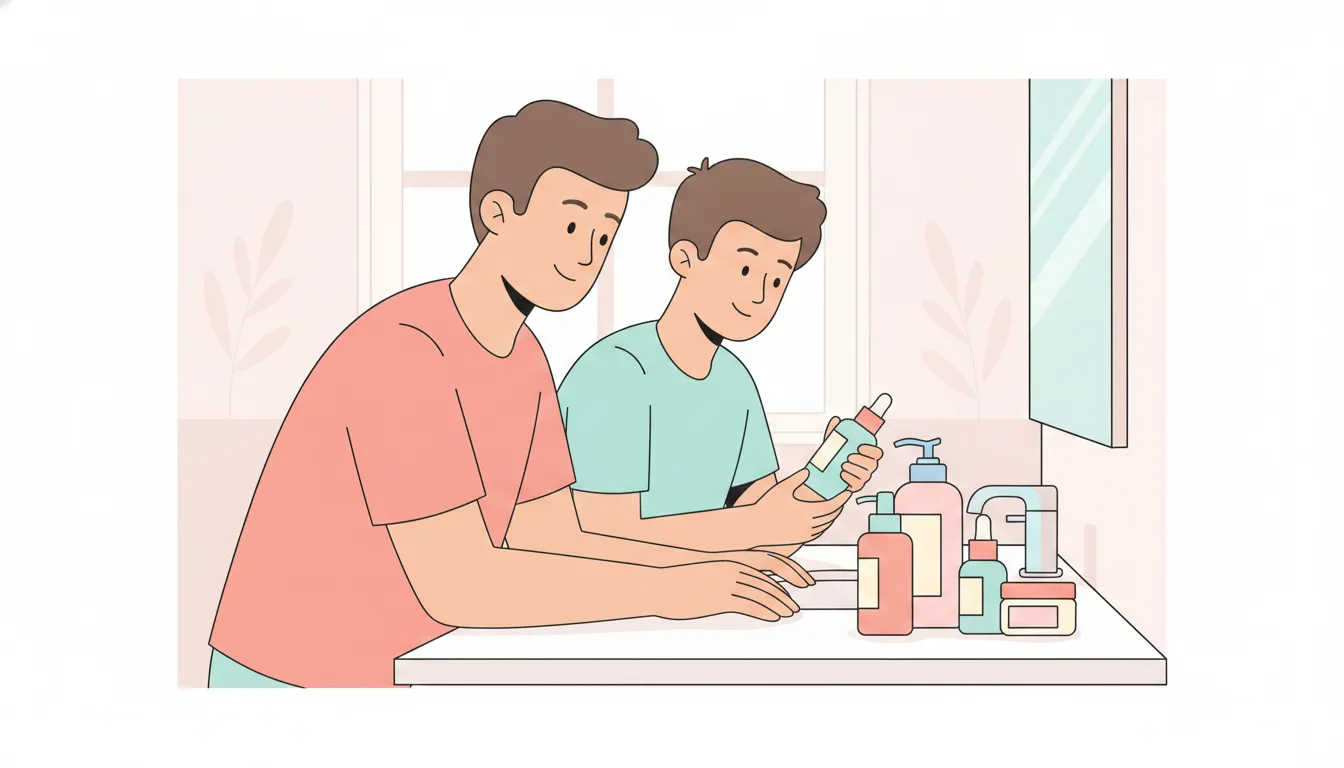
Start with cleansing that leaves the face comfortable after rinsing. A cleanser should remove everyday buildup without stripping natural oils or creating a tight, dry feeling. That sensation can be a useful sign to reconsider the product or the amount of washing. Guidance from CeraVe emphasizes choosing a mild cleanser that does not strip natural oils or leave skin tight and dry. Pediatric guidance also commonly centers cleansing as part of a simple routine. Bright+Clean Gel Facial Cleanser is pH-balanced, has a non-drying gel texture, and is designed for ages 8 and older. Families can learn more about choosing a gentle facial cleanser for teens.
Moisturizer helps make hydration an intentional part of the routine rather than an afterthought. Choose a formula that feels comfortable and is appropriate for the skin type. For oilier skin, look for a lightweight product that does not feel heavy or clog-prone. For dry or combination skin, a richer feel may be more comfortable. Day+Bright Facial Moisturizer is pH-balanced, non-greasy, and designed to provide all-day hydration without clogging pores. The guide to a moisturizer for teen skin types can help families compare what comfortable hydration may look like across different skin needs.
Mineral sun protection belongs in the morning, after the products that support cleansing and hydration. Pediatric guidance recommends physical-blocker sunscreen ingredients such as zinc oxide, and sunscreen is recommended for people six months and older. Bright+Block SPF 44 features zinc oxide as its mineral sunscreen ingredient. Apply it as the final morning skincare step before outdoor exposure, and follow the product directions for use and reapplication. For a closer look at choosing and using this category, read about mineral sunscreen for adolescents.
A routine is easier to maintain when each product has a clear purpose. Cleanse gently, moisturize for comfort, and protect in the morning. Optional products can wait until there is a specific reason to consider them. If a new formula causes ongoing discomfort, stop using it and ask a dermatologist or pediatrician for individualized guidance.
What Signs Show an Adolescent Skincare Routine Is Too Complicated?
A routine can become difficult to evaluate when every product adds another active ingredient, instruction, or possible source of irritation. More steps do not automatically mean better care. HealthyChildren.org describes a simple, safe approach for tweens and teens, while Mayo Clinic pediatric guidance similarly emphasizes that less is more for young skin. Parents can use the following signs to decide whether a routine needs to be simplified, without assuming that every reaction has the same cause.
Are several products using overlapping active ingredients?
Look closely at the labels when a cleanser, toner, serum, mask, and spot product all promise a similar purpose. Acids, exfoliating ingredients, and other strong actives can overlap across product lines. HealthyChildren.org cautions against retinol, acids, and harsh exfoliants unless a medical professional directs their use. Mayo Clinic also notes that acids and chemicals in some products can potentially irritate young skin.
A long ingredient list is not automatically a problem. Stacking similar products makes it harder to know what the skin is reacting to and whether each step adds meaningful value.
Does the skin repeatedly sting, peel, or feel tight?
Persistent stinging, visible peeling, or a tight feeling after cleansing or applying products is a practical signal to pause and reassess the routine. These sensations should not be dismissed as proof that a product is doing its job. New products can sometimes cause irritation or itchiness. Repeated exposure to a chemical may increase the likelihood of irritant or allergic contact dermatitis over time, according to Mayo Clinic guidance. If discomfort does not settle, stop the product in question and seek medical care rather than adding another item to counteract the reaction.
For a closer look at ways to reduce unnecessary irritation, read this gentle teen skincare routine guide.
Can your adolescent explain what each product is for?
Every step should have a clear, age-appropriate purpose. If a young person cannot explain why a product is included. Or if the answer is simply that it is popular online, the routine may be carrying unnecessary complexity. Too many products can overwhelm young skin. Influencer-led, multi-step regimens may also encourage product choices without enough attention to individual fit. Parents can review the routine together and remove duplicate steps while preserving the basics of cleansing, hydration, and protection.
Are products changing before there is time to evaluate them?
Frequent switching can make a routine difficult to understand. Changing several products at once also removes the ability to identify which item is associated with a new sensation or visible change. A calmer approach is to keep the routine understandable, introduce additions carefully, and record what changed. The goal is not to create a perfect schedule. It is to make safe skincare products for adolescents easier to assess and practical enough to use consistently.
Does the routine feel like a chore that is hard to follow?
If the morning or evening routine takes so long that steps are regularly skipped, it may be too burdensome. A routine that can be followed comfortably is more useful than an elaborate plan that works only on its best days. Use simplicity as a quality check: each product should be gentle, transparent, and relevant to the young person's needs. When concerns are persistent, painful, worsening, or difficult to understand, ask a dermatologist or pediatrician for individualized guidance.
When Should a Family Ask a Dermatologist for Guidance?
Safe skincare products for adolescents should support simple, age-appropriate habits, but no general routine can account for every young person's skin. A dermatologist or pediatrician can offer individualized guidance when a concern is persistent, painful, worsening, or difficult to understand. Professional input is especially valuable when a family is unsure whether a product is appropriate. How to introduce it, or whether a young person's skin needs a more tailored plan.
Consider asking for guidance if a concern continues despite a gentle routine, keeps returning, or is affecting comfort, confidence, sleep, school, or activities. Pain, marked swelling, oozing, crusting, sudden changes, or a reaction that seems intense also warrant prompt medical attention. These signs do not identify a specific condition on their own, so avoid trying to diagnose the issue from product labels or social media advice. A clinician can assess the skin in context and explain sensible next steps.
New products can sometimes cause irritation or itchiness. Mayo Clinic guidance advises stopping an acne product and seeking medical care if those side effects do not go away. Read Mayo Clinic's guidance on product-related irritation for additional educational context. If stinging, burning, persistent redness, peeling, tightness, or itching does not settle after discontinuing a new item, contact a healthcare professional rather than adding more products to compensate.
A family visit can also help when a routine has become difficult to manage. Bring the product names, ingredient lists, frequency of use, and a brief timeline of when the concern began. Photos taken in consistent lighting may help show changes over time, although they do not replace an examination. Be prepared to discuss cleansing, moisturizing, sun protection, cosmetics, hair products, and any recent changes in habits.
HealthyChildren.org notes that a dermatologist can provide tailored advice for a teen's unique skin needs and help families introduce products safely to avoid irritation. Its guidance on adolescent skincare safety can support a conversation with a pediatrician or dermatologist. The goal is not to build a longer routine. It is to understand the individual concern, protect comfort, and choose a manageable approach with appropriate professional oversight.
Frequently Asked Questions
What should a 13-year-old use for skincare?
Start with a gentle cleanser, a suitable moisturizer, and mineral sunscreen. A routine should be easy to follow and comfortable, not built around a long list of strong active ingredients. Add another product only when there is a clear reason for it, and introduce one new product at a time so you can notice how the skin responds.
What skincare is safe for 10-year-olds?
For many children, simple care is the best starting point: wash with water and a gentle cleanser, use a fragrance-free or unscented moisturizer when needed, and apply sunscreen. Mayo Clinic guidance recommends washing the face with a gentle cleanser twice daily and using sunscreen for everyone six months and older. Read the Mayo Clinic guidance.
How can parents tell if a skincare routine is too complicated?
Look for overlapping active ingredients, frequent product switching, or steps that are difficult to remember. Stinging, peeling, tightness, or ongoing discomfort are also reasons to pause and simplify. Too many products can overwhelm young skin, so each item should have a clear purpose and fit comfortably into daily life.
Should adolescents use acids, retinol, or harsh exfoliants?
Do not add these ingredients simply because they are popular online. HealthyChildren.org advises avoiding retinol, acids, and harsh exfoliants unless a medical professional directs their use. A dermatologist or pediatrician can offer individualized guidance when skin concerns persist, worsen, become painful, or do not settle after simplifying the routine. Review the pediatric skincare guidance.
Ready to Explore Age-Appropriate Skincare?
A thoughtful routine can make daily skincare feel clearer for both adolescents and parents. Choose products that fit the skin's needs, keep the steps manageable, and support healthy habits over time.
Explore Bright Girl's dermatologist-created collection to find age-appropriate options, then continue learning through Bright Ideas.
