


Healthy Skincare Education: A Guide for Teens and Parents
Healthy skincare education gives teens a calm, practical way to understand their skin. It gives parents reliable language for supporting everyday care. The goal is not a crowded shelf or a complicated trend cycle. It is learning how the skin barrier works, choosing age-appropriate steps, and building habits that feel comfortable enough to repeat.
Explore gentle skincare for young skin
Healthy skincare education connects basic skin science with gentle cleansing, hydration, moisturizer, and mineral sun protection. A simple routine can help young people notice what feels comfortable, read product directions, and make thoughtful choices with a parent or dermatologist. For most beginners, consistency and comfort matter more than adding many products.
Skin changes during the tween, teen, and young adult years. A routine can change with it, but the underlying skills stay useful. Learn the purpose of each step, introduce one change at a time, and ask for professional guidance when a concern is persistent.
What Does Healthy Skincare Education Teach About Young Skin?
Healthy skincare education teaches that skin is a living protective barrier with changing needs. Young people can learn to support that barrier with gentle cleansing, hydration, moisturizer, and daily mineral sun protection. They can also learn to evaluate comfort, directions, and ingredients instead of copying every routine they see online.
Why Does the Skin Barrier Matter?
The skin barrier is part of the body's first line of protection. It helps keep moisture in while serving as a boundary between the body and the outside environment. When a routine leaves skin feeling tight, stinging, or unusually uncomfortable, that feedback matters. Skincare education helps a teen notice those signals without turning normal skin changes into a reason for alarm.
That lesson changes how product choices are made. A young person does not need to chase every new ingredient or use several strong steps at once. A better starting point is a small routine with clear purposes. Cleanser removes daily buildup. Moisturizer supports comfortable hydration. Mineral sunscreen helps protect exposed skin during daytime activities. Each product should have a job that the teen and parent can explain.
Bright Girl takes this education-first approach with pH-balanced, age-appropriate products developed by double board-certified dermatologist Angela Casey, M.D. Families can read the Bright Girl story and dermatologist background to understand the brand's Beyond Clean Beauty positioning before choosing products.
How Can Parents and Teens Learn Together?
Learning works best as a conversation rather than a correction. A parent can ask what a teen has noticed, which step feels confusing, and what they hope a routine will help them do. A teen can practice reading directions, checking an ingredient list, and describing how a product feels. This creates room for independence while keeping safety and realistic expectations in view.
Parents can also shift the focus away from appearance. Talk about comfort, habits, hydration, and protection. The Mayo Clinic's basic skin-care guidance offers a useful reference for gentle cleansing and sun-safety habits.
Healthy skincare education is especially useful when social media presents a complex routine as universal advice. A parent and teen can pause and ask: What is this product for? Is it appropriate for this age and skin type? Does the label explain how to use it? Is there a simpler option that meets the same need? Those questions build decision-making skills that last beyond one product.
What Should a Healthy Skincare Routine for Teens Include?
A healthy skincare routine for teens usually begins with three core ideas: cleanse gently, moisturize for comfortable hydration, and use mineral sun protection during the day. In the morning, cleanse if needed, moisturize, and apply sunscreen. In the evening, cleanse and moisturize. Add optional steps only when there is a clear reason and the routine still feels manageable.
A simple routine is easier to evaluate than a crowded one. Begin with the basics, then notice whether skin feels comfortable and whether the steps fit the teen's schedule. Warm water is generally more comfortable than very hot water, and rubbing hard with a towel can create unnecessary friction. Pat skin dry and follow product directions.
- Cleanse gently. Use a mild facial cleanser to remove daily buildup without making skin feel stripped. Bright+Clean Gel Facial Cleanser is a pH-balanced daily option formulated for young skin.
- Moisturize. Apply a comfortable moisturizer after cleansing. Day+Bright Facial Moisturizer is a pH-balanced, non-greasy option designed for everyday hydration.
- Protect during the day. Use a mineral sunscreen on exposed skin as directed, especially when spending time outdoors. Bright+Block options provide mineral sun protection in tinted and sheer formats.
- Keep optional steps purposeful. A toner, mask, or other product belongs in the routine only when its role is clear and the teen can use it as directed.
- Review the routine. After a few weeks, ask whether the steps are comfortable, understandable, and realistic for the teen's schedule.
For more context on building a manageable routine, explore Bright Girl's teen skincare buyer's guide. The best routine is one that a young person understands and can follow without pressure.
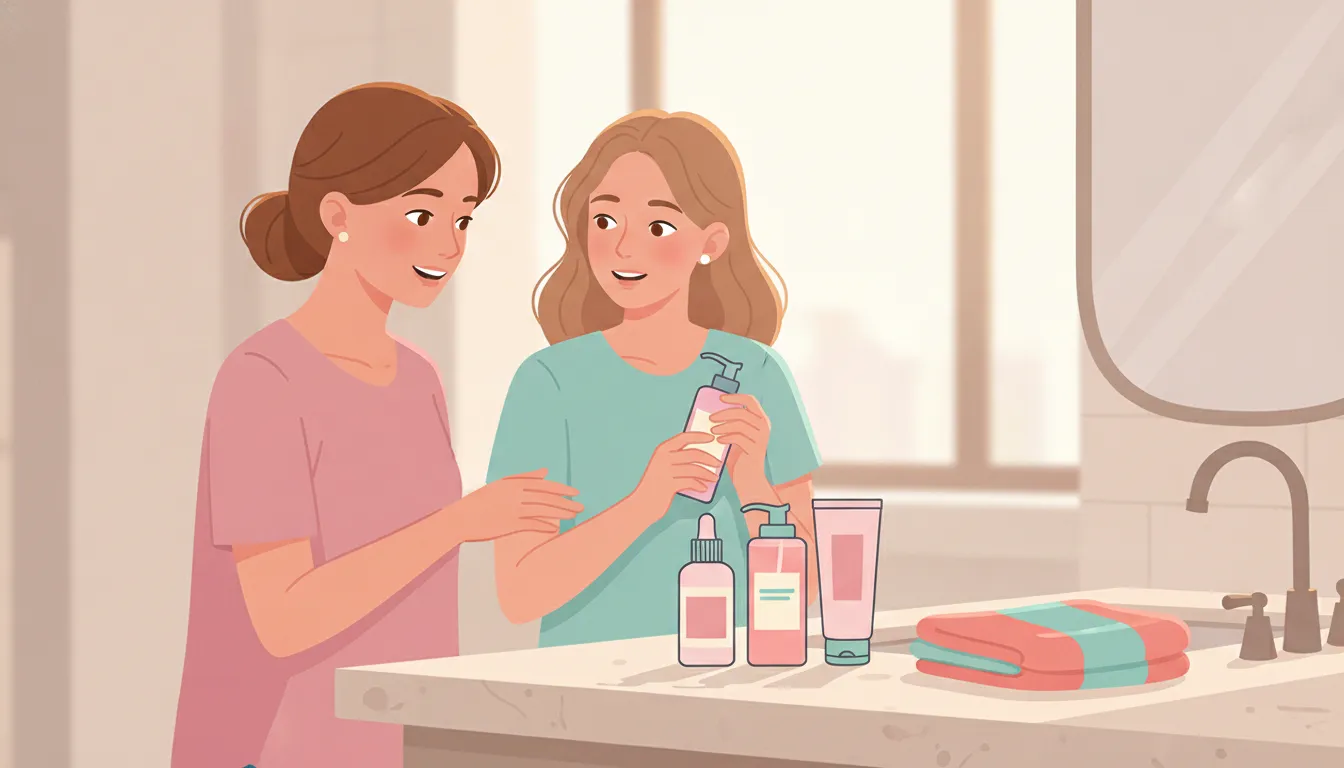
Start with a gentle daily cleanser
Which Ingredients Support Age-Appropriate Skincare?
Age-appropriate ingredients should match a clear routine purpose and a young person's comfort. Gentle cleansing agents, soothing botanicals, hydration-supporting ingredients, and mineral sunscreen filters can fit a simple routine when used according to the label. Ingredient safety also means understanding concentration, directions, and whether a product is appropriate for the individual.
Ingredient literacy does not require memorizing a long glossary. Start by connecting familiar categories with their roles:
| Routine goal | Ingredient category to understand | Helpful question |
|---|---|---|
| Gentle cleansing | Mild cleansing agents and soothing ingredients | Does skin feel clean without feeling tight? |
| Comfortable hydration | Humectants, emollients, and barrier-supporting ingredients | Does the moisturizer leave skin comfortable? |
| Soothing care | Botanicals selected for a calming, comfortable feel | Does the product fit the teen's needs and directions? |
| Daytime protection | Mineral sunscreen filters such as zinc oxide | Will the teen use the product as directed? |
Bright Girl's Beyond Clean Beauty approach combines ingredient awareness with practical education. For example, Bright+Clean includes aloe and allantoin, Day+Bright includes squalane and botanical ingredients, and Bright+Block mineral sunscreen uses zinc oxide. Product pages remain the best place to review the current ingredient list and directions before purchase.
Parents and teens should introduce changes thoughtfully. Add one new product at a time so it is easier to understand how the routine feels. Follow the label, avoid using more than directed, and stop if a product causes unusual discomfort. If a concern continues, a dermatologist can help the family choose an appropriate next step.
For a broader discussion of formulation choices, read Bright Girl's guide to clean skincare for teens. The goal is not fear of ingredients. It is informed, age-appropriate decision-making.
How Can Teens Build Safe Skincare Habits?
Teens build safe skincare habits by keeping the routine visible, simple, and consistent. Use products in the order described on the label, wash hands before applying facial products, avoid sharing products, and make sunscreen part of daytime planning. Track one change at a time and ask a parent or dermatologist when a concern does not settle.
What Makes a Routine Easier to Repeat?
Habit design matters as much as product selection. Keep daily products together in a clean, convenient place. Attach cleansing to an existing morning or evening habit, such as brushing teeth. Use a small number of steps and let the teen choose practical details, such as whether a lightweight or richer moisturizer feels more comfortable.
It is also helpful to define success in realistic terms. A healthy routine is not measured by perfect-looking skin every day. It is measured by understanding the steps, using them consistently, and responding calmly when needs change. This mindset helps teens avoid switching products repeatedly because of short-term trends.
How Should Teens Approach Sports and Busy Days?
Busy schedules call for a routine that can travel. After practice or exercise, cleanse when practical and change out of damp, sweaty clothing. During outdoor activities, reapply mineral sunscreen according to the product directions and the day's conditions. A small routine is more useful than an elaborate one that rarely fits real life.
Families can continue learning from Bright Girl's articles about skin pH and the skin microbiome. These resources can make science easier to discuss without turning skincare into a test or a source of pressure.
How Can Families Evaluate Skincare Advice Online?
Families can evaluate online skincare advice by checking who created it, identifying the purpose of each recommendation, and comparing claims with product directions or trusted medical sources. Advice should acknowledge age, skin type, and individual differences. It should not pressure a teen to copy a trend or promise the same outcome for everyone.
- Check the source. Look for a qualified dermatologist, medical organization, or clearly identified brand expert.
- Look for a specific purpose. A recommendation should explain what a step is meant to do and how to use it.
- Watch for absolute promises. Skin responds differently from person to person, so certainty is a reason to investigate further.
- Read the directions. A video or post cannot replace the product label or individualized professional guidance.
- Keep the routine age-appropriate. Young skin does not need every product marketed to adults.
The American Academy of Dermatology's basic skin-care guidance can give families a reliable starting point for conversations. Parents can also teach teens to distinguish education from marketing. A product may be attractive and well designed, but the decision should come back to purpose, directions, comfort, and fit.
Families who want to compare routine steps can review Bright Girl's Bright Tone Hydrating Toner, Day+Bright Facial Moisturizer, and Bright+Block mineral sunscreen pages. Product selection should remain personal and should follow the current information on each page.
When Should a Teen Ask a Dermatologist About Skin Concerns?
A teen should ask a parent, primary care clinician, or dermatologist when a skin concern is persistent, painful, rapidly changing, or affecting sleep, school, confidence, or daily activities. A professional can help identify an appropriate plan and explain which products or habits fit the situation. Online education is a starting point, not a personal diagnosis.
Healthy skincare education helps families know when a question deserves more support. Seek professional guidance when discomfort continues despite a gentle routine, when a product reaction is concerning, or when a teen feels distressed by a skin change. Bring product names and ingredient lists when possible. A clear record of what was used and when can make the conversation more useful.
Parents should avoid turning a consultation into criticism. A teen may be more willing to share concerns when the conversation centers on comfort and support. The teen can describe what they notice, while the parent can help with scheduling, product information, and follow-through.
Education also has a mental-health dimension. Skin concerns can affect confidence and social comfort, especially during adolescence. A supportive routine should never become a source of shame. Encourage breaks from social media comparisons, use neutral language, and remind teens that their worth is not determined by their skin.
Bright Girl was created by Angela Casey, M.D., a dermatologist and mother who wanted age-appropriate options for young skin. That perspective is reflected in the brand's education-led approach, but individual concerns still deserve individualized medical guidance.
Before choosing products, families can review the full Bright Girl skincare collection and compare each product's current directions and ingredient information.
Shop Bright Girl's age-appropriate skincare collection
Frequently Asked Questions About Healthy Skincare Education
What is the simplest skincare routine for a teen?
A simple routine includes gentle cleansing, moisturizer, and mineral sunscreen during the day, then cleansing and moisturizing in the evening, start with the smallest routine that fits the teen's schedule, follow product directions, and add optional steps only when there is a clear purpose
How can parents talk about skincare without creating pressure?
Focus on comfort, habits, and product purpose rather than criticizing appearance, ask what the teen has noticed, invite questions, and allow age-appropriate choices, a calm conversation helps skincare remain a form of self-care instead of a source of shame
What should a teen do when a product feels uncomfortable?
Stop using the product if it causes unusual discomfort and tell a parent or trusted adult. Review the directions and ingredient list. If the concern continues, is painful, or seems significant, ask a dermatologist or another qualified healthcare professional for guidance.
Does a teen need many skincare products?
No. A teen can learn the core purposes of cleansing, moisturizing, and daytime mineral sun protection without using a crowded shelf. A shorter routine is easier to evaluate and repeat. Optional products should have a clear role and should be used according to the label.
