


How to Choose a Tween Skincare Brand for Your Child
When your daughter starts asking for skincare, it can be difficult to separate thoughtful guidance from whatever is trending online. At ages 8 to 12, most families need a clear, gentle starting point rather than a crowded shelf of potent ingredients or complicated steps. Choosing a tween skincare brand is less about finding the most exciting packaging and more about finding a trustworthy routine your child can understand and use consistently.
Shop the Bright Girl skincare collection
Quick answer: The right tween skincare brand should offer a simple cleanser, moisturizer, and daily mineral sun protection, along with pH-balanced formulas, transparent ingredient guidance, and realistic product education. A named dermatologist and age-appropriate directions can give parents greater confidence while helping a tween build healthy self-care habits.
Use the guide below to evaluate a brand through a parent's lens while giving your tween an active, age-appropriate role in the decision.
What Should Parents Look for in a Tween Skincare Brand?
A thoughtful tween skincare brand should make a short routine easy to understand. Look for gentle, pH-balanced formulas, clear ingredient lists, practical directions, qualified dermatologist guidance, realistic claims, and products that support cleansing, comfortable hydration, and daily mineral sun protection without encouraging unnecessary steps.
Start with simplicity. A brand should explain what to use, when to use it, and why each product belongs in the routine. For a tween, that usually means gentle cleansing, comfortable moisture, and sun protection. A short routine is easier to remember before school and after sports. It also makes it easier for a parent to notice how the skin responds to one new product at a time.
Review the formula, not just the packaging. Look for a complete ingredient list and plain-language product education. pH-balanced formulas can support the skin's natural barrier. A noncomedogenic label tells you that a formula is designed not to clog pores. Neither label guarantees that every product will feel the same on every child, so observation and a gradual introduction still matter.
Look for qualified medical involvement. A brand should identify the clinician behind its products and explain that person's credentials and role. Bright Girl was formulated by double board-certified dermatologist Angela Casey, M.D. That information gives parents a useful point of comparison when social media recommendations make every new product sound essential.
Pay attention to claims. Trust language about gentle cleansing, hydration, barrier support, and mineral sun protection. Be cautious of dramatic promises, pressure to buy a long routine, or messaging that makes a tween feel that normal skin needs constant correction. A strong brand helps a family make a calm decision and gives a child room to build independence.
For additional pediatric context, read the Children's Hospital of Orange County guidance for parents. It reinforces the value of a straightforward routine for preteens.
Is a Simple Three-Step Routine Enough for Tween Skin?
For most tweens, a consistent three-step routine is a sensible place to begin: cleanse gently, moisturize comfortably, and apply broad-spectrum SPF 30 or higher in the morning. Keeping the plan short helps families introduce products gradually, notice changes, and avoid unnecessary active ingredients that may make young skin uncomfortable.
Yes. A simple routine can give a tween the structure she wants without asking her to manage an advanced regimen. CHOC Children's pediatric guidance recommends daily cleansing, a light oil-free moisturizer, and a noncomedogenic sunscreen rated SPF 30 or higher. That basic framework can be adapted to the child's skin and schedule.
- Gentle cleanse: Use a mild cleanser with lukewarm water. In the evening, cleansing can remove sweat, excess oil, and the day's sunscreen. Clean hands and a soft touch are enough. Rough cloths, vigorous rubbing, and very hot water can leave young skin feeling uncomfortable.
- Light moisturize: Apply a small amount of lightweight moisturizer after cleansing, while skin is still slightly damp. If the face feels tight after washing, that feedback can help a parent choose a more comfortable formula or ask a dermatologist for guidance.
- SPF 30+ protect: Each morning, apply a broad-spectrum sunscreen rated SPF 30 or higher to exposed skin, following the product directions. Reapply as directed during extended outdoor time, swimming, heavy sweating, or towel drying. Hats, shade, and protective clothing add helpful layers of sun-smart care.
- Introduce gradually: Start with the basics and add only one new product at a time when there is a clear reason. This makes it easier to identify what feels comfortable and avoids turning a small concern into a complicated routine.
- Build a shared habit: Give your tween a manageable role, such as washing at night or applying sunscreen before school. A parent can model the routine, check directions, and help with consistency while the child gains confidence.
Morning protection and evening cleansing create a reliable rhythm. If a concern persists or the skin becomes uncomfortable, pause new products and ask a dermatologist for individualized guidance.
Which Cleanser and Moisturizer Should a Tween Start With?
Begin with a gentle, pH-balanced cleanser and a light, noncomedogenic moisturizer. The cleanser should remove daily buildup without leaving the face tight, while the moisturizer should support comfortable hydration without a heavy finish. Introduce each product separately and follow the label rather than adding several new steps at once.
A cleanser should remove everyday oil, sweat, and residue without leaving the face tight or squeaky. pH-balanced formulas are designed to work in harmony with the skin's natural environment. This can be especially useful when a young person's barrier feels easily disrupted by weather, hot water, or vigorous scrubbing.
Technique matters as much as product selection. Wet the face with lukewarm water, use a small amount of cleanser, and massage it gently with clean fingertips for about 20 to 30 seconds. Rinse thoroughly and pat dry with a clean towel. A basic routine may use cleanser once in the evening and, when comfortable, in the morning as well. After a very active day, a gentle cleanse can remove sweat and sunscreen according to the product directions.
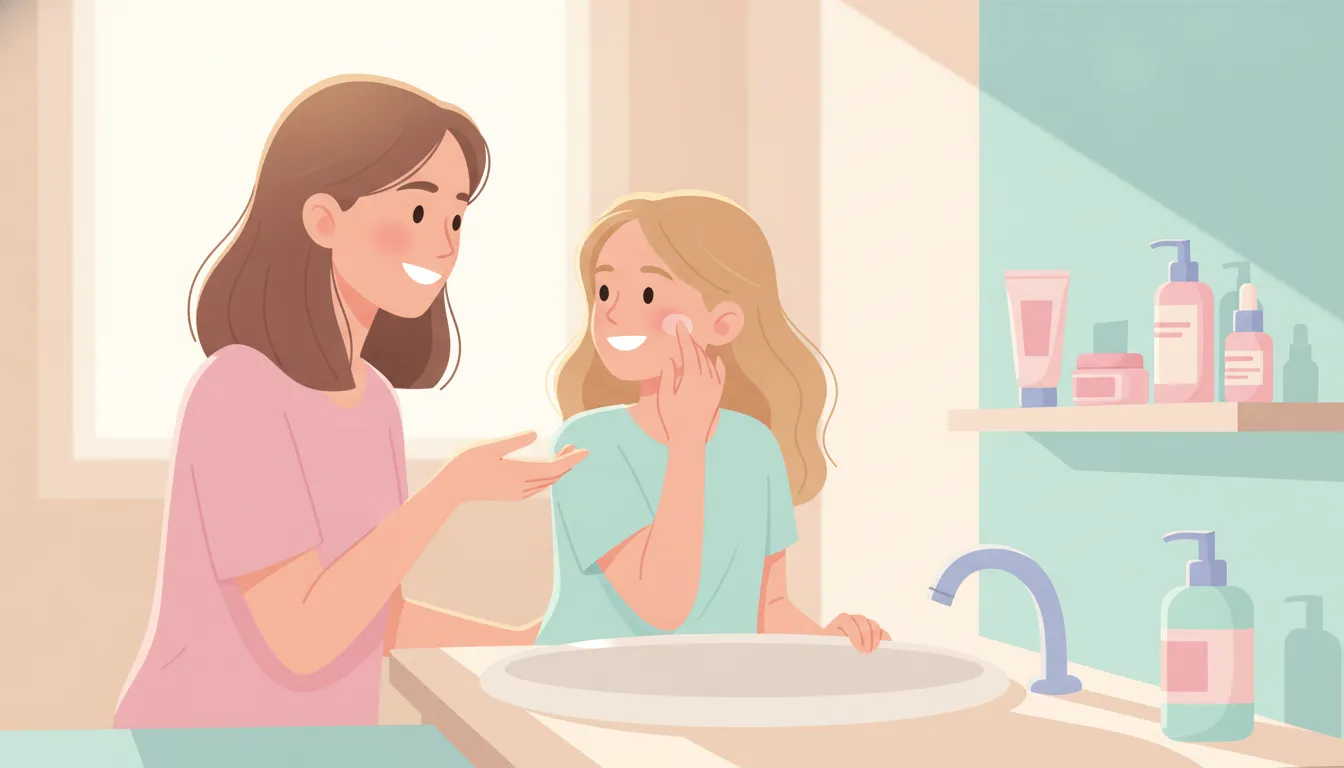
Follow cleansing with light hydration. A moisturizer labeled noncomedogenic is designed not to clog pores, while an oil-free or lightweight texture may feel comfortable on younger skin. Apply a small amount while the face is slightly damp, smoothing it over the cheeks, forehead, nose, and chin. If a product stings or causes ongoing discomfort, stop using it and ask a healthcare professional what to do next.
Bright Girl's Bright+Clean cleanser and Day+Bright moisturizer are designed for an age-appropriate routine. Bright Girl is formulated by double board-certified dermatologist Angela Casey, M.D., with pH-balanced products for young skin. Parents can introduce one product at a time so they and their tween can observe how the skin responds.
Explore a gentle Bright+Clean cleanser
Why Does Sun Protection Belong in Every Tween Routine?
Daily sun protection belongs in a tween routine because consistent SPF helps limit cumulative UV exposure while building a healthy habit. Choose a broad-spectrum mineral sunscreen labeled SPF 30 or higher, apply it as the final morning step, and reapply according to the label during outdoor activities, swimming, sweating, or towel drying.
Mineral formulas use filters such as zinc oxide to sit on the skin's surface and help protect it from UVA and UVB rays. Look for the words broad-spectrum and an SPF rating of 30 or higher. A noncomedogenic formula is designed not to clog pores, which can make it a practical choice for a tween who wants comfortable everyday protection.
Apply sunscreen generously to exposed skin before heading outside, following the product label. A single morning application may not be enough for a beach day, sports practice, a long walk, or any activity with repeated sun exposure. Keep sunscreen with a backpack or outdoor gear so reapplication feels like part of the plan rather than an interruption.
Sun protection does not need to depend on sunscreen alone. A wide-brimmed hat, sunglasses, protective clothing, and shade can add practical layers. Parents can model the habit by applying their own sunscreen alongside their tween and explaining what it does. The child can then take on reminders and reapplication as her independence grows.
The Children's Hospital of Orange County recommends daily sunscreen with SPF 30 or higher as part of age-appropriate skincare guidance. Read CHOC's skincare guidance, then compare Bright Girl's Bright+Block SPF 44 tinted mineral sunscreen and Bright+Block SPF 40 sheer mineral sunscreen.
How Can a Tween Skincare Brand Show It Is Age-Appropriate?
An age-appropriate tween skincare brand respects both the parent making the purchase and the child building independence. It explains ingredients and directions clearly, centers a focused routine, names qualified expertise, uses realistic language, and avoids pressure to collect potent products that are not needed for basic cleansing, hydration, and sun protection.
Use the following comparison when reviewing a brand's website, product pages, and educational content. The goal is not to find a perfect label. The goal is to find enough reliable information to make a measured choice.
| Area | What to look for |
|---|---|
| Routine | A focused cleanser, moisturizer, and sunscreen routine rather than a shelf full of unnecessary steps. HealthyChildren's pediatric guidance explains why trend-driven routines can be too much for young skin. |
| Ingredients | Transparent labels, clear product purposes, and gentle formulas. Be cautious with products promoted to young audiences that center on potent active ingredients or heavily fragranced formulas. |
| Expertise | A named medical expert should be easy to find, with credentials and an explanation of the brand's approach. Learn about Dr. Angela Casey and her role in Bright Girl. |
| Directions | Instructions should be easy for a parent and tween to follow. The brand should explain how often to use each product and what to do if the skin feels uncomfortable. |
| Marketing | Refined, age-appropriate education should support healthy habits without making a child feel pressured to buy more products. Colorful design may attract attention, but substance should guide the decision. |
Use this quick checklist:
- Simple routine: Does the brand explain what to use and when?
- Ingredient transparency: Can you review the full ingredient list and product purpose?
- Named dermatologist: Is the medical expert's role clear?
- Gentle formulas: Are products designed for young, developing skin?
- Mineral SPF: Is daily mineral sun protection part of the routine?
- Clear directions: Can a tween follow them with reasonable parent guidance?
- Realistic claims: Does the brand educate without promising perfect results?
Bright Girl brings these standards together through Beyond Clean Beauty, age-appropriate formulations, and education for families. The Bright Girl skincare collection lets parents compare products with the routine their tween actually needs.
When Should a Parent Ask a Dermatologist for Guidance?
Ask a dermatologist when your tween has ongoing discomfort, a reaction that continues after a new product is stopped, or a concern that keeps returning. A qualified professional can account for sensitivity, family history, and current products, then help your family decide which routine steps to keep, change, or leave out.
A first routine should support healthy habits, not create pressure to use more products. Even when a brand is designed for young skin, every child has individual needs. A dermatologist can offer advice that accounts for sensitivity, family history, existing skin concerns, and products your tween may already use.
What signs mean a product should be paused?
Pause a new product if your tween experiences burning, significant stinging, itching, swelling, or a noticeable rash. Do not encourage her to push through discomfort. If the sensation continues after the product is discontinued, becomes more intense, or interferes with sleep or daily activities, contact a dermatologist or the child's healthcare professional. Seek prompt medical care for a severe or rapidly worsening reaction.
Why should products be introduced one at a time?
Introducing one product at a time gives your family a clearer way to observe the skin. Use it as directed and allow time to notice how your tween responds before adding another step. The American Academy of Pediatrics recommends reading personal-care labels carefully and watching for reactions as children try new products. Review its family guidance on safer personal-care products.
How can the routine change as a child grows?
Weather, sports, puberty, travel, stress, and changing skin needs can affect what feels comfortable and practical. Revisit the basics periodically: gentle cleansing, comfortable hydration, and daily sun protection. If those essentials no longer feel sufficient, or if your tween is worried about her skin, a dermatologist can help your family decide what to change and what to leave out.
Compare Bright Girl products for a gentle tween routine
Frequently Asked Questions
What skincare brands should 12-year-olds use?
Look for a brand designed for young skin that centers on a simple routine: gentle cleanser, moisturizer, and sunscreen. Review the ingredient information, avoid unnecessary potent ingredients and harsh scrubs, and consider whether qualified medical expertise shaped the formulas. A parent can involve the tween in choosing products so the routine feels practical and easy to maintain.
Which skincare brand is best for tweens?
The right choice depends on the tween's skin needs, sensitivities, and comfort with the routine. A thoughtful brand should communicate its ingredients clearly, support age-appropriate habits, and set realistic expectations rather than relying on complicated regimens or trend-driven claims. Parent and child should understand what each product does and why it belongs in the routine.
What is the best skincare for tween girls?
Start with a gentle, pH-balanced cleanser, a light moisturizer, and daily broad-spectrum sunscreen. The cleanser removes everyday buildup without aggressive scrubbing, while moisturizer supports comfortable hydration. For sun protection, pediatric guidance commonly recommends a noncomedogenic SPF 30 or higher sunscreen, applied consistently and reapplied as directed.
How can parents tell if a product is age-appropriate?
Check whether the brand explains its intended age range, ingredient choices, and usage instructions in plain language. Be cautious with products built around potent ingredients or long routines that are not necessary for basic tween skincare. If a product causes persistent discomfort, pause the routine and ask a dermatologist for individualized guidance.
Ready to Build a Gentle Tween Routine?
Choosing a simple, age-appropriate routine can make skincare feel clear and manageable for both parents and tweens. Bright Girl offers dermatologist-created essentials designed to support young skin with thoughtful, gentle care. Explore the collection with your tween and choose the few steps that fit her actual needs.
