


Teen Skincare Without Retinol: A Gentle Guide
Skincare advice can make a teenager feel as if a complicated shelf is a requirement. Retinol is often presented as the answer to every concern, but young skin usually needs a calmer foundation first. For tweens, teens, and young adults, a consistent routine can center on gentle cleansing, comfortable hydration, barrier support, and daily mineral sun protection.
Shop age-appropriate Bright Girl skincare
Teen skincare without retinol is a sensible starting point for many young people. Retinol and prescription retinoids have specific roles, especially when a dermatologist recommends them for a defined concern. They are not automatic essentials for every teen. A simple routine with a gentle cleanser, moisturizer, and mineral sunscreen can support healthy skin while reducing unnecessary product overload.
That approach is not about ignoring a real skin concern. It is about matching an ingredient to a person's age, skin needs, and professional guidance instead of copying an adult routine from social media. The sections below explain what retinoids do, why they can be difficult to use casually, and how to build a practical routine without them.
Why Does Teen Skincare Without Retinol Make Sense?
Teen skincare without retinol makes sense because retinol is a potent vitamin A derivative, not a universal first step. Young people often benefit more from learning a few repeatable habits than from layering several strong actives. Gentle cleansing removes sweat, sunscreen, and daily buildup. A moisturizer helps maintain comfortable hydration. Mineral sunscreen protects exposed skin during the day.
Retinoids can be recommended by a dermatologist for a specific medical concern. That professional decision is different from buying an adult-focused retinol because it is trending. The American Academy of Dermatology's acne guidance lists topical retinoids among evidence-based options for acne care. So their use should be connected to a defined concern and an appropriate plan. Read the updated AAD acne guidance.
For a teen with generally healthy skin, adding retinol may introduce complexity without solving an actual need. It can also make it harder to identify which product is causing dryness or discomfort. A shorter routine is easier to follow, easier for a parent and teen to discuss, and easier to adjust when the seasons or skin needs change.
Is retinol necessary for every teenager?
No. Retinol is not a required part of a basic teen routine. A dermatologist may recommend a retinoid in some situations. But a teen should not start one simply because an influencer uses it or because an adult skincare product promises a smoother-looking complexion. The right question is not whether an ingredient is popular. It is whether the ingredient is appropriate for that person's concern, skin tolerance, and care plan.
What should a basic routine accomplish?
A basic routine should be easy to repeat and comfortable enough to maintain. It should clean without leaving skin tight, add hydration without unnecessary layers, support the skin barrier, and include sun protection. Those priorities create a useful baseline. If a concern persists, a dermatologist can evaluate it and recommend the next step rather than having a teen experiment with multiple active products at once.
What Is Retinol, and How Is It Different From Retinoic Acid?
Retinol is an over-the-counter vitamin A derivative found in some cosmetic products. Retinoic acid is the active form used in prescription topical retinoids. The skin converts retinol through intermediate steps before it becomes retinoic acid, while prescription products deliver a form that is ready to act on the skin. These ingredients belong to the same broader family, but they are not interchangeable.
The distinction matters because people often use the word retinol to describe several different products. Strength, formulation, frequency, skin condition, and the rest of the routine can all change how a product feels. A label alone cannot tell a teen whether a product is a good choice. Professional guidance is especially important when a person has persistent acne, eczema, unusual irritation, or another concern that needs an individual assessment.
Retinoids also have a clinical role that should not be confused with a general cosmetic routine. A review of topical retinoids describes their use in acne care and notes common local reactions such as redness, dryness, and scaling. Review the published topical retinoid research. Those effects do not mean a prescribed retinoid is wrong for everyone. They do mean that unsupervised experimentation can create avoidable discomfort.
Why can a strong active complicate a young routine?
A strong active can complicate a routine because irritation may resemble a worsening of the original concern. A teen may respond by adding another product, scrubbing harder, or using the first product more often. That cycle can weaken comfort and make the routine difficult to evaluate. Starting with fewer products provides clearer feedback and gives the skin a chance to settle.
Which Gentle Ingredients Support Healthy Young Skin?
Gentle ingredients can help a teen build a routine around comfort rather than intensity. The goal is not to collect every ingredient associated with skincare. It is to choose a small number of products that have a clear purpose and fit the person's skin type. Ingredients should be introduced gradually, and a new product should be stopped if it causes persistent burning, swelling, or a significant rash.
Hydrating ingredients help the skin feel comfortable and can make a routine easier to maintain. Soothing ingredients such as aloe, allantoin, chamomile, and marshmallow root are often used in gentle formulations. Squalane can add a lightweight emollient feel. These ingredient examples do not guarantee that every product will suit every person, but they illustrate the kind of supportive formulation a young routine can prioritize.
Bright Girl's products are designed for young skin ages 8 to 24 and use pH-balanced formulations. The Bright+Clean Gel Facial Cleanser is a gentle daily cleanser with aloe and allantoin. The Day+Bright Facial Moisturizer is a pH-balanced daily moisturizer with squalane and botanical ingredients. Product selection should still reflect individual preferences and sensitivities.
How does hydration support a simple routine?
Hydration supports a simple routine by helping skin feel less tight after cleansing. When a routine feels comfortable, a teen is more likely to use it consistently instead of skipping steps or constantly changing products. A moisturizer can be used after cleansing, while a toner is optional rather than mandatory. If skin feels dry, the answer is usually to simplify and support comfort, not to add more active ingredients.
Why is mineral sunscreen part of age-appropriate care?
Mineral sunscreen is a practical daytime step because sun protection belongs in a daily skincare plan. Bright Girl's Bright+Block SPF 40 Sheer Mineral Sunscreen is a mineral sunscreen option for the face. Apply sunscreen as directed on the product label, and reapply according to the label and the day's activities. Hats, shade, and protective clothing can add useful layers of sun protection.
What Does a Simple Retinol-Free Teen Skincare Routine Look Like?
A retinol-free routine can be short enough for a busy school morning and clear enough for a teen to follow without reminders. Start with the fewest steps that meet the skin's needs. Do not add every optional product at once. If the routine causes persistent discomfort, pause new additions and ask a parent, guardian, or healthcare professional for guidance.
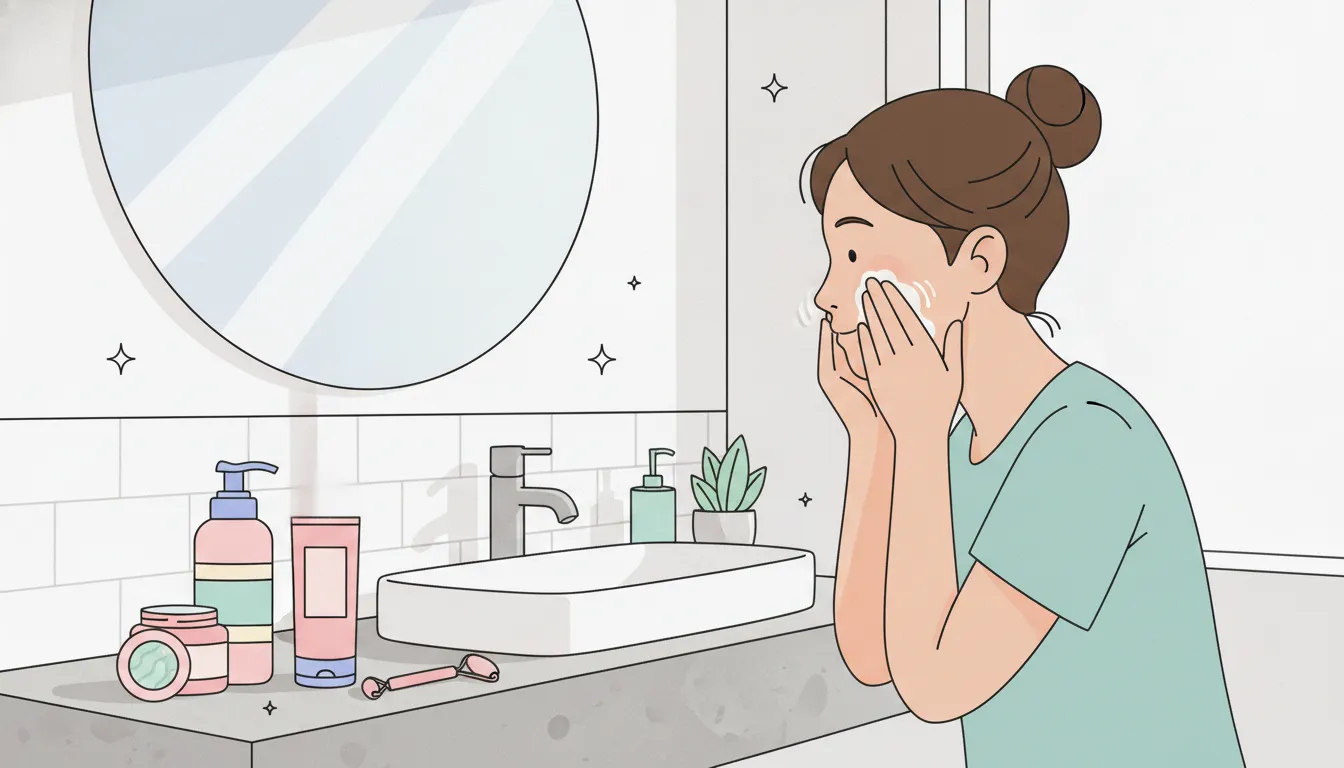
- Cleanse gently. In the morning and evening, use lukewarm water and a gentle cleanser. Use fingertips rather than a rough cloth or aggressive scrub. Rinse thoroughly and pat dry.
- Moisturize. Apply a comfortable, non-greasy moisturizer while skin is slightly damp. Use enough to cover the face without rubbing forcefully.
- Protect in the morning. Finish with a broad-spectrum mineral sunscreen during daytime exposure. Follow the product label for application and reapplication guidance.
- Keep the evening routine simple. Remove sunscreen and daily buildup with a gentle cleanse, then moisturize. There is no need to add retinol simply to make the evening routine feel more advanced.
- Review before adding. Keep a new product as the only major change for several days when possible. That makes it easier to notice whether the skin feels comfortable or whether the product should be removed.
For dry or sensitive skin, use less product variety and focus on comfort. For combination or oily skin, avoid the assumption that a tight feeling means the cleanser is working better. Skin can feel fresh without feeling stripped. If acne is persistent or distressing, a dermatologist can recommend a plan that may include medication when appropriate. The Bright Girl Acne Care Kit is a product option to explore, but product selection should not replace professional medical advice for a persistent concern.
| Routine focus | Retinol-free choice | Why it helps |
|---|---|---|
| Cleanse | Gentle gel cleanser | Removes daily buildup without making the routine feel harsh. |
| Hydrate | Comfortable moisturizer | Supports a consistent routine and helps reduce a tight after-cleansing feel. |
| Daytime protection | Mineral sunscreen | Adds a practical sun-protection step without introducing another active. |
| When concerns persist | Dermatology visit | Provides individualized guidance instead of trial-and-error product layering. |
What should teens avoid mixing?
Teens should avoid creating a crowded routine with several exfoliating acids, scrubs, retinoids, and fragranced products at the same time. The more changes made together, the harder it becomes to understand a reaction. A basic routine is not a lesser routine. It is a clearer starting point that can be adjusted with purpose.
When Should a Teen Ask a Dermatologist About Retinoids?
A dermatologist can help when a skin concern does not improve with a gentle routine, causes pain, leaves persistent marks, or affects confidence and daily life. A visit can also be useful when a teen is unsure whether a product reaction is irritation, allergy, or another condition. Parents and teens do not need to diagnose the issue alone or rely on a social media routine.
Bring a list or photographs of current products, note when the concern began, and describe any burning, itching, flaking, or swelling. Share how often each product is used. This information helps the dermatologist understand the routine and decide whether a retinoid or another option belongs in the plan.
What questions can families bring to an appointment?
- What is the most likely cause of this concern?
- Which steps should stay in the routine, and which should pause?
- Would a retinoid be appropriate for this specific concern?
- How should a recommended product be introduced?
- What signs mean the product should be stopped or the office contacted?
A dermatologist-created brand can provide helpful education, but no general article can replace an individualized evaluation. Bright Girl was created by double board-certified dermatologist Angela Casey, M.D., with a focus on age-appropriate skincare for young people. That perspective supports a simple message: start with healthy habits, choose products thoughtfully, and seek clinical guidance when a concern needs more than a cosmetic routine.
How Can Parents and Teens Make a Gentle Routine Stick?
Consistency becomes easier when the routine fits real life. Keep the number of steps realistic, place products where they will be used, and let the teen participate in choosing textures and formats. A routine should feel like useful self-care, not a daily test. Parents can ask whether skin feels comfortable and whether a product is easy to use rather than focusing only on a visible result.
It also helps to talk about ingredients without shame. Skin concerns are common, and a teen should not feel blamed for having them. Explain that more intense does not always mean more effective for that person. A calm routine can support healthy skin habits while leaving room for professional care when needed.
Bright Girl's guide to choosing skincare for teens can help families compare routine basics, while the article on ingredients to avoid in teen skincare offers additional ingredient education. Use those resources as a starting point, then keep the final routine focused on the individual's skin and comfort.
Frequently Asked Questions
Why should teens avoid using retinol?
Teens do not need retinol as a default skincare step. It can cause dryness, redness, or scaling, and it may add unnecessary complexity to a basic routine. A dermatologist may recommend a retinoid for a specific concern, but a teen should not start one just because it is popular online.
What is the best simple skincare routine for teens?
A practical routine usually includes gentle cleansing, moisturizer, and daytime mineral sunscreen. The morning and evening steps can stay short. Add optional products only when they have a clear purpose and the skin remains comfortable.
Are adult skincare products safe for teens?
Some adult products may be suitable, but age on the label is not the only consideration. Ingredients, strength, fragrance, skin type, and the person's concern all matter. Young people should choose products thoughtfully instead of assuming an adult routine is automatically appropriate.
When is it appropriate for a teen to use a retinoid?
A retinoid may be appropriate when a qualified healthcare professional recommends it for a defined concern and explains how to use it. Follow that plan carefully, keep the rest of the routine gentle, and ask what to do if irritation develops.
How can teens support acne-prone skin without retinol?
Use gentle cleansing, a comfortable moisturizer, and daily sun protection. Avoid scrubbing or changing several products at once. If breakouts are persistent, painful, or distressing, ask a dermatologist for individualized guidance.
Choose a Gentle Starting Point
Teen skincare without retinol can be effective as a simple, education-led approach: cleanse gently, moisturize, use mineral SPF, and make changes deliberately. Retinoids have a place in professional care for some concerns, but they are not a rite of passage or a requirement for healthy young skin. Start with habits that respect comfort and consistency.
