


Skincare Products for Tween Girls With Acne Guide
A first breakout can make a tween want a complicated shelf of products, but developing skin usually benefits from a calmer starting point. Parents can narrow the choice by focusing on age-appropriate formulas, gentle cleansing, comfortable hydration, and daily mineral sun protection rather than adult-style product stacks.
Shop age-appropriate skincare for young skin
The best skincare products for tween girls with acne support a simple routine: a gentle cleanser, a fragrance-free or otherwise suitable moisturizer, and daytime sunscreen. Choose products designed for young, sensitive skin, introduce changes gradually, and ask a qualified healthcare professional about persistent, painful, scarring, or concerning breakouts.
That foundation gives parents a practical way to compare labels and product claims without chasing every trend. Start by looking at the ingredients, texture, and age fit that make a daily routine easier to follow.
What Should Parents Look For in Skincare Products for Tween Girls With Acne?
When parents compare skincare products for tween girls with acne, the best starting point is not a long ingredient list or an adult-style product stack. Developing skin can be thinner, more sensitive, and more prone to irritation than adult skin. Look for age-appropriate basics that support healthy habits, then add complexity only when a qualified healthcare professional recommends it.
Start with a simple, age-appropriate foundation
A first routine can center on gentle cleansing, comfortable hydration, and daytime mineral sun protection. The American Academy of Dermatology recommends that tweens begin with a gentle cleanser, fragrance-free moisturizer, and broad-spectrum, water-resistant sunscreen with SPF 30 or higher. Mayo Clinic similarly recommends water and a gentle cleanser, an unfragranced or unscented moisturizer, and sunscreen for tweens ages 8 through 12. These fundamentals give families a clear way to begin without making every available product necessary.
| Look for | Why it matters |
|---|---|
| Age-appropriate formulas | Young skin may be more sensitive, so a tween routine should not copy an adult regimen. |
| Gentle daily cleansing | Harsh cleansing and scrubbing can cause irritation, while a simple habit is easier to follow. |
| Fragrance-free or unscented hydration | Added scents can trigger irritation or allergic reactions, and moisturizer supports comfortable skin. |
| Mineral sun protection | Physical blockers such as zinc oxide are an age-appropriate sunscreen option for daytime use. |
| Clear, realistic guidance | Products can support a consistent routine, but persistent, painful, or concerning acne may need individualized professional guidance. |
Parents should also check whether a product's purpose is clear and whether the routine can be followed consistently. Bright Girl products are formulated for young skin ages 8 to 24 by double board-certified dermatologist Angela Casey, M.D. For a broader overview of age-appropriate skincare choices, see this age-appropriate skincare for tweens guide.
Realistic expectations matter. A cleanser, moisturizer, and sunscreen can establish supportive habits, but they are not a substitute for an evaluation when breakouts persist. Cause pain, leave marks or scars, or when skin reacts to an over-the-counter product. Choosing fewer, well-understood products helps parents notice what their child is using and makes it easier to pause and ask for expert advice when needed.
Why Does a Tween's First Acne Routine Need to Stay Simple?
A first breakout can make a tween want to try every product on the bathroom shelf. A calmer starting point is usually more useful. Developing skin is thinner, more sensitive, and more prone to irritation than adult skin. So an age-appropriate routine should focus on a few well-chosen habits rather than a long list of steps. Puberty-related hormonal changes can also increase oil production, which may contribute to blackheads, breakouts, and an oilier complexion.
How Can Parents Reduce Irritation Risk?
More products do not automatically mean better care. Harsh cleansing and scrubbing can irritate skin, while added scents may trigger irritation or allergic reactions. Introducing several new products at once also makes it difficult to know which one is causing a problem. For that reason, parents can introduce changes gradually, follow each label carefully, and pause a new product if the skin becomes persistently uncomfortable.
Some acne-focused ingredients can cause dryness or irritation, which is one reason a daily moisturizer matters. A parent does not need to choose a complicated active routine without professional guidance. If a tween has very sensitive skin, a reaction to an over-the-counter product, or ongoing discomfort, a board-certified dermatologist can help the family make an individualized plan. The American Academy of Dermatology's guidance for tween skincare also emphasizes keeping early routines gentle and basic.
What Are the Foundations of a Simple Routine?
For many beginners, the foundation is straightforward: gentle cleansing, comfortable moisturization, and daytime sun protection. Mayo Clinic guidance for tweens ages 8 through 12 recommends washing with water and a gentle cleanser twice daily, followed by a hypoallergenic, unfragranced or unscented moisturizer. Sun protection can be added during the day according to the product label and family needs.
These basics are easier for parents to explain and for tweens to remember. They also leave room to observe how the skin responds before adding anything else. The goal is not to create an adult-style product stack. It is to build a manageable routine that supports healthy skin habits, respects developing skin, and helps a tween feel confident rather than overwhelmed.
Which Products Belong in a Gentle Tween Acne Routine?
For parents choosing skincare products for tween girls with acne, the best starting point is usually a short routine that is easy to repeat. Tweens ages 8 to 12 can learn the foundations of cleansing, moisturizing, and sun protection without adopting an adult-style product stack. Bright Girl products are formulated for young skin ages 8 to 24 by double board-certified dermatologist Angela Casey, M.D.
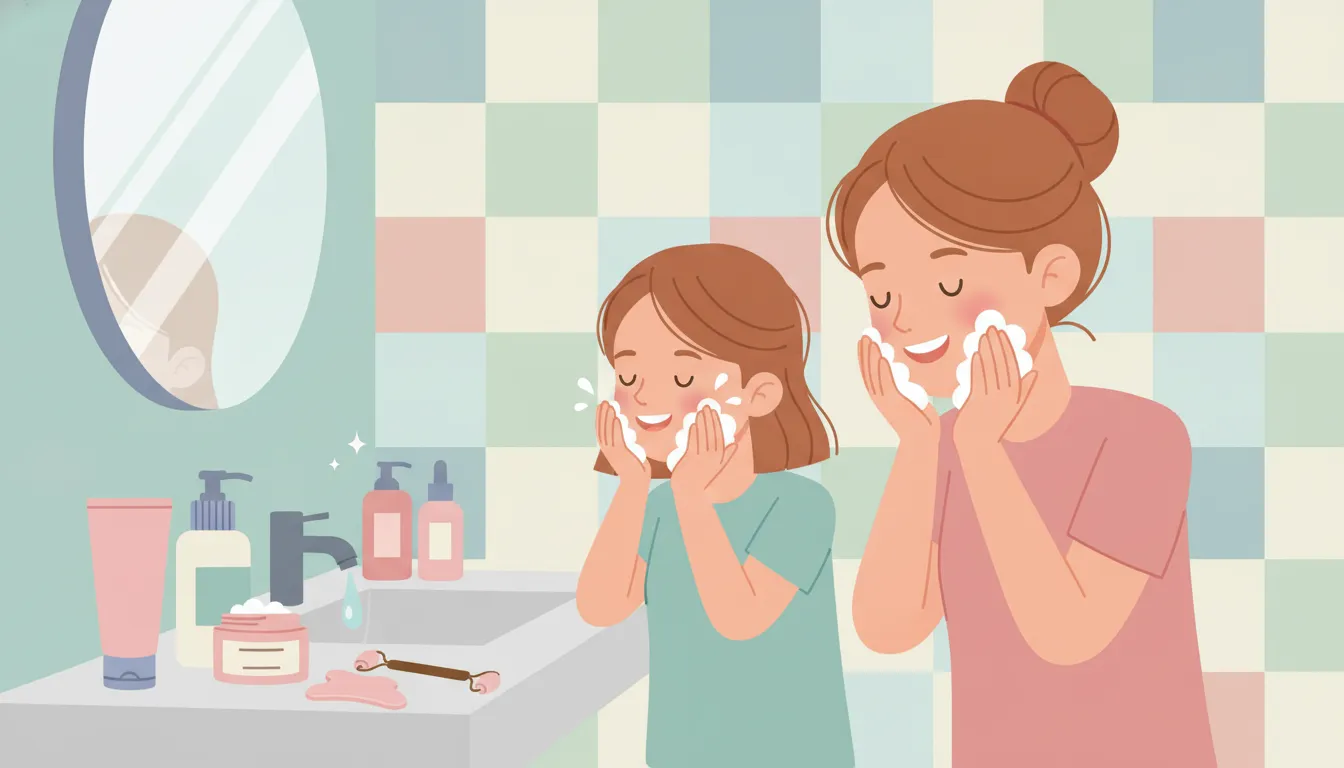
A simple morning and evening product path
- Cleanse in the morning and evening. Use lukewarm water and a gentle cleanser, with light fingertips rather than a scrub brush or rough cloth. Mayo Clinic guidance for tweens includes washing with water and a gentle cleanser twice daily. Bright+Clean gentle daily cleanser is a pH-balanced option described for acne-prone and sensitive skin. If the skin feels tight, stings, or looks increasingly irritated, pause and ask a qualified healthcare professional for guidance.
- Moisturize after cleansing. Apply a comfortable layer while the skin is clean. A moisturizer helps support the skin barrier, which matters because acne-focused products can sometimes cause dryness or irritation. Day+Bright daily moisturizer is a non-greasy daily moisturizer that provides hydration without clogging pores, according to Bright Girl's product information. The goal is comfortable, consistent care, not a heavy layer of products.
- Add daytime mineral sun protection. In the morning, finish with a broad-spectrum sunscreen appropriate for the day's activities. Mayo Clinic recommends a sunscreen with a physical blocker such as zinc oxide and notes that sunscreen is recommended for everyone six months and older. Reapply as directed on the product label, especially during extended outdoor time. This step supports healthy skin habits even when breakouts are the main concern.
- Consider a set only when it keeps the routine clear. For a parent who wants a coordinated starting point for oily or acne-prone skin, the Acne Care Kit follows Bright Girl's product-selection path for a full routine. Read the directions for each item and introduce products thoughtfully rather than adding everything at once. A toner, face mask, or acne active is not required for every tween, and none should be added simply because a routine looks incomplete.
Keep the routine steady before making several changes. If acne is persistent, painful, leaves dark marks or scars, or the skin reacts to a product, a dermatologist can help the family choose an individualized next step.
How Should Parents Choose a Cleanser, Moisturizer, and Sunscreen?
Choosing skincare products for tween girls with acne does not need to become a complicated shopping project. Start with the three daily basics: a cleanser that feels gentle, a moisturizer that supports comfortable hydration, and a mineral sunscreen for daytime. This approach gives parents a clear starting point while leaving room to adjust based on sensitivity, dryness, and professional guidance.
How should parents choose each daily essential?
Cleanser: Look for a product designed for gentle daily use, rather than a formula that leaves skin tight or uncomfortable. Bright+Clean is a pH-balanced daily cleanser described for acne-prone and sensitive skin. It can be a practical first step for families who want a straightforward wash without building an adult-style routine.
Moisturizer: Hydration still matters when a tween is concerned about breakouts. A moisturizer should feel comfortable enough for consistent use and should not leave a heavy, greasy finish. Day+Bright is described as a non-greasy daily moisturizer that provides hydration without clogging pores. If the skin feels dry or irritated, simplifying the routine and maintaining comfortable hydration may be more helpful than adding another product.
Sunscreen: Choose a mineral sunscreen for daytime use, especially when your family prefers a physical sunscreen option. Bright+Block tinted mineral sunscreen can fit into a morning routine and is available as a parent-selected option for young skin. Explore Bright+Block tinted mineral sunscreen to review the product details before deciding whether it suits your tween.
What should parents look for when reading labels?
Read the front and back of each package before adding it to the routine. Check the intended use, directions, warnings, and age guidance. Look for language that matches your goal, such as daily cleansing, hydration, or mineral sun protection. Avoid choosing a product solely because it is popular online or marketed with dramatic promises. Added fragrance may trigger irritation or an allergic reaction for some children, so parents of sensitive tweens may prefer unfragranced options.
Optional products, including a toner or face mask, should remain optional. Add only one new product at a time, watch how the skin responds. And ask a qualified healthcare professional for individualized guidance when acne is persistent, painful, or concerning.
When Should a Parent Ask a Dermatologist About Tween Acne?
Most first breakouts do not require an urgent appointment, but parents should not feel they have to solve every skin concern alone. A dermatologist can help you understand what your tween's skin needs, review current products, and create guidance that fits their age, sensitivity, and daily routine. This is especially useful when you are considering an over-the-counter acne active and are unsure whether it is appropriate.
Arrange individualized advice if breakouts are persistent, painful, spreading, or leaving dark marks or scars. A consultation is also sensible when a simple routine has been consistent for a few months without meaningful improvement. These signs are not a reason to panic. They are cues that professional input may offer more clarity than adding another product. The American Academy of Dermatology similarly recommends dermatology guidance when acne leaves marks or scars, or does not improve after a few months of over-the-counter use. The NICE acne management guideline in NCBI Bookshelf also emphasizes clear, tailored information and including parents or carers when support is needed.
What Should Parents Do About a Reaction?
Pay attention to new or worsening redness, burning, itching, peeling, swelling, or significant discomfort after introducing an active product. Some irritation can occur with new acne products, but persistent side effects deserve attention. Stop using the product and seek medical care if the reaction does not go away, as advised by Mayo Clinic's acne guidance. If swelling is pronounced, the skin is very painful, or your child seems unwell, contact a healthcare professional promptly.
When Is It Time to Escalate Care?
Ask for a dermatology appointment when pain, marks, scars, or ongoing uncertainty are affecting your tween's comfort or confidence. Bring a list or photos of the products being used, including any active ingredients, and note when the concern began. Do not layer several new actives or increase use on your own while waiting for answers. FDA labeling for common acne actives notes that dryness and irritation can occur, and that use may need to be reduced when bothersome peeling develops. A qualified professional can decide whether an active is suitable, how it should be used. Or whether a simpler foundation of gentle cleansing, moisturizer, and sun protection is the better next step.
How Can Parents Make a Tween Skincare Routine Easier to Follow?
Consistency is easier when the routine feels manageable, not like another set of rules. Parents can support the habit by choosing a short sequence, explaining what each step does, and letting their tween take an age-appropriate role in the process. Tweens are beginning self-care routines, so encouragement matters as much as the products themselves.
Where Should Products Live?
Keep the cleanser and moisturizer together in a visible, easy-to-reach spot, such as a bathroom shelf or a small routine basket. Place sunscreen near the door, backpack, or another morning cue. These simple reminders reduce the chance that a step gets forgotten during a busy school morning. A parent can check in without hovering: ask whether the routine feels comfortable, whether any product is irritating, and whether the steps still fit the day.
How Can Parents Introduce Products Calmly?
Begin with the basics: gentle cleansing, comfortable hydration, and daytime sun protection. The American Academy of Dermatology describes these as foundational habits for tweens and recommends a gentle cleanser, fragrance-free moisturizer, and broad-spectrum sunscreen. Learn more about age-appropriate skincare guidance from the AAD.
Add only one new product at a time, then give your family a chance to notice how the skin feels before making another change. This approach makes it easier to identify a product that causes discomfort and prevents a tween from feeling overwhelmed by a crowded routine. It also keeps the focus on healthy habits rather than chasing quick results.
Bright Girl is designed for young skin ages 8 to 24 and formulated by double board-certified dermatologist Angela Casey, M.D. Parents can start with a simple product path and adjust thoughtfully as needs change. If acne is persistent, painful, leaves marks or scars, or causes ongoing worry, ask a qualified healthcare professional for individualized guidance. The goal is a calm, supportive routine that helps a tween build confidence in caring for her skin.
Browse Bright Girl products for young skin
Frequently Asked Questions
How do I help my 12-year-old daughter with acne?
Start with a calm, simple routine: gentle cleansing, comfortable moisturization, and daytime mineral sun protection. Choose products made for young, developing skin rather than building an adult-style product stack. Parents can help by introducing one change at a time, watching for discomfort. And arranging qualified professional guidance if breakouts are persistent, painful, leave marks or scars, or cause concern.
What is the best acne cleanser for an 11-year-old?
The best starting point is a gentle cleanser that supports daily use without harsh scrubbing or a tight, stripped feeling. Mayo Clinic guidance for tweens ages 8 through 12 recommends washing with water and a gentle cleanser twice daily: Mayo Clinic guidance. If skin becomes uncomfortable, simplify the routine and ask a healthcare professional for advice.
What is the best skincare for a 10-year-old girl?
For many beginners, the foundation is a gentle cleanser, an unfragranced moisturizer, and broad-spectrum sunscreen. The American Academy of Dermatology recommends this simple approach for tweens, while noting that developing skin can be more sensitive and prone to irritation: AAD guidance. Add optional products only when there is a clear reason and the product is appropriate for her age and skin needs.
When should a parent ask a dermatologist about tween acne?
Ask for individualized guidance when acne is persistent or painful, leaves dark marks or scars, or does not improve after a few months of over-the-counter care. A dermatologist can also help when skin reacts to products or when you are unsure whether an active ingredient is appropriate. This is especially important for sensitive skin or ongoing redness, burning, itching, peeling, or swelling.
Ready to Build a Simple Routine?
Choosing a few age-appropriate essentials can make skincare feel clearer and more manageable for both parents and tweens. Bright Girl offers dermatologist-created options designed for young skin, so you can explore a routine that fits your child's needs without overcomplicating daily care.
