

For most school mornings, young skin does not need a crowded shelf or an elaborate routine. Parents can start with a few well-chosen basics that support comfortable, healthy-looking skin and help children build consistent self-care habits without making skincare feel complicated.
Shop Bright Girl skincare products
The best skincare products for school girls are age-appropriate, gentle, and easy to use consistently: a mild cleanser, a suitable moisturizer, and daytime mineral sun protection when needed. Bright Girl creates products for young skin ages 8-24, with formulations developed by double board-certified dermatologist Angela Casey, M.D.
The right choices depend on age, skin feel, and daily needs. Here is how to evaluate each product category and create a simple school-day routine that stays practical for both children and parents.
What Are the Best Skincare Products for School Girls?
For most parents, the best skincare products for school girls are not the most elaborate or trend-driven options. A practical starting point is a gentle cleanser, a comfortable moisturizer, and daytime sun protection. These three categories support basic habits without asking a child to manage a complicated routine. The American Academy of Dermatology recommends that tweens learn the basics of cleansing, moisturizing, and sun protection, with consistency taking priority over a 10-step regimen. Explore Bright Girl skincare products designed for young skin.
This is a product-selection guide, not a school-morning checklist. The goal is to help parents decide which types of products belong in a routine and what to look for on the label. It is also narrower than a broad "best products" roundup that presents every toner, mask, or serum as essential. A young person may eventually have a reason to add another product, but a larger collection is not automatically a better routine.
The three-category approach
- Cleanser: Choose a gentle facial cleanser to remove everyday buildup without relying on harsh scrubbing.
- Moisturizer: Look for a comfortable, age-appropriate formula that supports hydration and fits the child's skin needs.
- Sun protection: For daytime, choose a broad-spectrum, water-resistant sunscreen with SPF 30 or higher, following AAD guidance.
Bright Girl serves young skin ages 8-24, and its products were developed by double board-certified dermatologist Angela Casey, M.D. That makes the collection a relevant place for parents who want dermatologist-created, age-appropriate choices rather than a shelf of disconnected trend products. Start with the category that addresses the family's immediate need, introduce products thoughtfully, and give the routine time to become a manageable habit.
For specific skin concerns, persistent discomfort, or questions about a child's individual needs, a qualified dermatologist can provide personalized guidance. Product selection should support healthy self-care, not replace professional advice.
How Should Parents Choose Skincare Products for Young Skin?
Choosing skincare products for school girls does not require a crowded shelf. Parents can start by looking for gentle, age-appropriate formulas that support a manageable routine and are easy to use consistently. The American Academy of Dermatology advises that harsh cleansing and scrubbing can irritate skin, while regular moisturizing can help with dryness and itchiness. Read the dermatologist guidance for the full context.
Fragrance awareness is an important part of that review. When comparing products, check the label and consider fragrance-free options, particularly if a child has sensitive skin or has reacted to scented products before. According to the dermatologist quoted by the AAD, added scents can trigger irritation or allergic reactions. "Natural" or heavily scented does not automatically mean a product is a better fit for young skin.
Parents may also look for pH-balanced formulas. Skin has a natural protective barrier, and a product designed with age-appropriate use in mind can make the routine feel more intentional without adding unnecessary steps. Bright Girl's age-appropriate skincare guidance offers another way to review routine basics before shopping.
Keep the application gentle. Use fingertips rather than abrasive tools, wash with a mild cleanser, and pat the skin dry instead of rubbing. If the skin feels tight, stings, or becomes noticeably uncomfortable after use, pause the product and review the formula with a qualified professional when needed.
Finally, avoid introducing too many products too soon. Adding several formulas at once makes it difficult to know which one is not a good fit, and harsh ingredients used prematurely can increase irritation. Begin with the essentials, allow the routine to become familiar, and add a product only when there is a clear reason. For many young people, thoughtful selection and consistency matter more than an elaborate regimen.
Which Three Product Categories Belong in a School-Day Routine?
A school-day routine does not need a crowded shelf. For most young people, the useful foundation is three categories: a gentle cleanser, a comfortable moisturizer, and daytime sunscreen. The American Academy of Dermatology recommends this simple approach for tweens, with sunscreen that is SPF 30 or higher, broad-spectrum, and water-resistant. Learn how to choose sunscreen using those label details.
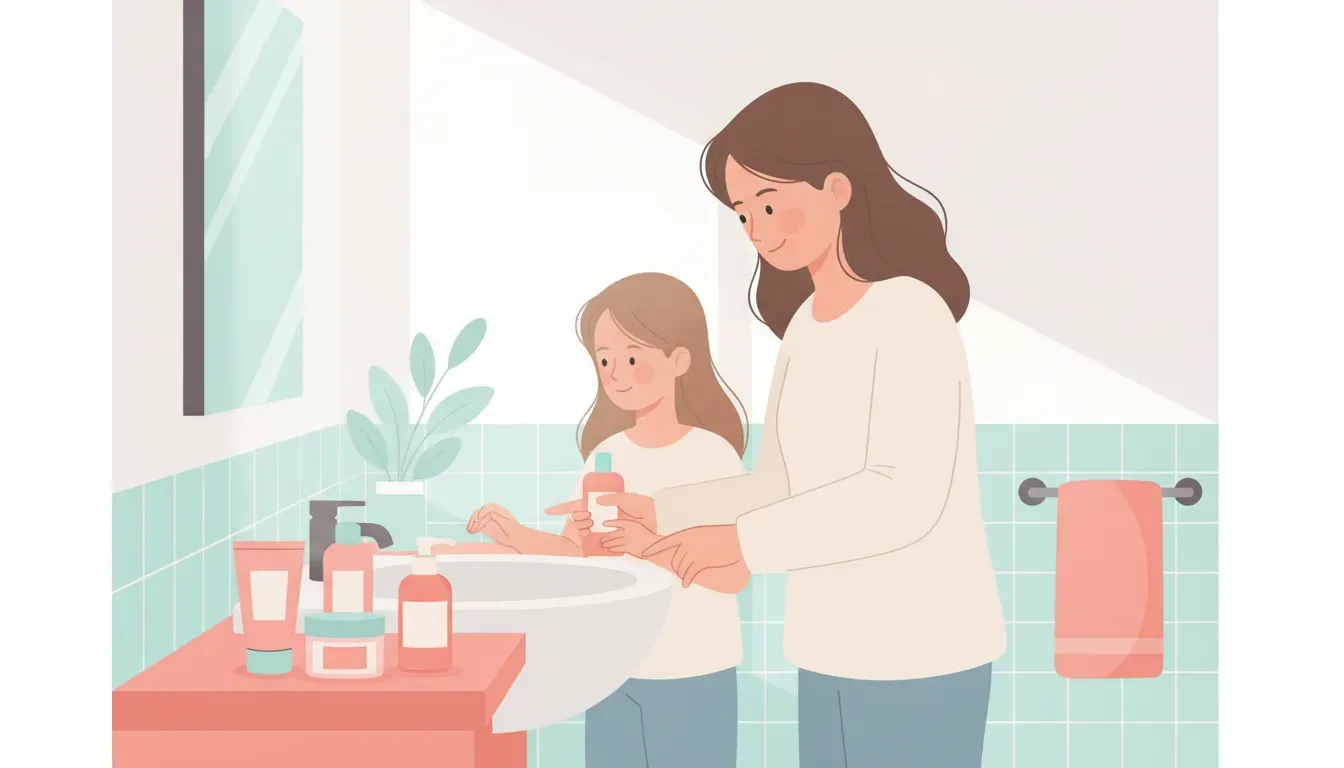
Think of these categories as a practical starting point, not a prescription for every child. Bright Girl products are formulated for young skin ages 8-24 and developed by double board-certified dermatologist Angela Casey, M.D. Parents can choose one product from each category and adjust the routine as their child grows or as a qualified clinician offers more specific guidance.
| Product category | What to look for | Bright Girl option |
|---|---|---|
| Cleanser | A gentle, non-abrasive formula that supports a comfortable wash without scrubbing. | Bright+Clean daily facial gel cleanser |
| Moisturizer | A comfortable, pH-balanced formula that adds hydration without a heavy or greasy feel. | Day+Bright 24-hour facial moisturizer |
| Daytime sunscreen | Broad-spectrum SPF 30 or higher with water resistance; mineral formats are one option to consider. | Bright+Block tinted SPF 44 mineral sunscreen |
How do the three categories fit together?
Cleanser is the washing step. Use it gently and pat the skin dry rather than rubbing. Moisturizer follows when skin needs comfortable hydration, helping make the routine easier to maintain. Sunscreen is the daytime finishing step for exposed skin. A tinted mineral formula can be a parent-approved option for families who prefer that format. The key selection details remain the label's protection level, broad-spectrum coverage, and water resistance.
The order can stay uncomplicated: cleanse, moisturize, then apply sunscreen in the morning. More products are not automatically better. Starting with these three categories gives parents a clear way to build a manageable habit without suggesting that every school-age girl needs toner, masks, or a long regimen.
How Can Parents Match Products to Different Skin Needs?
Product selection works best when it responds to what a child is noticing, rather than assuming every young person needs the same routine. Parents can start with three questions: Does skin feel tight or easily irritated? Does it seem oily in some areas but comfortable in others? Or has oil increased as the child has moved toward the teen years?
What works for dry or sensitive skin?
For dry or sensitive skin, keep cleansing gentle and avoid turning the routine into a scrub session. The American Academy of Dermatology notes that washing once in the evening may be sufficient for some people with dry or sensitive skin. In the morning, a child may be able to rinse with water and apply moisturizer and daytime sun protection, depending on what feels comfortable for their skin.
Look for a gentle cleanser and a moisturizer that supports comfortable, hydrated skin. Fragrance-free formulas can be a sensible choice when added scents seem irritating. Bright Girl's simple three-step skincare routine offers a useful starting point without suggesting that more products are automatically better.
How should parents approach combination skin?
Combination skin can feel dry in one area and more oily in another. Rather than adding a separate product for every zone, begin with a gentle cleanser used consistently, followed by a lightweight moisturizer. Apply enough moisturizer to support areas that feel dry, while choosing a texture that feels comfortable across the face. Adjust one step at a time so it is easier to notice how skin responds.
What about oilier or breakout-prone skin?
As hormonal changes occur during the teen years, oil production can increase and may be associated with blackheads, breakouts, and an oilier complexion. That does not mean a child needs harsh ingredients or aggressive scrubbing. A gentle cleanser, a comfortable moisturizer, and daytime sun protection remain a practical boundary. Persistent or concerning changes are outside a product-selection guide and are a good reason to ask a qualified dermatologist for advice.
The goal is not to diagnose a skin type or build a complicated shelf. It is to choose a few age-appropriate products that fit the child's comfort, habits, and stage of development, then use them consistently.
When Should a School-Day Skincare Routine Stay Minimal?
For girls ages 8 to 12, a school-day routine should stay minimal when the goal is to build comfortable self-care habits, not manage a long list of concerns. This age is a starting point for learning how to wash, moisturize, and protect skin during the day. It does not require pressure to collect or use many products.
Parents can make the routine approachable by introducing only the steps that fit the child's actual needs. A gentle cleanse, moisturizer, and daytime sun protection may be enough for many school days. If a child has dry or sensitive skin, even the cleansing schedule may need to be adjusted rather than increased. The right routine is one she can understand, use consistently, and discuss openly with a parent.
How can parents support growing independence?
Parent guidance works best as a shared process. Begin by explaining what each product is for, then let the child practice the routine with supervision. Keep products easy to identify and store them where the routine naturally happens. Ask how her skin feels instead of suggesting that she needs to fix it. This helps self-care feel like a useful daily skill rather than a response to appearance pressure.
Add only one new product or step at a time. That makes it easier to notice whether the routine feels comfortable and prevents a crowded shelf from becoming confusing. Bright Girl's educational content includes routine building and age-appropriate care for families who want to learn together. Parents who prefer a guided starting point can also browse beginner skincare sets for tweens, but a set is an option, not a requirement.
What falls outside a simple school-day routine?
A basic routine is not intended to diagnose or manage persistent, painful, or concerning skin changes. Pause before adding multiple new products, and seek advice from a qualified clinician when questions remain. The focus is steady, age-appropriate care, with enough flexibility for a child to grow into her own habits.
What Should Parents Check Before Adding a New Product?
A new product should earn its place by being appropriate, understandable, and easy to use consistently. Before adding it to a young person's routine, pause for a quick parent-child check rather than relying on packaging claims or social-media recommendations.
Read the label before opening the product
- Check the intended age and use. Confirm that the product is designed for the child's stage and identify whether it is meant for daily, occasional, morning, or evening use.
- Scan the ingredient and fragrance information. Fragrance-free options are often a thoughtful choice for sensitive skin because added scents may trigger irritation or allergic reactions, according to the American Academy of Dermatology (AAD). Read the AAD's guidance on skincare for tweens.
- Look for clear directions. A product should explain how much to use and where it belongs in the routine. Be cautious with products that make dramatic promises or encourage several new steps at once.
Introduce one change at a time
Adding one product allows parents and children to notice how the routine feels without creating confusion about what may be causing discomfort. Keep the rest of the routine familiar for a while, and avoid adding multiple strong or unfamiliar formulas together. Harsh cleansing, scrubbing, too many products, or harsh ingredients introduced too early can irritate young skin, the AAD notes.
Choose consistency over a crowded routine
A short routine that is followed regularly is usually more practical than a 10-step lineup. The AAD emphasizes that consistent use of fewer products matters more than using many products. Start with the basics that fit the child, such as gentle cleansing, moisturizing, and daytime sun protection, then reassess whether another step is genuinely needed.
If a skin issue persists, worsens, feels painful, or causes concern, pause product experimentation and speak with a qualified healthcare professional. This guide is for product-selection education, not diagnosis, and professional guidance can help a family decide what support is appropriate.
Shop Bright Girl's age-appropriate skincare products.
Frequently Asked Questions
What skincare products does a school girl need first?
Start with the simplest useful routine: a gentle cleanser, a moisturizer, and daytime sunscreen. A consistent three-step routine is usually more practical than adding many products at once. For younger girls, parents can help choose products and supervise how they are used.
Should a school girl use cleanser every morning?
Not necessarily. A gentle morning cleanse may suit some skin types, while dry or sensitive skin may need cleansing only in the evening. Avoid harsh scrubbing, and adjust the routine if the skin feels tight, dry, or irritated.
How can parents choose a moisturizer for young skin?
Look for a moisturizer that is gentle, age-appropriate, and comfortable enough to use consistently. Fragrance-free options can be a sensible choice when irritation is a concern. A lightweight, pH-balanced formula may work well for families who want hydration without a heavy feel.
Does a school-day routine need sunscreen?
Daytime sun protection is an important part of a basic routine. The American Academy of Dermatology recommends broad-spectrum, water-resistant sunscreen with SPF 30 or higher. Apply it as directed on exposed skin before heading outside.
When should a parent ask a professional about skin concerns?
If a concern persists, causes discomfort, or is difficult to understand, ask a qualified clinician for guidance rather than continually adding products. A professional can help determine an appropriate next step for the child's individual skin needs.


