


Non-Comedogenic Skincare for Teens: What the Label Really Means
When parents shop for non comedogenic skincare for teens, the label can look like an easy shortcut. It may be a useful clue, but it is not a promise that a product will suit every person or prevent every breakout. Understanding what the term means, and what else to consider, can help families build a simple, comfortable routine without piling on products.
Ask Bright Girl a skincare question
Non Comedogenic Skincare for Teens: What Does the Label Mean?
“Comedones” are clogged pores, including open comedones (often called blackheads) and closed comedones (often called whiteheads). A product described as non-comedogenic is formulated or evaluated with the goal of being less likely to contribute to clogged pores. In everyday shopping, the label signals that the formula is intended to be a pore-conscious option.
The wording is not the same as “oil-free,” “fragrance-free,” “hypoallergenic,” or “safe for sensitive skin.” Each phrase points to a different product feature or marketing statement. A formula can contain oils and still carry a non-comedogenic label; another product can be oil-free but still feel uncomfortable or unsuitable for a particular person. The ingredient list and the way skin responds matter alongside the front label.
There is no single label that can tell a family exactly how a product will behave on one teen’s skin. People differ, and products are used in different routines, amounts, climates, and activity levels. Think of non-comedogenic as one selection clue, not a skin diagnosis and not a guarantee.
It also helps to separate pore concerns from other kinds of comfort. Someone may prefer a light texture, avoid a particular fragrance, or need a product that fits sensitive-feeling skin. The non-comedogenic label does not answer all of those questions. If a teen has a known sensitivity, review the full ingredient list with a parent or guardian and use any professional advice they have already received.
Do not assume that every ingredient with a long or unfamiliar name is a problem, or that a short ingredient list guarantees a perfect fit. Formulas are combinations, and the finished product is what a person uses. Read the label, follow directions, and pay attention to skin’s response instead of judging a product by one ingredient name in isolation.
Why Isn’t the Label a Guarantee?
“Non-comedogenic” does not guarantee that a product will never contribute to clogged pores or cause irritation. The term alone does not tell you how a particular person will respond, what testing was used, or how the product performs when layered with other formulas. Labels can help narrow choices, but they cannot replace observing how skin feels over time.
Skin changes during adolescence. Hormonal shifts, sweat, sports equipment, hair products, makeup, and the weather can all affect how skin feels and looks. A product that feels comfortable in one routine might feel too rich when several layers are added, or in hot, humid conditions. Conversely, removing every moisturizing product can leave skin feeling dry or tight. The goal is not to chase a perfect label. It is to choose gentle basics that fit the teen’s needs and keep the routine manageable.
For a general overview, Rush University Medical Center’s skin-care tips recommend looking for non-comedogenic labeling when choosing products. Harvard Health also discusses checking for terms such as “non-comedogenic” and “oil-free” in its guide to acne-prone skin and product labels. These are useful starting points, not individualized guidance for every teen.
How Can Parents Choose a Simple Routine?
Begin with the purpose of each step rather than a long list of trending ingredients. Most teens can start with a gentle cleanser, a moisturizer that feels comfortable, and sunscreen for daytime. Add a toner or face mask only when there is a clear reason and the routine is already going smoothly. More steps do not automatically mean better care.
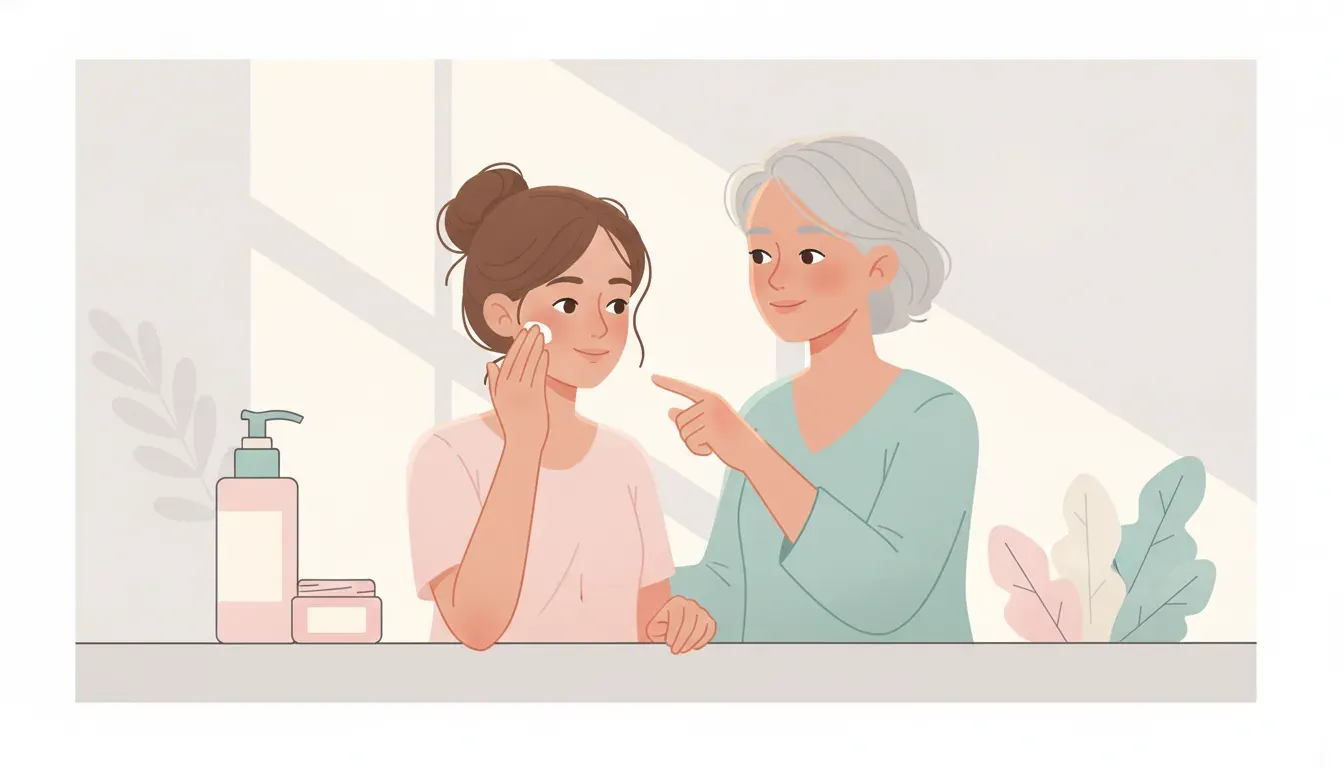
Parents can help by agreeing on a realistic morning and evening sequence, then keeping the products in one easy-to-find place. A simple routine is easier to remember and makes it easier to see whether a new item feels comfortable. It can also lower pressure around buying products because a video or friend made them popular. The best starting point is the teen’s actual needs, not an expectation that every routine should include several layers.
If there is no clear reason for an optional product, it is reasonable to wait. A toner or mask is not a required step simply because it is available. Check the directions and intended use before adding one, and ask a healthcare professional if the teen has an ongoing concern or an established skincare plan.
- Cleanse gently. Choose a cleanser that removes everyday dirt, oil, and buildup without leaving skin feeling stripped. Use it as directed. Scrubbing harder or washing repeatedly is not a shortcut to balanced-looking skin.
- Moisturize for comfort. Look for a texture the teen will use consistently. A moisturizer can support hydration and a healthy-looking skin barrier. If skin feels tight, flaky, or uncomfortable after cleansing, revisit how much cleansing and product layering is happening.
- Use sunscreen during the day. Choose a broad-spectrum sunscreen that fits the family’s preferences and can be applied as directed. A formula that feels pleasant and fits the day’s activities may be easier to use consistently. See Bright Girl’s sun protection options and guide to zinc sunscreen for more sun-care context.
Some families prefer to choose age-specific formulas. Bright Girl describes its skincare as dermatologist-created for young skin ages 8 to 24, with products formulated by Angela Casey, M.D. To review available basics, browse the Bright Girl skincare collection or explore Bright Girl’s curated skincare sets. Check each current product page for its full ingredient list and directions before purchase.
Use Bright Girl’s skincare quiz
Which Product Details Should You Check Besides the Label?
Use the label as the start of a short review. Read the directions and ingredients, check whether the product fits the intended use, and consider how it feels after application. Parents and teens can discuss the routine together and make one change at a time. That makes it easier to notice what is comfortable and what may not be a good fit.
| Routine choice | What to check | Practical question |
|---|---|---|
| Cleanser | Directions, intended use, and how skin feels after rinsing | Does skin feel clean without feeling tight or stripped? |
| Moisturizer | Texture, ingredients, and whether the formula suits the teen’s preferences | Will they use a comfortable amount consistently? |
| Sunscreen | Sun-protection label, directions, and whether it is practical for daily use | Can it fit school, outdoor activities, and reapplication as directed? |
| Optional toner or mask | Purpose, usage directions, and compatibility with the basics | Is there a clear reason to add this step now? |
Families who want to learn more about simple routines can read Bright Girl’s overview of skincare for teens and its article on choosing clean skincare for teens. “Clean” does not replace careful label reading. Focus on the product’s intended use, ingredient information, directions, and the teen’s experience with it.
When comparing two options, ask practical questions: Which one has clear directions? Which texture suits the teen’s preferences? Can the family fit it into the morning or evening routine without adding unnecessary steps? Is there any ingredient the teen has previously been advised to avoid? A short comparison based on real needs can be more useful than buying several products at once because they use the same label.
For instance, imagine two moisturizers both carry non-comedogenic wording. One has a richer texture that a teen enjoys using at night; the other feels lighter and may be easier to apply before school. The label alone does not decide between them. Review the full directions and ingredient information, then consider when the product will be used and whether the teen finds it comfortable. A choice that fits the actual routine is more practical than selecting a formula solely because its front label uses a familiar phrase.
Parents can also look at packaging information as a whole. Check the product name and intended use, the instructions, and any cautions. Make sure the teen knows whether a product is meant to be rinsed off or left on, and where it belongs in the order of the routine. These small details can prevent confusion, especially when several products look similar on a bathroom shelf. Keep the packaging or take a photo of the ingredient list if you want to compare options later or ask a clinician about them.
For a teen who plays sports, washes up after practice and spends time outdoors, the routine may need to account for sweat, showering, and sun exposure. That does not mean more elaborate skincare is required. Keep the basics accessible in the places they will be used, and follow each product’s directions. Parents can help younger teens understand application and storage, while older teens can take more ownership as the routine becomes familiar.
How Should Teens Introduce a New Product?
Keep the first test straightforward. Follow the product’s directions, use a small amount as instructed, and avoid changing several products at once. This is a practical way to notice whether skin feels comfortable with a new addition. If a product causes persistent stinging, burning, redness, or discomfort, stop using it and ask a parent or guardian for help deciding what to do next.
Do not take a label as permission to apply a product more often or in greater amounts than directed. More product is not necessarily more effective, and combining several new items makes it harder to work out which one may be causing a reaction. Keep the routine stable while evaluating a new basic product, and give the teen time to notice comfort and usability rather than expecting an instant change in appearance.
Keep a simple note if it helps: product name, when it was introduced, how often it was used, and any changes in comfort. This is not a substitute for professional care, but it can help families describe what happened if they speak with a clinician. For product-specific questions, Bright Girl offers a skincare quiz to help shoppers navigate its options.
For example, a family might introduce a new moisturizer while keeping the cleanser and sunscreen unchanged. They can use it as directed and note whether skin feels comfortable through the school day and after washing. If several new items are started on the same weekend, it becomes harder to tell which product is associated with a change. A measured pace helps keep decisions clear and reduces the temptation to overhaul a routine in response to every small fluctuation.
Also consider how the teen feels about the routine itself. A complicated lineup may be difficult to maintain during busy mornings, travel, or sports seasons. A few products they understand and can use as directed are often more practical than a shelf full of options. Parents can support consistency without making normal day-to-day skin variation feel like a failure.
When Is It Time to Ask a Professional?
A blog or product label cannot diagnose a skin concern. If breakouts are persistent, painful, widespread, or affecting a teen’s confidence, a parent or guardian can contact a board-certified dermatologist or the teen’s healthcare professional. Ask for guidance if there is a significant reaction, ongoing irritation, or uncertainty about using a particular product. Teens with a diagnosed skin condition or a prescribed routine should check with their clinician before making changes.
Professional guidance is especially useful when a family has tried simplifying the routine but still has concerns. Bring the product packaging or ingredient lists to the appointment, along with a brief note about when symptoms began and which products are in use. That context can help the clinician offer advice suited to the individual rather than relying on a general label.
Parents can make the conversation easier by asking what kind of cleanser, moisturizer, or sunscreen is appropriate, whether any current product should be paused, and which changes should prompt follow-up. This gives the family specific next steps without guessing from general label language. A teen should not feel that they have to manage persistent or uncomfortable skin concerns alone.
Consider the skin pattern the teen notices, while remembering that a person’s skin may feel different across areas of the face or at different times of year. A shiny forehead and tight-feeling cheeks, for example, can make comfort and texture relevant alongside pore-conscious wording. Rather than assigning a fixed category from one day’s appearance, notice recurring patterns and choose gentle basics that feel workable. If symptoms are persistent or worrying, a clinician can help the family decide what is going on.
Parents can invite the teen into the choice without asking them to become an ingredient expert. Review the directions together, agree on how to use the product, and set expectations that the label does not promise flawless skin. This makes shopping more collaborative and keeps the focus on care, comfort, and consistency, not on blame when skin changes.
Explore Bright Girl skincare sets
Frequently Asked Questions
Is non-comedogenic the same as oil-free?
No. Oil-free refers to a formula that is labeled as not containing oil, while non-comedogenic describes an intention or evaluation related to the likelihood of clogged pores. One term does not automatically imply the other, so read the specific product information.
Can a non-comedogenic product still irritate skin?
Yes. The label is not a guarantee against irritation or an individual reaction. Follow the directions and discontinue use if a product causes persistent discomfort. A healthcare professional can help assess ongoing or severe symptoms.
Do teens need a multi-step skincare routine?
Not necessarily. A few comfortable basics, including gentle cleansing, moisturizing, and daytime sun protection, can be a sensible place to begin. Add an optional step only when there is a clear need and it fits the teen’s routine.
Should parents choose products based on the label alone?
No. Consider the product’s purpose, directions, ingredients, texture, and how it fits with the rest of the routine. A label is one clue among several, not a promise of a particular result.
How Can You Use the Label as a Starting Point?
Non-comedogenic can be a helpful phrase to look for when comparing products, but it cannot predict exactly how a teen’s skin will respond. Pair it with a simple routine, thoughtful label reading, and professional guidance when concerns persist. A calm, consistent approach can help families make more confident choices for young skin.
