


Best Clean Sunscreen for Teens: A Parent’s Guide
Choosing the best clean sunscreen for teens means looking beyond a trendy label. Parents can compare the protection information, active ingredients, texture, and directions, then choose a formula that fits a teen’s daily routine. A straightforward option is often easier to use consistently than a complicated one.
Ask Bright Girl for product guidance
What Should Parents Look for in the Best Clean Sunscreen for Teens?
Start with the product label, not a “clean” claim on the front of the package. “Clean” does not have one universal definition across skincare brands. It can be a helpful description of a brand’s approach, but it does not replace checking what the sunscreen is designed to do, which active ingredients it contains, and how to use it.
For everyday selection, consider these points:
- Clear sun protection information: Look for sunscreen labeling that identifies the protection level and whether the product is broad spectrum. Read the directions and any water-resistance information on the specific product.
- Active ingredients: Mineral sunscreens use zinc oxide, titanium dioxide, or both as active sunscreen ingredients. Check the Drug Facts label to see what is in the product.
- Comfortable texture: A formula that feels wearable on your teen’s skin is more likely to become part of the morning routine. Consider whether they prefer a sheer or tinted finish.
- Age-appropriate routine: A teen generally does not need a long list of extra steps to use sunscreen. Choose a product that can sit comfortably alongside their cleanser and moisturizer.
- Directions that fit the day: Compare the label directions with how your family spends time outdoors, including whether reapplication will be needed.
The U.S. Food and Drug Administration shares consumer information about sunscreen and sunscreen labeling. Parents can use the FDA website as a starting point for official information and should follow the instructions on the sunscreen they select.
What Does “Clean” Mean When Comparing Sunscreen?
When a sunscreen is described as clean, the phrase may reflect a company’s ingredient standards, formulation choices, or broader product philosophy. It is not a substitute for a regulated protection label. Instead of relying on a single front-label phrase, turn the package over and review the active ingredients, use directions, warnings, and any other information relevant to your family.
Families who prioritize ingredient transparency may also want to understand how a brand explains its formulation choices. Bright Girl describes its approach as Beyond Clean Beauty and provides a list of ingredients it excludes on its ingredient information page. These pages can help parents explore the brand’s standards. They do not replace checking an individual product’s label or asking a health professional about a particular concern.
It can help to separate three questions. First, does the product have the type of protection information your family is seeking? Second, can the teen comfortably use the texture and finish? Third, does the formula align with the family’s ingredient preferences? Answer those questions in order, rather than choosing based only on a marketing phrase or social media recommendation.
How Do Mineral and Other Sunscreens Compare?
Mineral sunscreens use zinc oxide, titanium dioxide, or both as active ingredients. Other sunscreen products use different active ingredients. Parents who prefer a mineral option can confirm the active ingredients in the Drug Facts panel. That small label check is more reliable than guessing from the product name or color of its package.
Mineral products can vary in feel and finish. Some leave a more visible cast, while other products are designed to look more sheer or have a tint. A tint may be a preference for some teens, while others may want an untinted formula. The best fit is personal, and a label or product description cannot guarantee how a particular formula will look on every skin tone.
| What to compare | Mineral sunscreen | Other sunscreen formulas |
|---|---|---|
| Active ingredients | Check for zinc oxide, titanium dioxide, or both on the product label. | Review the listed active ingredients on the specific product. |
| Finish and feel | Can vary from one formula to another; some may leave a visible cast. | Texture and finish also vary by product. |
| How to decide | Compare the label, directions, and whether the teen likes the feel. | Use the same label-first approach and consider family preferences. |
| Everyday fit | Choose a texture the teen is willing to apply as directed. | Choose a texture the teen is willing to apply as directed. |
This table is a starting point, not a ranking. Both the ingredient list and the finished product matter. A teen who dislikes the texture may avoid using the sunscreen, so a comfortable fit is a practical consideration. For families exploring mineral options, Bright Girl offers sun protection products, including its complete collection for a broader look at the range.
Which Details on a Sunscreen Label Matter Most?
Reading the label together can turn a confusing shopping decision into a repeatable checklist. Start with the product’s stated sun protection information. Check whether it is labeled broad spectrum, note its SPF, and review the directions for application and reapplication. If water resistance is relevant to swimming or sports, check the exact claim and time period on the package rather than assuming all sunscreens have the same directions.
Next, find the active ingredients in the Drug Facts information. For a mineral sunscreen, look for zinc oxide and/or titanium dioxide. Then scan the rest of the package for warnings and directions, especially if your teen has a known sensitivity or a clinician has given your family specific advice.
Parents may find it useful to make a quick note of the product name and active ingredients when trying a new formula. This can make it easier to compare options and to explain what the teen has used if a question comes up. Keep the original packaging or take a clear photo of the label, and do not rely on a retailer’s thumbnail image if the full product details are available.
Bright Girl’s skin quiz is another way to explore product guidance based on needs and preferences. For sunscreen selection, use the quiz or a product page as a starting point and confirm all use details on the actual package.
How Can Parents Help a Teen Choose a Sunscreen They Will Use?
Invite the teen into the choice without making the decision feel like a beauty test. Parents can set the essentials: review the label, select a formula that fits the family’s preferences, and follow product directions. Then let the teen weigh in on practical details such as texture, tint, and whether it fits easily into their bag or bathroom routine.
A useful family conversation might sound like this: “Let’s compare the active ingredients and directions first. Then you can tell me which texture you would rather use.” That approach keeps safety and label details central while recognizing that comfort affects whether a product fits someone’s routine.
Allow time to see how a sunscreen feels during normal use. A product can seem different when applied as directed than when sampled on the back of a hand. Follow the product’s directions, and if your teen has a history of skin reactions or a specific health concern, ask a qualified health professional for individualized guidance before making a choice.
Keep the rest of the routine simple. A daily cleanser such as Bright+Clean and a moisturizer such as Day+Bright can be considered alongside sunscreen, according to the teen’s preferences and the product labels. If your family wants to compare ready-made routines, see the Core 4 set or browse skincare sets. These are product options, not a requirement to add more steps.
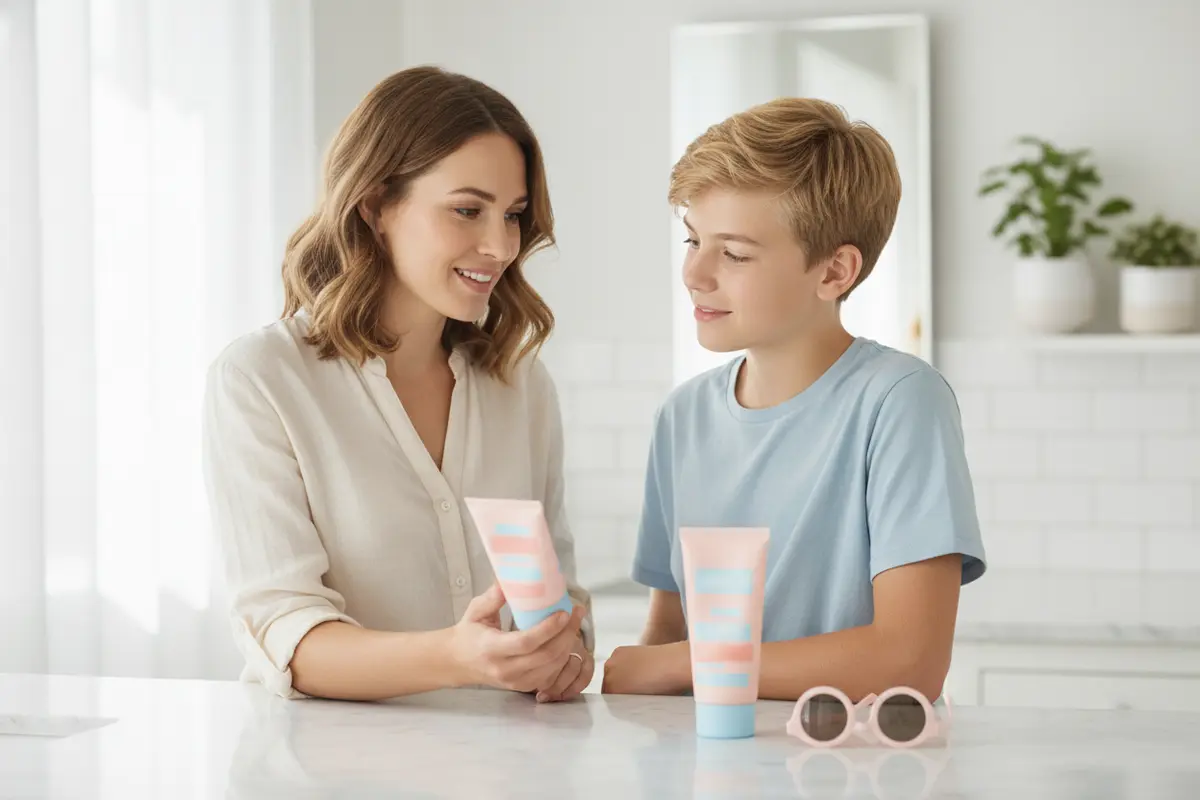
What Does a Simple Sunscreen Routine Look Like?
The routine can be uncomplicated: check the product directions, apply sunscreen as directed, and follow the label’s guidance for reapplication. If the teen is heading outdoors for school, practice, a walk, or another activity, help them plan where the sunscreen will be kept so it is accessible when needed. The exact routine will depend on the product directions and the day’s activities.
For a morning routine, sunscreen is usually the final skincare step before other products such as makeup, if used. Avoid layering multiple products just to make a routine seem more complete. A cleanser, moisturizer when needed, and sunscreen can be a manageable starting point for many families, with adjustments based on individual skin needs and professional guidance.
For outdoor activities, read and follow the product label closely. Do not assume a single morning application covers every situation or that a sunscreen’s directions are the same as another product’s. Keep the package available, especially when a teen is learning how to use it independently.
Bright Girl’s guide to why sunburns happen can support a family conversation about everyday sun habits. Parents can also review the brand’s sunscreen expiration guide when checking an older product at home.
What Common Sunscreen Shopping Mistakes Can Families Avoid?
- Choosing by “clean” alone: The phrase does not tell you everything about protection, active ingredients, or directions. Read the full label.
- Assuming all mineral formulas feel alike: Texture and finish can differ. Compare the product details and let the teen consider what feels comfortable.
- Overlooking directions: Check how to apply and reapply the specific sunscreen. Water resistance, when stated, also has product-specific directions.
- Buying for a trend rather than a routine: A popular product may not suit your teen’s preferences. Focus on label information and a usable texture.
- Adding too many products at once: More steps can make a routine harder to follow. Begin with the essentials and make changes thoughtfully.
- Ignoring personal concerns: If a teen has a known sensitivity or a health-related question, seek professional advice rather than relying on general online guidance.
These checks are especially useful when a family is comparing products online. Product photos and short descriptions may not show the full ingredient or direction details. Open the full listing or packaging information before purchase, and keep a record of what you chose.
When Should a Parent Ask a Health Professional?
Ask a qualified health professional when your teen has a known allergy or sensitivity, has experienced a reaction to a sunscreen, needs advice related to a health condition, or is unsure which product is suitable. A health professional can consider your teen’s circumstances and give guidance that a general shopping guide cannot provide.
It can help to bring the product or a clear photo of its full label to the conversation. Note when the product was used and what else was part of the routine. Do not continue using a product that is causing a concerning reaction; seek appropriate medical advice. For general product questions, parents can also contact Bright Girl.
Explore Bright Girl sun protection
Frequently Asked Questions
Is “clean sunscreen” a specific sunscreen category?
The phrase can mean different things depending on the brand. Use it as a prompt to learn about a company’s standards, then review the product’s active ingredients, protection information, and directions.
Should a teen choose mineral sunscreen?
That depends on the family’s preferences and the individual teen. A parent considering mineral sunscreen can check the label for zinc oxide and/or titanium dioxide, then compare texture and directions with other options.
Is tinted sunscreen better for teen skin?
A tint is a finish preference, not a universal measure of suitability. Some teens may prefer a tinted product, while others may choose an untinted formula. Consider how the specific product looks and feels, and follow its label.
Can a teen use sunscreen with a simple routine?
Yes. Sunscreen can fit within a straightforward routine. Follow the product directions and keep the other steps manageable, with choices based on the teen’s skin needs and any professional advice.
What is the easiest first step when comparing products?
Read the label. Check the protection information, active ingredients, directions, and any details important to your family. Then consider whether the texture is one your teen will be comfortable using.
Ready to Choose a Sunscreen?
The best clean sunscreen for teens is a well-labeled option that fits your family’s ingredient preferences and feels practical for the teen to use as directed. Compare the details, keep the routine simple, and ask a health professional when individual guidance is needed.
